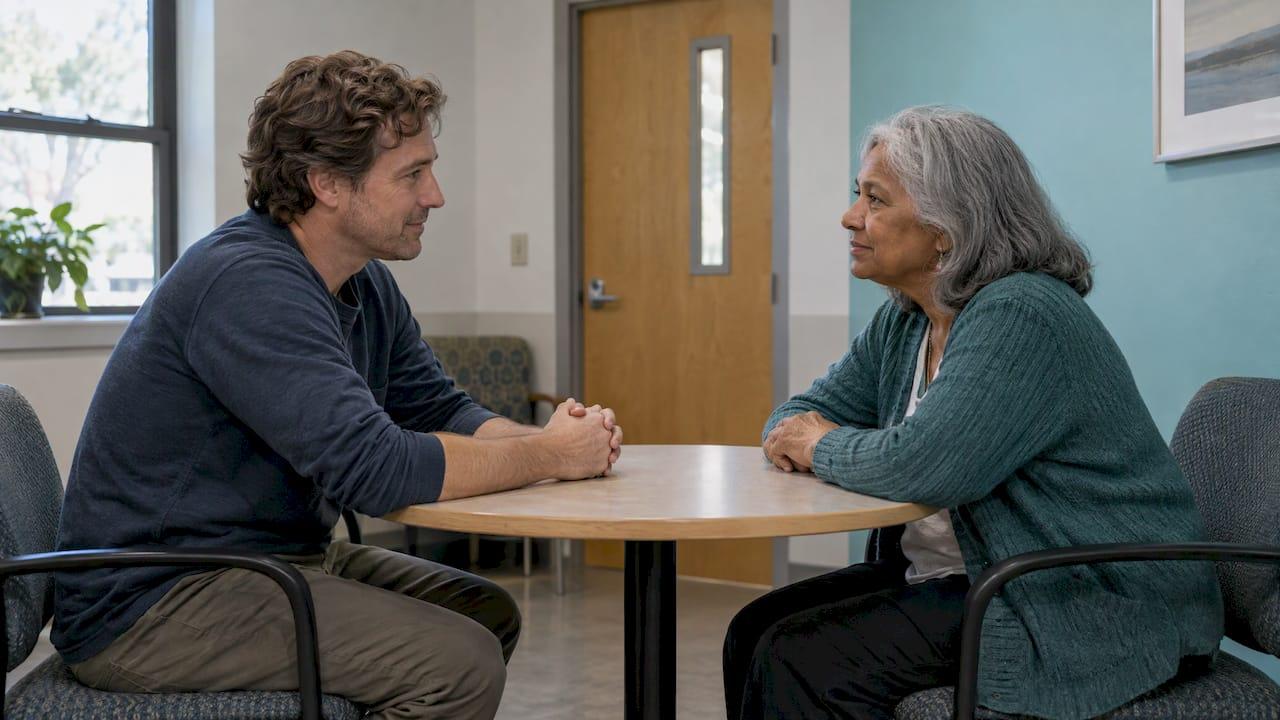
Yes, you can usually visit a loved one in residential rehab, but not on day one and not on a schedule you set alone. Most programs hold off visits for a short stabilization period, then open them up on set days with a few ground rules. Exact timing depends on the program, the person's clinical needs and the level of care. The fastest way to get a real answer is to ask the treatment team before admission.
This guide explains when visits typically begin, how they are scheduled, what visitors should and should not do, how privacy law affects what staff can tell you, and what family involvement looks like beyond a Saturday afternoon visit.
TL;DR
- Most residential programs limit or pause visits during the first days so the person can get through detox and settle in. Ask for the policy in writing.
- Visits are usually scheduled through the clinical team, with set hours, a visitor list and conduct rules.
- Federal privacy rules generally require your loved one's written consent before a program shares anything that identifies them as a patient.
- Family therapy and education sessions often matter more to recovery than casual visits, and they tend to start once the person has stabilized.
- Before you go: confirm the time, bring only approved items, and plan what you will say.
Table of Contents
- Why programs limit visits early on
- When visits usually begin and how they are scheduled
- Rules visitors are usually asked to follow
- How to prepare for a visit
- Privacy: what staff can and cannot tell you
- Beyond visiting day: family therapy and education
- What the "3-hour rule" does and does not mean
- How Connected Recovery involves families
- Planning for discharge and the first weeks home
- FAQ
- Sources
Why programs limit visits early on
The first days of treatment are the most physically and emotionally fragile. Someone coming off alcohol, opioids or stimulants may be in withdrawal, sleeping badly and flooded with shame or anger. A visit in that state can be hard on everyone, and it can pull the person's focus away from the one job in front of them: getting stable.
That is why many facilities restrict visits during the first week or two. Programs that describe their policy publicly commonly say the same thing: early restrictions give the patient room to stabilize before outside contact begins. Treat that as a general pattern, not a promise. Each program sets its own rules.
There is also a legal frame. Many states let a treatment program set reasonable limits on phone, mail and visits, as long as those limits put the safety and well-being of patients, staff and the community first. Florida's statute is one clear example: it says patients have a right to communicate freely and privately, within the limits of provider policy, and that providers must set reasonable visitation rules. Other states have their own wording, so ask the program how its policy works in the state where it operates.

What this means for medical detox
Detox is the stage with the tightest limits, because the person is under close medical watch. At a medically supervised program, nurses and physicians monitor symptoms around the clock and adjust care as needed. Families should expect phone updates through approved channels, not open visiting, until the clinical team says the person is ready. You can read how we structure this stage on our medical detox page.
When visits usually begin and how they are scheduled
There is no universal calendar, but the typical sequence looks like this:
- Admission and stabilization. Little or no in-person contact. Calls may be limited or brief.
- Adjustment period. The person has settled in, attends groups and sessions, and the team starts talking about contact with family.
- Scheduled visiting. Visits happen in set windows, often on weekends or in the afternoon, so they do not collide with therapy.
- Family sessions. Structured meetings with a therapist or case manager, in person or by video.
Some centers do not publish a visiting schedule at all. Instead they ask families to coordinate through the person's primary therapist. That approach is common because the right timing is a clinical call, not a calendar rule.
Questions to ask before admission
Put these to the admissions team and write down the answers:
- How long is the initial no-visit or limited-contact period, and who decides when it ends?
- What days and hours are visits held, and how long can one last?
- Who is allowed to visit, and does each visitor need to be on an approved list?
- Can children visit?
- Where do visits take place?
- What can I bring, and what is prohibited?
- Are there video or phone options if I live far away?
- Who do I call if I am worried between visits?
Our guide on family visits in rehab goes deeper on timing and preparation, and the inpatient rehab schedule article shows what the first 72 hours look like and what to get in writing.
Rules visitors are usually asked to follow
Visiting rules protect the person in treatment and everyone else in the house. The details differ, but most programs share a core set.
| Common rule | Why it exists |
|---|---|
| Visit only during set hours | Keeps therapy, meals and rest on track |
| Approved visitor list | Protects privacy and prevents unwelcome contact |
| Bag or item check | Keeps alcohol, drugs and unprescribed medications out |
| No phones or photos in shared areas | Protects other patients' confidentiality |
| Sober, calm arrival | Keeps the setting safe for everyone |
| No discussing other clients | Respects their privacy |
Expect staff to ask you to follow these without negotiation. They are not personal. A small residential setting often feels more flexible than a large institution, but the rules still apply, because they are part of the treatment structure.
How to prepare for a visit
A good visit takes a little planning. The person you love may be tired, emotional or raw, and so may you.
Before you go
- Confirm the details. Check the time, location and visitor list with staff the day before.
- Decide what you want to say. Aim for support, not a debate about the past. Statements such as "I'm proud of you for being here" land better than a list of grievances.
- Leave heavy topics for the therapist. Money, legal trouble, custody and blame are better handled in a facilitated family session.
- Bring only what is allowed. Ask what items are accepted. Clothing, books and letters are often fine, but policies vary.
- Manage your own expectations. Your loved one may seem distant, upbeat or irritable. None of those moods predicts how treatment will go.
During the visit
- Arrive on time, introduce yourself to staff and follow their guidance.
- Listen more than you speak. Ask open questions about how they are sleeping, what groups are like, what they are learning.
- Avoid ultimatums, "I told you so" and news that could rattle them, such as a family crisis, unless the team has agreed on how to share it.
- Keep the visit short if either of you is struggling. Leaving on a warm note beats pushing through.
After the visit
Take a few minutes to process. It is normal to feel relieved, sad or worried. Tell the care team if something in the visit worried you, though they may not be able to tell you much in return, for the privacy reasons below.
Privacy: what staff can and cannot tell you
This is the part that surprises families most. You may drive across town, check in at the front desk and hear that staff cannot confirm your loved one is even a patient. That is not stonewalling. It is the law.
Federal rules known as 42 CFR Part 2 protect records that identify someone as receiving substance use disorder treatment. In general they require the patient's consent before such information is disclosed, with limited exceptions. In practice, your loved one signs a release naming who the program may speak with and what it may share.
What that means for you:
- Ask your loved one, or the admissions team at intake, to set up a release that names you.
- Be clear on its scope. A release may allow updates on attendance and progress but not details of therapy sessions.
- Understand that a release can be changed or withdrawn by the patient.
- Keep your own copies of the family's key documents, such as insurance cards and medication lists, organized and ready. For ideas on handling clinical data sharing practices within a family, a guide on that topic can help.
We cover this more fully in our article on substance use privacy rights.
Beyond visiting day: family therapy and education
A two-hour visit is a moment. Family work is a process. Many programs add family therapy, education and communication coaching because addiction affects the whole household.

SAMHSA notes that family therapy is typically introduced after the person has made progress in recovery, which can be a few months into treatment or later, because exploring family issues too early can add stress for someone new to recovery. The same publication explains that "family" can include people with close, lasting emotional ties whom the person considers family, so parents, partners, siblings and chosen family can all be part of the work.
That is also the honest answer to the question "Can family members go to rehab together?" Residential programs generally treat the individual, and family members join through structured sessions rather than as co-residents. Ask any program how its family component works.
Families also need support of their own. Many find it helpful to work with a counselor while their loved one is in treatment, and family counseling support can give parents and relatives a place to process their own stress. After discharge, our guide on family support after rehab shows how to put the first 72 hours in writing.
What the "3-hour rule" does and does not mean
People searching for visitation rules often run into the "3-hour rule" for inpatient rehab. It is not a visiting rule. Programmed-hour requirements describe how many hours of structured treatment a level of care must include. For example, Connecticut's Medicaid program requires that each adult intensive outpatient day include at least 3 programmed hours, at least 2 of them clinical, and each partial hospitalization day at least 4. Those figures are about service structure and billing, not about how long a visit can last. For visit length, ask the program.
Our perspective on family visits
We keep Connected Recovery intentionally small, with 12 beds, so our team knows each person and each family. That matters for visits. When a clinician knows a client well, the conversation about when family contact will help, and when it will not, is specific rather than a blanket rule.
We see family contact as part of treatment, not an add-on. Our approach treats substance use and co-occurring mental health conditions together, with 24/7 medical supervision, so the pace of family involvement can follow the person's stability. Families deserve clear information up front, and a plan for what comes after discharge.
If you are weighing a program, ask how it involves families from admission through aftercare. We built our family program and discharge planning around that question.
Jim
How Connected Recovery involves families
Our Van Nuys, Los Angeles program offers medically supervised detox, residential treatment, dual diagnosis care and medication-assisted treatment in a boutique 12-bed setting, along with a family program, case management, aftercare planning and discharge planning. If you are looking for a place where your loved one gets personal attention and you get clear communication, start with our family program or our residential treatment page. Our admissions team can walk you through current visiting arrangements and the release forms that let us talk with you.
If the situation is urgent, contact us through our site to speak with someone about admission.
Planning for discharge and the first weeks home
Visits during treatment are practice for what comes after. Talk with the team about how contact will work as discharge nears: who will have a role, how medications will be handled, and when the first follow-up appointment happens. Our discharge planning guide explains how to lock in the first follow-up and medications, and our case management and aftercare planning services support that handoff.
FAQ
Can you have visitors when you're in rehab?
Usually yes, after an initial stabilization period. Most residential programs allow family visits at set times and require visitors to follow conduct rules. Policies vary by program and by the person's clinical needs, so ask for the policy before admission.
Can inpatient rehab patients have visitors right away?
Often not. Many programs limit or pause visits in the first days, especially during detox, so the person can stabilize. The treatment team usually decides when visits begin.
Why won't staff confirm my loved one is a patient?
Federal confidentiality rules generally require the patient's consent before a program discloses information identifying them as receiving treatment. Ask your loved one to sign a release naming you. Then staff can share the information it covers.
Can family members go to rehab together?
Residential programs generally treat the individual, and relatives take part through family sessions and education. Family therapy usually begins once the person has made some progress in recovery. Ask the program how and when it brings family in.
What should I bring to a rehab visit?
Bring only what the program allows. That is often a short list, such as approved clothing, letters or books, and always a calm, sober presence. Confirm the item rules with staff the day before.
Sources
- Florida Statutes, section 397.501: rights of individuals
- SAMHSA 42 CFR Part 2 key points (University of New Hampshire, 2021)
- SAMHSA: Family Therapy Can Help (2013)
- Connecticut Department of Social Services provider bulletin PB 2023-51
- Clinical Data Sharing Best Practices: 2026 Guide
- Parenting Support in Tyler, TX