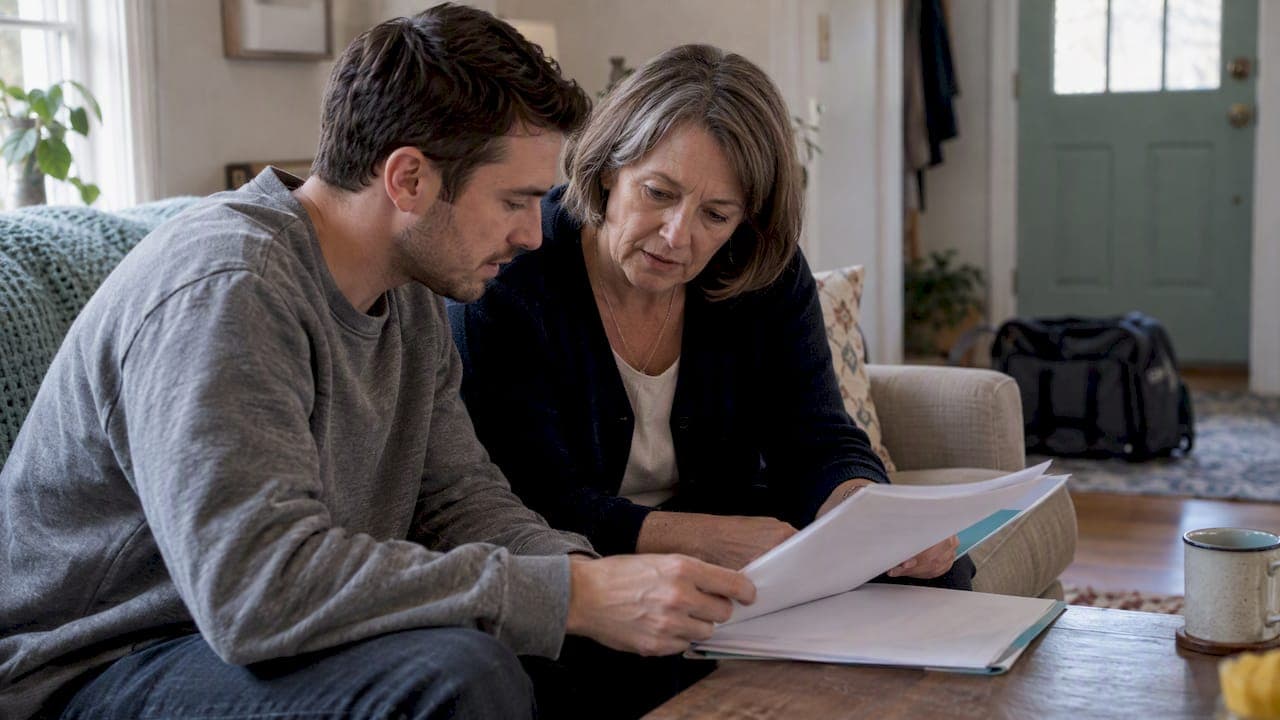
The single most important action is to sit down with your loved one and the clinical team, review the discharge and aftercare plan together, and agree in writing on roles: who manages medications, who handles rides and appointments, and what happens in an emergency. Schedule a first check-in within a week and keep naloxone on hand if opioids were involved.
TL;DR:
- Within the first 72 hours, reconcile prescription bottles with discharge instructions, confirm MAT dosing and refills, and assign someone to track doses.
- Write and sign a family agreement covering money, housing, rides, medication oversight, and privacy, then schedule its first review for two to four weeks later.
- Treat a single lapse differently from sustained relapse: contact the treatment team that day, resume the next appointment, and avoid blame.
- Call 911 and give naloxone for a suspected opioid overdose, even if uncertain; stay nearby, monitor breathing, and prepare to repeat the dose.
- Family involvement should be negotiated rather than imposed, and a loved one's preference about who attends appointments should guide participation.
Table of Contents
- First 72 hours: review the discharge plan, medication management, and logistics
- Boundaries, avoiding enabling, and making a clear family agreement
- Relapse prevention: warning signs, what a lapse looks like, and an emergency plan
- Family-focused treatments, peer support, and how to invite clinical involvement
- Caregiver health: self-care, coping skills, and planning continuing support for yourself
- How evidence shapes these recommendations: a short research summary
- Connected Recovery's view on supporting families through aftercare
- Getting coordinated support for your family's aftercare plan
- FAQ
- Sources
First 72 hours: review the discharge plan, medication management, and logistics
The discharge paperwork your loved one brings home is not a formality. It is the single clearest roadmap for the weeks ahead, and SAMHSA's TIP 39 guidance treats reviewing that plan as a core family task, not an optional add-on. The plan should list follow-up appointments, medication instructions, case-management contacts, and any medication-assisted treatment (MAT) protocol. Read it together within the first day home, ideally before anyone unpacks a bag.
Start by confirming three things on paper: what medications are prescribed, who is picking them up, and who is tracking doses. If MAT is part of the plan, write down the clinic name, dosing schedule, and refill dates. A missed MAT dose is one of the most common, and most preventable, gaps in early aftercare.
Here is a practical order of operations for the first 72 hours:
- Read the discharge summary together and highlight every appointment, medication, and contact name.
- Call the outpatient clinic or therapist to confirm the first follow-up date and ask who should attend.
- Reconcile medications: match pill bottles to the discharge list and remove anything not on it from the household.
- Set calendar reminders (phone or shared household calendar) for doses, appointments, and check-ins.
- Confirm transportation for the first week of appointments, including a backup driver.
- Identify the case manager or discharge planner's direct contact information in case questions come up.
Beyond logistics, the first 72 hours set the emotional tone for everything after. A short internal checklist helps families avoid turning the homecoming into an interrogation:
- Decide who greets your loved one at the door and keep the moment low-key, not a group intervention.
- Ask directly what kind of help feels supportive right now rather than assuming.
- Avoid quizzing about treatment details unless your loved one brings them up first.
- Keep the home environment free of alcohol or substances that were part of the pattern.
- Plan one quiet, unstructured activity together instead of a packed welcome-home schedule.
How you frame your involvement matters as much as the tasks themselves; short practical scripts for inviting someone into a conversation or offering support can help, as explained in How to Comfort People: Practical Scripts and Steps. Research on helpful family involvement finds that people in early recovery respond better to negotiated, practical help than to monitoring that feels like surveillance. A short script can shift the whole dynamic: "I want to help with whatever makes the next few weeks easier. What would actually be useful?" is a very different opening than "I'm going to check your phone and your pockets."
That distinction, invited participation versus surveillance, runs through SAMHSA's TIP 39, which recommends that family involvement be tailored to what the person in recovery wants and screened for situations where it is not appropriate, such as active conflict or acute psychiatric symptoms. If your loved one does not want a particular family member involved in appointments, that preference should guide the plan, not override it.
Our guide to discharge planning and medication follow-up walks through the medication reconciliation process in more detail if you want a longer checklist to work from.
Pro Tip: Take a photo of the discharge summary and the medication list the day it's handed to you. Paper gets lost in the first chaotic days home; a phone photo doesn't.
Boundaries, avoiding enabling, and making a clear family agreement
Support and enabling look similar on the surface but produce opposite results. Support means helping someone follow their treatment plan: driving them to an appointment, keeping the house free of triggers, sitting in on a family session. Enabling means removing the natural consequences of substance use, covering a missed shift, lying to a landlord, handing over cash with no accountability. SAMHSA's family guidance frames this distinction around behavioral contracts and structured problem-solving, not vague intentions, because vague boundaries are the ones that erode fastest under pressure.

A written family agreement turns good intentions into something enforceable. It does not need to be a legal document, just specific enough that everyone in the house knows exactly what is expected and what happens if it is not met.
Consider including these items in your agreement:
- Financial boundaries: what, if anything, you will pay for directly (rent, a phone bill) versus what you will not pay for (cash, unsupervised spending money).
- Housing rules: curfews, guests, substance-free premises, and what happens if a rule is broken.
- Transportation limits: when you will provide rides and when your loved one needs to arrange their own.
- Medication responsibilities: who holds and administers medications, especially controlled substances.
- Privacy expectations: what you will and will not monitor, agreed on in advance rather than improvised in a moment of worry.
- A scheduled review date, typically two to four weeks out, to revisit and adjust the agreement.
Write the agreement down, date it, and have everyone involved sign it, including the person in recovery. That step alone changes how seriously it gets treated.
To put it into practice:
- Draft the agreement together during a calm moment, not during a crisis.
- Name one person in the household responsible for enforcing each boundary.
- Decide in advance what happens if a boundary is broken (a consequence you can actually follow through on).
- Set the first review date on the calendar before you finish the conversation.
- Loop in the treatment team if the same boundary keeps getting tested; a case manager or family therapist can help troubleshoot without turning it into a standoff.
Boston Medical Center's reporting on common myths about supporting a family member in recovery makes a useful point here: compassionate, action-oriented support tends to outperform punitive "tough love," and the two are not mutually exclusive. You can refuse to hand over cash and still show up for a hard conversation.
Pro Tip: Keep a shared notes document (not a confrontation) where boundary issues get logged with dates. It turns "you always" arguments into specific, solvable problems.
Relapse prevention: warning signs, what a lapse looks like, and an emergency plan
Relapse rarely arrives without warning. Missed medication doses, skipped appointments, increased secrecy, withdrawal from family activities, and sudden mood swings are the signals families most often report before a setback. Documenting these patterns, briefly, in the shared notes mentioned above, makes it easier to spot a trend instead of dismissing each incident as a one-off.
A lapse (a single use episode) and a relapse (a return to a sustained pattern of use) are not the same thing, and treating every lapse as a catastrophic failure can backfire. The more useful response to a lapse is rapid, nonpunitive re-engagement: contact the treatment team the same day, go to the next scheduled appointment rather than skipping it out of shame, and avoid framing the conversation around blame. A systematic review of family therapy outcomes found that family involvement is associated with reduced substance use and improved family functioning, but that benefit depends on families staying engaged through setbacks rather than withdrawing after one.
An overdose is a different situation entirely, and it calls for immediate, practiced action rather than judgment calls in the moment.
- Call 911 first, even if you are not certain it is an overdose.
- Administer naloxone right away if opioids are a possibility; it is available over the counter in the United States and carries no risk if you turn out to be wrong, according to CDC guidance.
- Stay with the person and monitor breathing until emergency responders arrive.
- Be ready to give a second dose: the CDC notes that fentanyl exposures sometimes require multiple doses of naloxone.
- Call the treatment team afterward, even if the person recovers fully, so the plan can be adjusted.
One thing families supporting someone with opioid use history should do now, before an emergency happens: keep naloxone in the house and know where it is. The CDC's naloxone guidance confirms it can be carried and used by anyone, not just medical professionals, and reverses an opioid overdose quickly when given promptly.
Our relapse prevention program page outlines how a structured plan addresses exactly these warning signs before they escalate.
Family-focused treatments, peer support, and how to invite clinical involvement
Family involvement is not just emotionally helpful, it changes clinical outcomes. A 2022 systematic review of family therapy research found that involving family in substance use disorder treatment is associated with reduced use and improved family functioning across both adolescent and adult cases. Several structured models deliver this in practice: multifamily groups, brief strategic family therapy, functional family therapy, and solution-focused approaches all give families and the person in recovery a shared, clinician-guided space to rebuild communication rather than relying on informal conversations at home.
Family peer recovery support specialists offer a different kind of help: people with lived experience who assist families in navigating resources, advocating for services, and processing the practical and emotional weight of the situation. Family peer support services are still an expanding field, but they fill a gap that clinical appointments often cannot, ongoing, informal guidance between sessions.
Mutual-aid groups extend that support indefinitely. Al-Anon and Nar-Anon exist specifically for family members and friends affected by someone else's substance use, and they cost nothing to attend.
If you want to request family sessions as part of ongoing care, a few steps make the process smoother:
- Ask the case manager or primary therapist directly whether family sessions are available and how to schedule one.
- Bring a short list of specific concerns or questions rather than an open-ended request to "talk about everything."
- Ask about remote or phone sessions if distance or work schedules make in-person attendance difficult.
- Clarify in advance what information the clinician can and cannot share, since confidentiality rules shape what a family session will cover.
For a broader list of community and recovery resources, our guide to recovery support resources catalogs options beyond formal therapy, and our guide to peer support's role in recovery explains how peer specialists typically work alongside clinical teams.
Caregiver health: self-care, coping skills, and planning continuing support for yourself
Supporting someone through early recovery is exhausting in ways that rarely get acknowledged. Watching for warning signs, managing logistics, and holding boundaries under pressure takes a toll, and families who skip their own care tend to burn out before the hardest stretch of recovery is even over.
Start with immediate relief: a mutual-aid meeting like Al-Anon, a short-term counseling session for yourself, or simply a scheduled break where someone else covers logistics for an afternoon. These are not indulgences, they are what keeps you capable of showing up next week.
A short caregiver checklist helps catch your own warning signs before they compound:
- Notice your own stress signals: sleep disruption, irritability, or constant preoccupation with your loved one's choices.
- Keep a short contact list of people you can call when you need to vent or problem-solve, separate from your loved one's support network.
- Schedule recurring breaks on the calendar, not just when you happen to remember.
- Revisit your own boundaries agreement periodically; caregiver fatigue often shows up as boundary erosion first.
A 2022 systematic review of interventions for family members found that caregiver outcomes like depressive symptoms and coping improved immediately after a support intervention, but those gains were not consistently sustained at four to eleven months of follow-up. That finding has a direct practical implication: a single support group session or one round of family counseling is a start, not a finish line. Ongoing supports, whether a recurring mutual-aid meeting, periodic check-ins with a therapist, or scheduled family sessions, tend to hold up better over time than a one-time intervention.
Pro Tip: Treat your own support plan with the same specificity as your loved one's aftercare plan: name the group, the day, and the person you'll call, not just the intention to "get more support."
How evidence shapes these recommendations: a short research summary
Three sources anchor most of the guidance above, and it is worth knowing what each one actually says, since the specifics matter more than the general reassurance that "family support helps."
- SAMHSA's TIP 39 recommends family education, mutual-aid linkage, behavioral contracts, and structured family problem-solving as components that belong across the full continuum of care, not just at discharge.
- A systematic review of family therapy models found consistent associations between family involvement and reduced substance use plus improved family functioning, across varied study designs since 2010.
- A 2022 review of interventions for affected family members found real but time-limited benefits for caregivers themselves: better coping and mood right after an intervention, with less consistent results months later.
The practical translation is straightforward. Family involvement that is specific, invited, and clinically coordinated outperforms vague good intentions, according to the pattern across SAMHSA's TIP 39 and the systematic reviews above. A written plan, a behavioral agreement, and scheduled check-ins are not bureaucratic overkill, they are the mechanism through which "being supportive" actually becomes measurable and sustained.
The naloxone guidance fits the same logic from a different angle: the CDC's recommendation to call 911 and administer naloxone promptly during a suspected opioid overdose is not a suggestion to keep in the back of your mind. It is a specific, rehearsed action that only works if the naloxone is already in the house and someone knows how to use it before the emergency starts.
Connected Recovery's view on supporting families through aftercare
Discharge planning works best when it is specific enough to act on immediately, not a general summary handed over on the way out the door. Our team at Connected Recovery builds discharge plans that name follow-up appointments, medication schedules, and the case manager responsible for coordinating next steps, because a plan that only exists in conversation tends to get lost in the first busy week home.
Our family program is structured around the same principle: family sessions focus on concrete goals, usually communication patterns, medication oversight, and agreeing on roles, rather than open-ended discussion. When MAT is part of a client's treatment, clinical teams coordinate directly with family members on dosing schedules and follow-up so medication adherence does not depend on memory alone.
Case management continues past discharge day. Our case management services are designed to stay involved through the early weeks home, connecting families to outpatient providers, mutual-aid resources, and follow-up scheduling so the transition does not rest entirely on the family's shoulders. For families looking for a longer-term framework, our aftercare planning guide lays out what a structured post-discharge plan typically includes.
— Jim
Getting coordinated support for your family's aftercare plan
A written aftercare plan only works if someone is actively coordinating it, and that coordination is exactly what care teams provide. Boutique treatment settings keep each plan personalized rather than templated, which carries directly into how discharge and family involvement are handled.
- Our aftercare planning service builds a specific, written plan before discharge day, not after.
- Our case management team stays connected through the first weeks home to help with appointments, referrals, and follow-up.
- Our family program gives you a structured setting to work through roles, boundaries, and communication with clinical guidance.
If your loved one is still in treatment or approaching discharge, ask their care team whether family sessions are available before the discharge date arrives, it is far easier to build the plan together than to assemble it after the fact. You can also reach out directly through our aftercare planning page to ask what family involvement looks like for your situation.
This article is general information, not a substitute for advice from a qualified doctor. Consult a qualified healthcare professional about your own circumstances before acting on anything here.
FAQ
How do you cope with a family member struggling with addiction?
Focus on what you can control: your own boundaries, your own support network, and consistent, calm communication rather than trying to control their choices directly. Mutual-aid groups like Al-Anon and Nar-Anon, along with your own counseling if needed, give you a dedicated space to process the stress rather than carrying it alone.
How can families best help a loved one after rehab?
The most effective help is specific and coordinated: reviewing the discharge plan together, confirming medications and appointments, and agreeing on clear roles rather than offering vague general support. SAMHSA's TIP 39 frames this structured, invited involvement as more effective than informal monitoring.
Why does family support matter in addiction recovery?
Family involvement is linked to reduced substance use and better family functioning, according to a 2022 systematic review of family therapy research. Positive support also correlates with longer-term abstinence, while ongoing conflict or pressure to use raises relapse risk.
What coping skills help families support someone in recovery?
Useful skills include setting and enforcing clear boundaries, documenting warning signs instead of reacting to each one in isolation, practicing calm rather than confrontational communication, and scheduling your own breaks and support check-ins. A written family agreement with a set review date helps turn these skills into habits rather than one-time efforts.
What should a family do if they suspect an opioid overdose?
Call 911 immediately and administer naloxone right away if opioid use is even a possibility, since it carries no risk if the person turns out not to be overdosing, according to CDC guidance. Stay with the person, monitor their breathing, and be prepared to give a second dose, since fentanyl exposures sometimes require more than one.
Sources
For urgent help, contact the SAMHSA National Helpline or a local treatment provider; for ongoing guidance, the sources below cover discharge planning, family therapy evidence, and overdose response.
- TIP 39: Substance Use Disorder Treatment and Family Therapy (SAMHSA)
- Naloxone frequently asked questions (CDC)
- Systematic review: Interventions for affected family members improved caregiver outcomes immediately after treatment (2022)
- Effects of family therapy for substance abuse: A systematic review (2022)