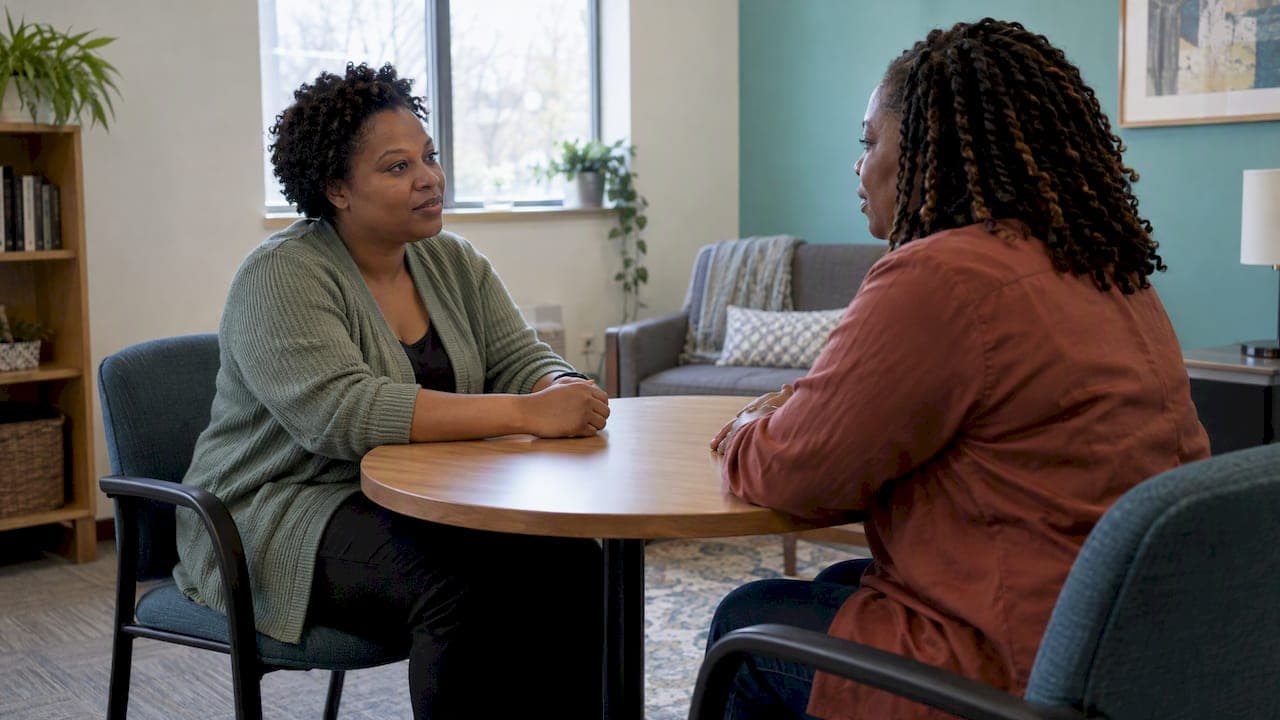
In most residential rehab programs, yes, family can visit. But visits rarely start on day one, they follow the facility's schedule, and the treatment team can limit them when clinical needs call for it. Visitation is usually treated as part of treatment, not as a right you can demand. Knowing that up front makes the whole process less frustrating for you and easier on the person in care.
This guide explains how visitation policies typically work, what happens in the first days, how to handle children and long distances, and how to make a visit useful. For the specifics at our facility, call us. Policies differ from one program to the next, and you should always confirm the rules before you travel.
TL;DR
- Most residential programs allow family visits, often after a short adjustment period, and each facility sets its own schedule and rules.
- Visits can be limited for clinical reasons, such as a patient's need for privacy, a visitor's disruptive behavior, or a court order.
- Your loved one decides who counts as family and who is on the visitor list. Privacy rules mean staff may not even confirm someone is a patient without consent.
- Children usually need a separate approval step. Plan it with the treatment team rather than just showing up.
- Family sessions with a therapist are often more valuable than a casual visit. Ask about them first.
Table of Contents
- How visitation works in residential rehab
- The first days: why you may have to wait
- Who counts as family, and who decides
- Visit or family session: what actually helps
- How to prepare for a visit
- Bringing children to visit
- When distance gets in the way
- Perspective: why we keep our house small
- If you are still looking for a program
- What if your loved one is not in treatment yet
- FAQ
- Sources
How visitation works in residential rehab
A rehab program is not a hospital ward with open visiting hours, and it is not a hotel. Early treatment is when someone is most vulnerable, whether they are in withdrawal, adjusting to a new routine, or facing hard emotions for the first time. Staff manage contact with the outside world on purpose.
Two ideas explain most policies.
Visits are a therapeutic tool. Facilities generally view them this way, which means they can be restricted if the treatment team decides a visit is hurting the patient's recovery or the visitor is disrupting the unit. The Moritz patient handbook from Ohio's mental health agency, written for patients, families and friends, takes this approach to visits and privacy.
Restrictions must have a clinical reason. One published visitation policy from a rehabilitation hospital lists the usual grounds: substance abuse protocols, a patient's need for privacy, disruptive behavior by a visitor, and valid court orders limiting contact. Such policies also tell patients they can name a support person. That is one hospital's policy, not a universal rule, but it shows how the thinking runs.
In practice, that means you should expect:
- A scheduled visiting window, not drop-ins
- A visitor list the patient has approved in writing
- Rules on what you can bring in
- Staff who may sit in, or hold a family session in place of a social visit
The first days: why you may have to wait
Many programs ask families to wait through an initial adjustment period before in-person visits. Local policies vary, so ask for the exact timing instead of guessing. The reasons are practical.
- Detox comes first. During medically supervised withdrawal, a person may be physically ill, sleeping a lot, or not ready to talk. Visits can interrupt care, and seeing a loved one in that state is hard for family too. If you want to understand what that stage involves, read about medical detox.
- Cravings and emotions peak early. A familiar face can bring comfort, but it can also bring guilt, conflict or a pull to leave.
- Staff need to assess. The team learns who supports the patient and who might be a source of stress.
Phone calls are often allowed sooner than visits, though that also depends on the program. Use the waiting period to get ready, not to push for exceptions.
Who counts as family, and who decides
You may be surprised to learn that you do not control your adult relative's visitor list. Federal confidentiality rules for substance use treatment records generally mean a program needs written consent before sharing information, so staff may be unable to tell you anything until your loved one signs a release.
The patient also gets to define family. SAMHSA's guidance for counselors, Chapter 4 of the family therapy volume on NCBI Bookshelf, advises considering family from the client's point of view: whoever the client would describe as a family member or significant other. That can include a partner, a close friend, a mentor or a sponsor. It can also exclude relatives who are harmful to their recovery.

If you are left off the list, that is not necessarily a verdict on you. Sometimes it is a temporary boundary. Write a short note through staff, say you are ready when they are, and leave it there.
Visit or family session: what actually helps
A social visit is time together in a common room. A family session is led by a therapist. Both have a place, but the second does more work.
SAMHSA's TIP 39 on substance use disorder treatment and family therapy reports that family involvement is empirically supported and is linked to better engagement and retention, and that systemic family therapy can outperform individual-only treatment by addressing family dynamics that help sustain substance use. In plain terms: showing up matters, and showing up in a structured session matters more.
What a good family session can do:
- Give everyone accurate information about addiction and treatment
- Let each person say how the substance use has affected them, with a therapist keeping the conversation safe
- Agree on boundaries and expectations for life after discharge
- Surface problems early, before they derail the first weeks home
The guidance also warns clinicians against shaming labels such as "enabler" or "codependent." The goal is empathy, education and support, so families can keep healthier boundaries. If a program ever makes you feel blamed instead of included, say so. Our own family program is built around involvement, not blame.
How to prepare for a visit
A visit goes better when you plan for it the way you would plan for a hard conversation.
- Call ahead and confirm the schedule. Ask about days, hours, length of visits, and whether you need to book.
- Confirm you are on the approved list. Bring photo ID.
- Ask what you can bring. Many programs restrict food, medication, cash, electronics, and anything containing alcohol, including some toiletries and mouthwash. Ask before packing anything. Do not bring anything the staff did not approve.
- Decide your goal. Aim to show support, not to settle old arguments.
- Check yourself. Do not arrive under the influence or in a heated state. Disruptive behavior is a standard reason for visits to be cut short or limited.
- Talk to staff first. A brief check-in with the therapist can tell you what your loved one is working on and what to avoid.
Do and don't at a glance
| Do | Don't |
|---|---|
| Arrive on time | Show up unannounced |
| Acknowledge effort and progress | Bring up past mistakes or financial debts |
| Ask open questions and listen | Interrogate about the program or other patients |
| Respect other patients' privacy | Take photos or ask about others |
| Follow staff instructions | Pass along gifts or items unapproved |
| End the visit calmly when time is up | Make promises about life after treatment that you cannot keep |
Bringing children to visit
Parents in treatment often miss their kids most. Children also deserve honest, age-appropriate explanations. Both things can be true while the visit still needs a plan.
Staff often have a formal process for visits involving children. In the Moritz handbook cited above, special visits can require a doctor's order, an assessment of the benefit against possible harm to the child, and confirmation of the relationship. Not every rehab uses that exact process, but expect more than a simple scheduling request.
It helps to know why the effort is worth it. A study of children whose mothers were in treatment notes that children of a parent with a substance use disorder have a two to five times higher risk of developing one themselves, and that including children in family therapy has been linked to larger decreases in their own alcohol and tobacco use than in control groups. That supports structured involvement, which is different from an informal visit in a common room.
Tips for the child's sake:
- Ask the therapist whether a visit is advisable now or whether a phone or video call is better first.
- Tell the child beforehand where the parent is, in simple, truthful, non-blaming words.
- Keep the visit short and predictable. Bring a drawing or a game.
- Prepare for strong feelings afterward, and have a trusted adult available.
When distance gets in the way
Many families live far from the facility. Programs often handle this with secure video sessions, or with longer sessions over consecutive days for those traveling a long way, instead of short, frequent meetings. If you are flying in, ask whether they can schedule a family session during your visit, and whether the therapist can join by video if someone cannot attend.
Perspective: why we keep our house small
We run a 12-bed residential program in Van Nuys, and we built it small on purpose. Small changes how families experience us. Your loved one's therapist and the nursing team know each other and know your family. When a visit is coming, the people who decide how it should go are the people who see your relative every day.

We also treat visits as part of care, not as a reward or a punishment. A visit that helps one person in week two may not help another until week four. That is why we don't promise a standard calendar to every family before we know the patient. Because we treat substance use and co-occurring mental health conditions together, we pay attention to how a visit may stir up anxiety, depression or trauma, and we plan around that.
What we ask of families is simple: tell us what worries you, tell us what has happened at home, and let us help you prepare. The strongest thing a family can do is arrive steady. Recovery is a long road, and what happens at home after discharge matters as much as what happens in a visiting room. For that, we suggest reading our piece on family support after rehab.
— Jim
If you are still looking for a program
If you are reading this because someone you love needs care and you are weighing programs, ask each one how it handles visits, family sessions and communication. Ask who will update you and how often. We welcome these questions at Connected Recovery. Our residential treatment is a boutique setting for adults in Van Nuys, with 24/7 medical supervision and integrated care for substance use and mental health. Call us and we will explain how family involvement works for your situation.
What if your loved one is not in treatment yet
Not every reader has a family member in rehab yet. If yours does not want help, remember that adults cannot be forced into treatment outside strict, state-specific involuntary commitment criteria. SAMHSA's page on how to help someone says you cannot force someone to get care, and suggests a supportive conversation. Raise concerns about specific things you have seen, avoid judgment, and offer to help find professional care.
For support and referrals in the meantime, the SAMHSA National Helpline at 1-800-662-HELP (4357) is free, confidential, and open 24 hours a day, every day of the year, for individuals and family members.
FAQ
Can family visit during rehab?
Usually, yes, in residential programs, but on the facility's schedule. Many ask families to wait through an early adjustment period, and visits may be limited for clinical reasons. Ask the program for its written policy before you plan travel.
Should kids visit parents in rehab?
Sometimes, with preparation. Many programs require a separate approval step and consider whether the visit will benefit the child. Ask the parent's therapist whether an in-person visit, a family session or a video call is the best first step.
Can you make a family member go to rehab?
Not an adult, except under strict state-specific involuntary commitment rules, which generally require immediate danger or severe incapacity. Otherwise, the most effective approach is a calm, non-judgmental conversation about what you have observed, plus help finding professional care.
Why can't I get information about my loved one?
Substance use treatment records are confidential, and programs generally need the patient's written consent before sharing information, even with relatives. Ask your loved one to sign a release naming you. Until then, staff can still listen to what you want to share.
What should I do if a visit goes badly?
End it calmly, thank your loved one for seeing you, and tell the staff what happened. Setbacks in emotional conversations are common. A therapist can help you and your relative debrief and plan the next visit.
Sources
- Moritz Patient Handbook with special guidance for family and friends
- Visitation rights policy (Encompass Health)
- Chapter 4, Integrated Family Counseling, NCBI Bookshelf
- Benefits to children who participate in family therapy with their substance-using mother
- SAMHSA: How to help someone
- SAMHSA National Helpline