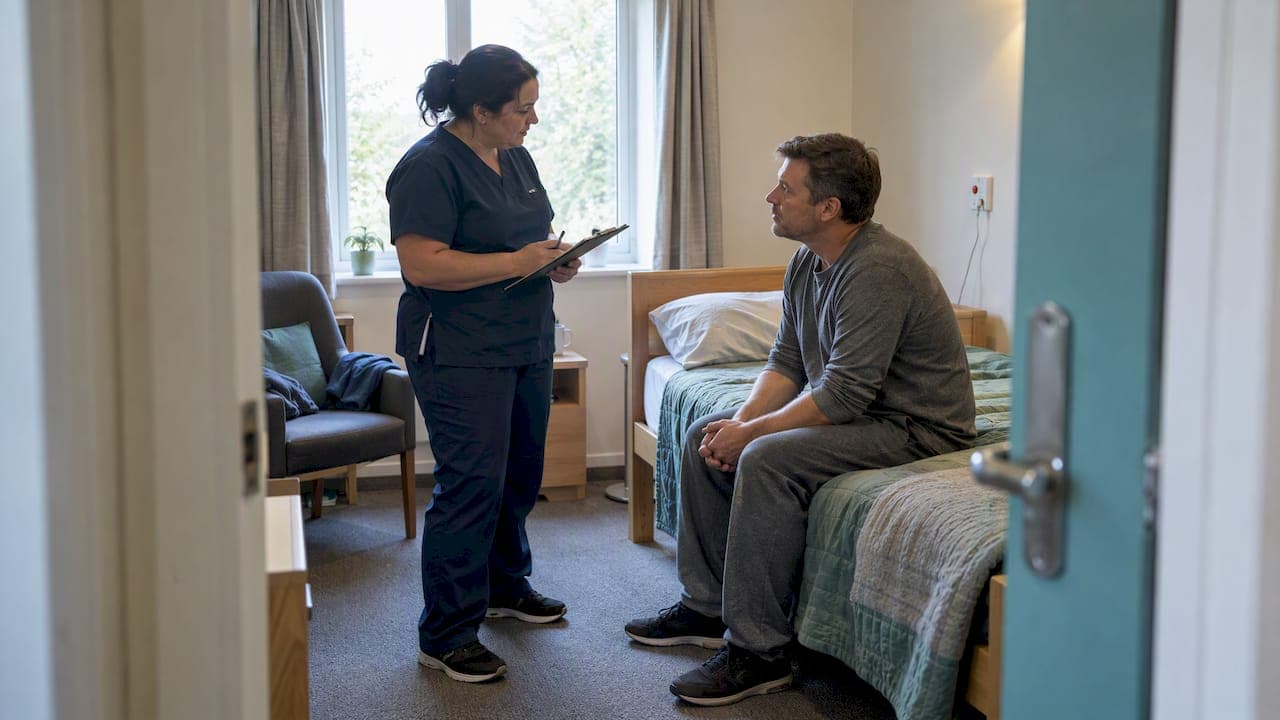
Yes, MAT in residential rehab is common when it is clinically appropriate. Programs use FDA-approved medications such as methadone, buprenorphine and naltrexone, plus acamprosate and disulfiram for alcohol use, alongside counseling. The medications stabilize brain chemistry, help people stay in treatment and lower overdose risk, while round-the-clock staff keep the early days safe.
TL;DR:
- Methadone requires coordination with a regulated opioid treatment program, while buprenorphine can be prescribed in residential care and extended release naltrexone requires opioid abstinence.
- Acamprosate, disulfiram, and naltrexone are alcohol use disorder options, often started after detox and selected according to a person’s history and treatment goals.
- Before discharge, confirm an outpatient prescriber, book the first appointment, arrange enough medication to bridge care, and provide naloxone with instructions for someone close.
- Treatment duration varies; some people continue medication for months or years, and ongoing outpatient medication is linked to better retention than care without it.
- Continuous monitoring helps staff respond to reactions and adjust doses; residential programs use safeguards such as locked storage, observed dosing, records, and staff training.
Table of Contents
- What does MAT mean inside a residential treatment program?
- How is MAT delivered during a residential stay?
- Why do 24/7 supervision and facility policies matter for safe MAT?
- Which medications may be used in residential MAT?
- What happens to MAT after residential treatment?
- How we coordinate MAT in a small residential program
- Where I think most people get this wrong
- How to start the conversation with us
- FAQ
- Sources
What does MAT mean inside a residential treatment program?
SAMHSA describes MAT as FDA-approved medications combined with behavioral therapies and psychosocial supports, a whole-patient approach. In a residential program, that combination happens under one roof, with clinicians who can monitor how you respond.
Residential care sits at a different level than outpatient care. ASAM's criteria tie levels of care to treatment settings, and residential care is distinct from outpatient. Methadone for opioid use disorder is dispensed through regulated opioid treatment programs, while naltrexone can be prescribed in any setting.
Here is how that plays out in practice:
- Start: a residential team can begin a medication when your assessment supports it, following best practices for the initiation of medications for alcohol use disorder.
- Continue: if you arrive already stable on a medication, we keep it going rather than interrupting it.
- Coordinate: when a medication needs an outside dispensing partner, staff arrange it and manage the schedule.
- Intensity: you get regular clinical contact, which can be especially helpful early in treatment.
The right path depends on your history, your substance use pattern and any other health conditions. No single approach fits everyone.
How is MAT delivered during a residential stay?
The process follows a predictable arc, though the pace is set by your clinical picture rather than a calendar.
- Medical intake and assessment. A clinician reviews your substance use, medical history, current medications, pregnancy status and mental health to decide whether MAT fits.
- Induction. If you are starting a medication, staff time the first dose to your withdrawal state and watch for reactions, adjusting as needed.
- Stabilization. Doses are adjusted until cravings and withdrawal settle, with vital signs and symptoms tracked closely.
- Medication management. Depending on the program, this means on-site prescribing, a partnership with an opioid treatment program, or scheduled supervised dosing.
- Safety practices. Locked storage, observed dosing, regular counts and written documentation keep medication accounted for in a shared living space.
- Therapy integration. Individual and group counseling, psychiatry and case management run alongside the medication so each supports the other.
For people with substance use and a mental health condition at once, concurrent treatment guidance notes that FDA-approved pharmacotherapy may be combined with counseling and other supports tailored to the individual's needs. That is why we treat both together rather than one after the other.
Pro Tip: Ask any program you are considering who prescribes, who administers each dose and where medication is stored. Clear, specific answers signal a team that has done this before.
Why do 24/7 supervision and facility policies matter for safe MAT?
The first days of a medication are when close observation pays off. Nurses and physicians can respond right away to an adverse reaction, a dose that feels wrong or withdrawal that shifts faster than expected. At home, you would be guessing; here, someone is always on hand.
Staff also own the daily mechanics: administering doses, recording them and noticing changes in mood, sleep or vital signs. That oversight protects you and the other people in the house.
Research on recovery housing offers a useful model of how medication can be handled safely in shared spaces. The IRIS research summary describes a continuum of policies that let residences integrate MOUD when policies and staff training are in place:
- Screening and intake criteria that decide who can be supported and how.
- Storage rules such as lockboxes and two-key systems.
- Medication oversight practices that track who has access and when.
- Staff training so every team member handles medication the same way.
Residential programs use the same ideas, with the added advantage of clinical staff on site around the clock.
Which medications may be used in residential MAT?
SAMHSA lists three FDA-approved medications for opioid use disorder: methadone, buprenorphine and naltrexone. For alcohol use disorder, the options are acamprosate, disulfiram and naltrexone. FDA materials also note multiple formulations, including sublingual, injectable and extended-release products.
- Methadone (opioid use): dispensed through regulated opioid treatment programs, so a residential stay usually means coordinating with one.
- Buprenorphine (opioid use): can be prescribed in an office-based or residential setting, with induction timed to withdrawal.
- Extended-release naltrexone (opioid use): requires being opioid-free before the first injection, which makes induction the hard part.
- Naltrexone, acamprosate, disulfiram (alcohol use): considered when your history and goals fit, and often started once detox is complete.
Safety planning matters as much as the prescription. Tolerance drops after a period of abstinence, so overdose risk rises if someone returns to use, and naloxone belongs in every discharge plan. NIDA states that these medications are safe and effective during pregnancy and breastfeeding.
Fewer than 1 in 5 people with opioid use disorder are treated with these medications. That gap exists even though the same research ties them to better survival, longer retention and less illicit opioid use.
What happens to MAT after residential treatment?
Medication does not stop at the door, and many people benefit from it for months or years. The NCBI Bookshelf overview notes there is no one-size-fits-all treatment, that some people stay on medication long term, and that ongoing outpatient medication is linked to better retention and outcomes than treatment without it.
Planning starts early in the stay, not on the last day. Our case management team lines up referrals and appointments so there is no gap. Where your medication continues depends on which one you take: office-based opioid treatment for buprenorphine, an opioid treatment program for methadone, and primary care or a specialty clinic for extended-release naltrexone.
Before you leave, work through this list:
- Confirm the outpatient prescriber and book the first appointment before discharge.
- Transfer prescriptions or dosing arrangements so you leave with enough medication to bridge the gap.
- Secure naloxone and make sure a family member or housemate knows where it is.
- Choose supports that welcome medication, such as peer groups and recovery housing that accepts MOUD.
- Line up remote follow-up if distance is a barrier; our telehealth aftercare article explains how that works.
If naltrexone is your plan, our safe start checklist can help you plan your start.
How we coordinate MAT in a small residential program
We run a boutique residential program, and its small size shapes how we handle medication. With a small number of residents, the same clinicians see you regularly, which makes it easier to spot when a dose needs adjusting or a taper should slow down. Because we treat substance use and co-occurring mental health conditions together, with 24/7 medical supervision, induction and maintenance plans fit the person rather than a template. You can expect a clear path from intake through discharge planning, with aftercare mapped out before you leave.
— Jim
Where I think most people get this wrong
Most families ask the wrong first question. They ask whether a program is "medication-free" or "medication-friendly," as if medication were a side road away from real recovery. The evidence points the other way: SAMHSA and ASAM guidance treats medication as a foundation of whole-patient care, and SAMHSA's own description frames it as stabilizing brain chemistry, blocking euphoric effects and reducing cravings, much like medication for diabetes. It is not swapping one addiction for another.
What gets overrated is the length of the stay. A stay that ends with no prescriber, no naloxone and no appointment can leave you more exposed than a shorter stay with a solid handoff. The first thing to prioritize is the discharge plan: who writes your next prescription, where your next dose comes from and who is in your corner. Ask about that on your first call, before you ask about amenities. The best programs answer in specifics, and the ones that hedge are telling you something.

How to start the conversation with us
If you are weighing residential care, our Medication Assisted Treatment program is built around the small, closely supervised setting described above. Alongside it we offer medical detox, residential treatment, dual diagnosis care and discharge planning, so your medication, therapy and aftercare are coordinated by one team. A small residential home means your doses and progress are watched by people who know you. Call our admissions team and have your insurance details, current medications and substance use history ready, and we can walk through next steps with you.
This article is general information, not a substitute for advice from a qualified doctor. Consult a qualified healthcare professional about your own circumstances before acting on anything here.
FAQ
What does MAT mean in rehab?
MAT stands for medication-assisted treatment. It combines FDA-approved medications with counseling and other supports to treat substance use disorders. SAMHSA describes it as a whole-patient approach.
Is MAT the same as methadone?
No. Methadone is one medication used in MAT, not the whole approach. Buprenorphine and naltrexone are also approved for opioid use disorder, and acamprosate and disulfiram are used for alcohol use disorder.
What medications are used in MAT programs?
For opioid use disorder, the FDA has approved methadone, buprenorphine and naltrexone. For alcohol use disorder, options include acamprosate, disulfiram and naltrexone. Your clinician chooses based on your history, health and goals.
Can MAT start during a residential stay?
Yes, when your assessment supports it. A residential team can start a medication, continue one you already take or coordinate with an outside program, with staff monitoring you around the clock.