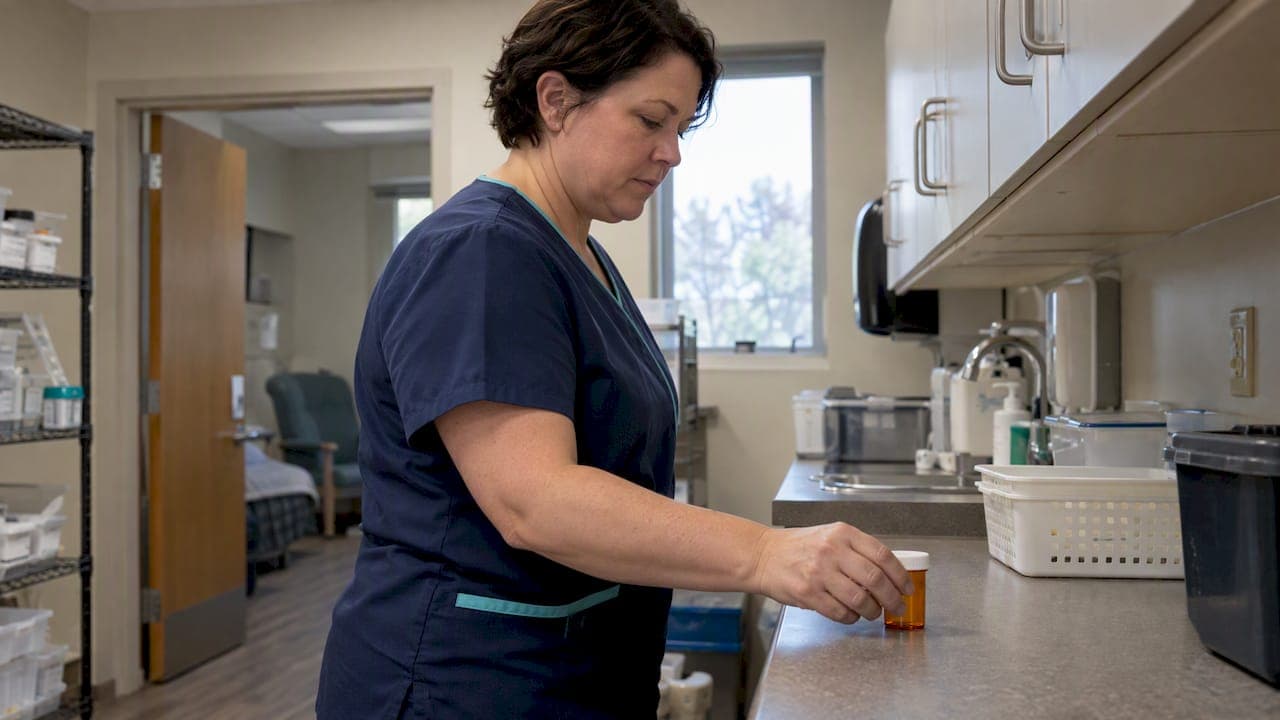
Naltrexone can typically start once a person is fully opioid-free, usually after a medically appropriate waiting period for short-acting opioids and a longer interval after methadone or buprenorphine, confirmed through testing before the first dose. For alcohol, most clinicians wait until acute withdrawal has resolved, often 4 to 7 days of abstinence. Starting while opioids are still active in the body can trigger sudden, severe withdrawal, so confirming opioid-free status always comes first.
TL;DR:
- Naltrexone does not treat acute alcohol withdrawal; benzodiazepines and supportive medical care address tremors, agitation, and seizure risk before relapse prevention begins.
- For alcohol use disorder, 50 mg oral naltrexone can reduce heavy drinking, while counseling or structured behavioral support improves results compared with medication alone.
- Methadone and buprenorphine require longer clearance periods than quickly cleared opioids, so clinicians may use urine testing or a supervised naloxone challenge before dosing.
- Daily tablets suit people who can maintain a routine, while monthly VIVITROL injections may help those who miss doses but require a scheduled clinic visit.
- Before treatment, clinicians should review liver tests and all medications; acute hepatitis, liver failure, current opioid dependence, or a positive opioid screen rules out starting.
Table of Contents
- Timing and rationale for starting naltrexone after alcohol detox
- Timing and confirmation steps for starting naltrexone after opioid detox
- How naltrexone works and which formulation fits
- Key safety checks and contraindications to review before starting
- A step-by-step induction checklist patients and clinicians can use
- What the evidence and guidelines say about post-detox naltrexone
- How we manage safe naltrexone starts after detox
- What matters most in the weeks after detox
- Ready to plan a safe naltrexone start
- FAQ
- Sources
Timing and rationale for starting naltrexone after alcohol detox
Naltrexone does not treat acute alcohol withdrawal. It has no role in managing tremors, agitation, or seizure risk in the first days after the last drink, so benzodiazepines and supportive medical care remain the standard tools for that phase. Naltrexone's job starts after the physical crisis has passed, when the goal shifts from surviving withdrawal to preventing a return to heavy drinking.
Clinical trials behind naltrexone's approval for alcohol use disorder commonly required at least four days of abstinence before participants were randomized to treatment, and in practice many clinicians wait 4 to 7 days before writing the first prescription, according to a PMC review of naltrexone trials. That review also found that pausing for several days of abstinence before starting naltrexone appeared to improve response in some patient groups, and that pairing the medication with counseling or structured behavioral support consistently outperformed medication alone.
Oral naltrexone at 50 mg per day has been shown in randomized trials to reduce the likelihood of returning to heavy drinking, based on the same PMC review, though individual response varies and the benefit is strongest when combined with therapy.
Before the first dose, a few checks matter:
- Liver function tests, since naltrexone is processed through the liver and baseline values guide monitoring.
- Pregnancy testing when clinically indicated, since safety data in pregnancy are limited.
- A full medication reconciliation to rule out concurrent opioid use, including prescription painkillers or cough syrups.
- Confirmation that psychosocial support, whether individual counseling or a structured relapse prevention program, is already lined up.
Skipping these steps does not make naltrexone dangerous the way starting too early during opioid withdrawal would, but it does reduce how much benefit a patient is likely to get from the medication.
Timing and confirmation steps for starting naltrexone after opioid detox
Opioid detox carries a stricter, less forgiving timeline than alcohol detox because starting naltrexone while any opioid remains active can trigger a rapid and severe withdrawal reaction. Getting the sequence right is the single most important safety decision in the first weeks after detox.
The standard interval is straightforward in principle:
- Wait at least 7 to 10 days after the last dose of a short-acting opioid, such as heroin or oxycodone, before considering naltrexone.
- Wait considerably longer after buprenorphine or methadone, since these long-acting medications clear the body more slowly; the NIAAA clinical review ties this extended window directly to the drugs' longer half-lives.
- Confirm opioid-free status with urine drug testing, a naloxone challenge test, or both before the first naltrexone dose.
A naloxone challenge test is the clearest way to confirm the body is actually free of opioids rather than just assuming enough time has passed. The REVIA prescribing information describes a stepwise protocol: a small dose of naloxone, often 0.2 mg given intravenously, followed by a larger dose such as 0.6 mg if no withdrawal signs appear, with close observation throughout. If the test provokes withdrawal symptoms, naltrexone is delayed and the test is reassessed the following day rather than pushed through.
Precipitated withdrawal is what happens when naltrexone blocks opioid receptors in someone whose body still depends on opioid activity. Unlike the gradual onset of natural opioid withdrawal, precipitated withdrawal can hit within minutes of the dose and escalate quickly, with intense nausea, muscle cramping, and severe distress. This is the core reason the opioid-free interval is treated as non-negotiable rather than a rough guideline.
A few practical notes for anyone leaving opioid detox:
- Keep a written log of the exact last-use date and opioid type, since this determines the required waiting period.
- Avoid overlooked opioid sources during the waiting window, including tramadol, codeine-containing cough medicine, and some prescription painkillers.
- Review our opioid detox timeline and prescription opioid withdrawal timeline resources to understand what the waiting period actually feels like day by day.
How naltrexone works and which formulation fits
Naltrexone is an opioid receptor antagonist, meaning it occupies the same receptors opioids and alcohol's reward pathways rely on without activating them. For opioid use, this blocks the effects of opioids taken during treatment. For alcohol use, it blunts the reward signal that heavy drinking produces, which helps explain why it reduces the drive to keep drinking once someone has started.
The evidence behind this mechanism is substantial. Randomized trials and meta-analyses summarized in the PMC review show consistent reductions in heavy drinking days among people taking oral naltrexone compared to placebo. For opioid use disorder, the FDA prescribing information for VIVITROL documents its role in relapse prevention following detox, when started under the correct conditions.
Two formulations exist, and the choice between them often comes down to adherence:
- Oral naltrexone is taken daily, usually as a 50 mg tablet, and requires the patient to remember and commit to a daily pill.
- Extended-release injectable naltrexone (VIVITROL) is given as a 380 mg intramuscular injection once a month by a healthcare provider, removing the daily adherence burden but requiring a clinic visit on schedule, per the FDA prescribing information.
Clinical trials commonly test naltrexone over 3 to 4 month treatment courses, according to the NIAAA clinical review, though real-world duration is tailored to each patient's progress and risk of relapse rather than fixed to a trial protocol. Some patients continue well beyond that window when it keeps working and side effects stay manageable.
Choosing between oral and injectable naltrexone often has less to do with which drug performs better and more to do with which format a given patient will actually stick with. A person with a strong daily routine and reliable memory may do fine with the tablet. Someone whose history includes missed doses or inconsistent follow-through may benefit more from a monthly injection that takes the daily decision out of the equation. For anyone weighing this against staying on an opioid agonist like buprenorphine, our medication assisted treatment overview lays out how these approaches compare.

Key safety checks and contraindications to review before starting
Naltrexone is generally well tolerated, but a short list of conditions and precautions needs attention before the first dose, and ongoing vigilance after it.
Naltrexone should not be started in anyone who is currently physiologically dependent on opioids, has a positive opioid urine test, has acute hepatitis or liver failure, or has a known hypersensitivity to the drug, based on the FDA prescribing information for VIVITROL. These are the conditions that make the medication unsafe to begin, not reasons to avoid treatment altogether once they are resolved or ruled out.
Pro Tip: Keep a current medication list on hand at every follow-up visit, since even small amounts of opioids in cough syrup or combination painkillers can complicate testing and dosing decisions.
Beyond the start-up checks, a few safety habits protect patients through the full course of treatment:
- Baseline liver function tests before starting, with periodic follow-up testing, since naltrexone carries a dose-related risk of liver irritation at higher doses.
- A naloxone kit at home for the household, since stopping naltrexone, missing doses, or any opioid use during treatment leaves a person with lower opioid tolerance and a higher overdose risk if they relapse.
- Family or household education on recognizing an opioid overdose and using naloxone, since the people around a patient are often the first to notice trouble.
- Clear administration by a trained provider for the injectable formulation, since injection-site reactions can occur and technique matters.
- A documented plan for pregnancy or breastfeeding, since these situations call for an individualized risk discussion rather than a default answer.
The injection-site and overdose-risk points deserve emphasis because they are the safety issues most likely to get lost once the early excitement of starting treatment takes over. A person who feels well for a few weeks may be tempted to skip a dose or test whether they can "handle" a drink or a pill. Reduced tolerance means that test can be far more dangerous than it used to be.
A step-by-step induction checklist patients and clinicians can use
Getting naltrexone started safely is less about a single decision and more about a short sequence of checks, each one building confidence that the next step is safe.
- Take a detailed substance use history, including the exact date, amount, and type of the last opioid or alcohol use.
- Run a urine opioid screen to confirm the absence of opioids rather than relying on self-report alone.
- Check liver function tests and review for any signs of acute hepatitis or liver impairment.
- Screen for pregnancy when clinically relevant, and reconcile all current medications, watching especially for tramadol, codeine-containing cough products, and other opioid-containing drugs that are easy to overlook.
- Perform a naloxone challenge test when opioid exposure history warrants it, using a stepwise dosing approach with close observation, and delay naltrexone if the test provokes withdrawal signs.
- Start with a test dose, often 25 mg of oral naltrexone, before moving to a full 50 mg dose once tolerance is confirmed, or time the first injectable dose according to the confirmed opioid-free interval.
- Schedule frequent early visits, since the first month after induction is when most dosing adjustments and side-effect questions come up.
A safety plan should travel alongside every induction:
- Send the patient home with a naloxone kit and make sure at least one household member knows how to use it.
- Confirm who the prescribing clinician is and how to reach them between visits.
- Put a specific relapse-response plan in writing, not just a verbal mention, so everyone knows the exact next step if cravings or a lapse occur.
- Set up early check-ins, whether in person or through telehealth aftercare options, so problems get caught before they grow.
What the evidence and guidelines say about post-detox naltrexone
The guidance behind these timing rules comes from a consistent set of sources rather than a single opinion. The NIAAA clinical review states that medications for alcohol use disorder should begin after detoxification and abstinence, often in the 4 to 7 day range, and should be paired with psychosocial support rather than used alone.
An opioid-free interval of a minimum of 7 to 10 days is recommended for patients previously dependent on short-acting opioids before starting oral naltrexone, according to the NIAAA review, a figure that matches the opioid-free interval described in the VIVITROL prescribing information for the injectable formulation.
Trial-level evidence supports naltrexone's role in reducing heavy drinking, and several studies built abstinence windows directly into their design, which is part of why that waiting period carries weight in clinical practice today, per the PMC review.
What is not settled is just as important as what is. Optimal treatment duration and which patients benefit most from oral versus injectable naltrexone remain individualized decisions, shaped by a person's history, support system, and response to early treatment rather than a fixed formula. SAMHSA's guidance on naltrexone reinforces that behavioral support should accompany the medication, not substitute for it.
- Guideline bodies agree naltrexone works best as part of a broader treatment plan, not a standalone fix.
- The 7 to 10 day opioid-free window and the 4 to 7 day alcohol abstinence window are the two figures that appear most consistently across sources.
How we manage safe naltrexone starts after detox
Getting the timing right takes more than knowing the general rule. It takes a clinical team watching a specific patient's history, labs, and recovery progress closely enough to know exactly when that window has opened.
We provide medically supervised detox with 24/7 oversight, so the transition into naltrexone eligibility is tracked from day one rather than estimated after the fact. Our clinicians coordinate directly with the prescribing provider handling naltrexone induction, so testing, dosing decisions, and follow-up visits stay connected rather than scattered across separate appointments.
A few things we build into every induction:
- A written relapse-response plan that names specific steps, not just a general warning to "call if something happens."
- Early, frequent follow-up through the first 90 days after detox, the period when relapse risk runs highest.
- Family education, including naloxone training, so the people closest to a patient know what to watch for and what to do.
- Coordinated dual diagnosis care for patients managing a co-occurring mental health condition alongside substance use, since treating one without the other rarely holds.
This is the kind of oversight that catches a missed lab value or a forgotten medication before it becomes a safety problem, rather than after.
What matters most in the weeks after detox
The biggest mistake I see in how naltrexone gets discussed is treating the waiting period as a formality to get through rather than as part of the treatment itself. Those 4 to 10 days are not dead time. They are when the body stabilizes enough for the medication to actually do its job safely, and rushing them is how precipitated withdrawal happens.
The second mistake is underestimating the first 90 days after induction. A medication that blocks cravings does not replace the need for therapy, family support, or a plan for the moment things get hard. Naltrexone is a tool that works best inside a structure built around it, not instead of one.
If you are approaching this decision, talk through the exact timing with the clinician managing your detox before you assume you know your own window. Every history is different, and that conversation is worth having early.
— Jim
Ready to plan a safe naltrexone start
If you are finishing detox and weighing naltrexone as your next step, we offer a direct path from supervised withdrawal management into coordinated medication planning. We offer a residential setting where detox, labs, and induction timelines are managed in a coordinated way rather than handed off between unfamiliar providers.
At intake, we review your substance use history, run the labs and screenings that determine your safe starting window, and build a follow-up schedule that covers the first 90 days, including dual diagnosis support if a co-occurring condition is part of the picture. Explore our medical detox program or learn how our medication assisted treatment services coordinate naltrexone induction with ongoing care, and reach out to talk through your timeline.
This article is general information, not a substitute for advice from a qualified doctor. Consult a qualified healthcare professional about your own circumstances before acting on anything here.
FAQ
How long after quitting drinking can you take naltrexone?
Most clinicians wait 4 to 7 days of confirmed abstinence before starting naltrexone for alcohol use disorder, a window used in many of the clinical trials behind the medication's approval, according to a PMC review. The exact timing depends on how withdrawal symptoms resolve and what a clinician observes at follow-up.
Why do you have to wait 7 days to start naltrexone?
The 7 to 10 day wait after short-acting opioids allows the drug to fully clear the body, since starting naltrexone while opioids are still active can trigger sudden and severe precipitated withdrawal. This interval is specified in the VIVITROL prescribing information and echoed in NIAAA clinical guidance.
Why don't doctors like naltrexone?
Some clinicians hesitate because naltrexone requires a confirmed opioid-free period before starting, careful liver monitoring, and close attention to overdose risk if a patient relapses after their opioid tolerance has dropped. These are safety considerations to plan around rather than reasons the medication is ineffective, since trial evidence shows it reduces heavy drinking and supports relapse prevention when used correctly.
How long does it take for the body to adjust to naltrexone?
Most people tolerate naltrexone within the first days to weeks, though response and side effects vary by individual and by formulation. Follow-up visits in the first month, often starting with a lower test dose before moving to the standard dose, help a clinician catch and adjust for any issues early.
Sources
- Naltrexone for the Management of Alcohol Dependence (PMC review)
- Alcohol Use Disorder: The Role of Medication in Recovery (NIAAA clinical review)
- REVIA (naltrexone hydrochloride tablets USP) 50 mg - Prescribing Information