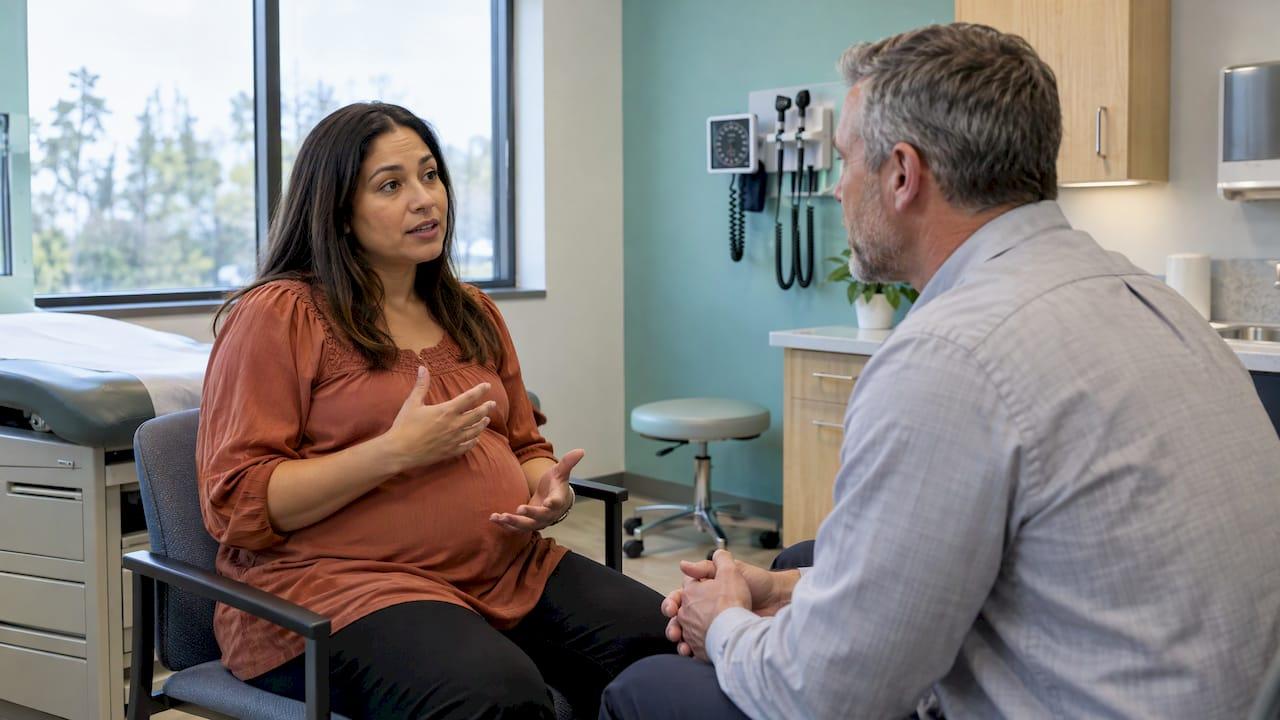
If you are pregnant and using alcohol or drugs, do not stop on your own, and do not wait. Withdrawal during pregnancy is safe only with medical supervision, and for opioids, medication treatment is usually recommended over withdrawal alone. The first step is a call to a prenatal provider and an addiction medicine team who will work together. At Connected Recovery in Van Nuys, Los Angeles, our medical detox program offers 24/7 medical supervision in a 12-bed setting, and our admissions team can talk through your situation confidentially.
TL;DR
- Quitting alone, "cold turkey" or with a detox drink or cleanse is not a safe plan in pregnancy. Withdrawal needs a clinician, and for alcohol and sedatives it can be life-threatening.
- For opioids, the CDC says quickly stopping is not recommended during pregnancy. Methadone or buprenorphine is the first-line approach, with prenatal care alongside.
- For alcohol, there is no known safe amount in pregnancy, and moderate to severe withdrawal generally calls for inpatient care.
- Your care team should include both an obstetric provider and an addiction specialist who talk to each other.
- Seeking help is the right move. You should never be pressured, shamed or coerced into any treatment.
Table of Contents
- Why this question deserves a careful answer
- What to do first
- Opioids: medication usually comes before withdrawal
- Alcohol and sedatives: the most dangerous to stop alone
- What medically supervised withdrawal looks like
- Detox drinks, cleanses and "natural" detox
- Risks to weigh, in plain terms
- When mental health is part of the picture
- Choosing a care setting
- Our perspective
- Getting started with Connected Recovery
- FAQ
- Sources
Why this question deserves a careful answer
Most people who search this are scared on two fronts. They worry about what continued use does to the baby, and they worry about what stopping might do. Both worries are valid, and both point to the same answer: get medical help before you change anything.
The National Harm Reduction Coalition says that if you want to detox during pregnancy, you should do it only with supervision from a healthcare provider, because detoxing can be stressful and dangerous for both you and the fetus. Its pregnancy toolkit also says no one should be pressured or coerced into detox. That matters. A good care team starts from support, not blame.
The right plan depends on what you are using, how much, for how long, how far along you are, and whether you also live with anxiety, depression or trauma. That is why a one-size-fits-all "pregnancy detox" does not exist.
What to do first
The CDC's guidance is simple: the first step is to work with a healthcare provider, who should coordinate care between prenatal and addiction specialists. In practice:
- Tell a clinician what you are using. That can be your OB-GYN, midwife, primary care provider or an addiction medicine team. Say the substances, the amounts and when you last used.
- Do not stop suddenly before that conversation, especially if you use alcohol, benzodiazepines or other sedatives, or opioids daily.
- Ask for a coordinated plan. ASAM's clinical recommendations call for co-management by an obstetric provider and an addiction medicine provider, with consent for information exchange that meets 42 CFR Part 2, the federal rule that protects substance use treatment records.
- Get a medical assessment of withdrawal risk. This decides whether care happens in a hospital or a residential medical detox setting, and which medications are used.
A recent peer-reviewed review describes a model called SBIRT (Screening, Brief Intervention, and Referral to Treatment) as the preferred way to identify high-risk substance use in pregnancy. It stresses engaging patients without stigma and arranging a warm handoff to an addiction specialist, with continued communication between providers. In plain terms: you should not have to explain yourself over and over, and the people treating you should be talking to each other.
If you need to talk to someone right now, SAMHSA's National Helpline is a free, confidential, 24/7 treatment referral service in English and Spanish. If you have seizures, severe confusion, heavy bleeding, or think you or the baby are in danger, call 911.
Opioids: medication usually comes before withdrawal
This is the part that surprises people. You might expect that getting off opioids completely is the safest goal. U.S. guidance says otherwise.
The CDC's page on opioid use disorder treatment during pregnancy (updated May 2026) states that quickly stopping opioids is not recommended because it can cause preterm labor, fetal distress and miscarriage. Current recommendations favor medication for opioid use disorder (MOUD) over supervised withdrawal, with methadone and buprenorphine as the first-line options.
Why medication works better:
- Relapse. ASAM notes that relapse rates after medically supervised withdrawal range from 59% to more than 90%, which is why opioid agonist medication is preferable to withdrawal alone.
- Steadier levels. The Washington State Department of Health explains that MOUD smooths out the highs and lows of short-acting opioid use, reducing intoxication and withdrawal for both parent and fetus. It also lowers injection-related infection risk, reduces exposure to illicit drugs and contaminants, and improves adherence to prenatal care.
- Newer evidence. StatPearls reports that buprenorphine is now the preferred first-line medication in pregnancy. It cites a 2025 study of 14,463 mother-infant pairs in which buprenorphine was linked to lower rates of severe maternal illness, preterm birth and NICU admission than no medication. Relapse rates are also substantially higher among those who choose detoxification instead.
If you are already stable on methadone, the New York State guideline advises against switching you to buprenorphine because of the risk of precipitated withdrawal, a sudden and severe withdrawal triggered by starting buprenorphine too soon. It also recommends continuing either medication through the postpartum period. Starting buprenorphine safely takes planning; our guide to the Suboxone induction process walks through what the first days involve. Many people also wonder how the medication appears on screenings, and this explainer on buprenorphine and drug tests covers that question.
Naltrexone is handled differently. The CDC says that if you were stable on it before pregnancy, continuing should be a discussion that weighs limited safety data against the risk of relapse. The New York guideline says clinicians should not start extended-release naltrexone in pregnant patients actively using opioids, because it requires withdrawal and raises overdose risk.
What if you want to withdraw anyway?
Some people do not want to take methadone or buprenorphine. ASAM says that in that case, medically supervised withdrawal can be considered, but only under a physician experienced in perinatal addiction treatment, with informed consent. It often requires prolonged inpatient care and intensive outpatient behavioral health follow-up.
The same ASAM document notes that early case reports raised fears of fetal death from opioid withdrawal, but more recent studies find no clear evidence linking medically supervised withdrawal to fetal death or preterm delivery. Long-term follow-up data are lacking. The takeaway is not that withdrawal is risk-free. It is that the setting, the supervision and the follow-up plan decide how safe it is.
Alcohol and sedatives: the most dangerous to stop alone
The CDC states there is no known safe amount or safe time to drink alcohol during pregnancy, and that fetal alcohol spectrum disorders are preventable if the baby is not exposed to alcohol before birth. The CDC adds that if you cannot stop drinking, you should get help through your provider, local Alcoholics Anonymous, or a local alcohol treatment center.
Heavy drinkers should not simply quit. The Harm Reduction Coalition warns that alcohol withdrawal can bring serious complications such as seizures, that people who are alcohol-dependent should not quit "cold turkey," and that in rare cases alcohol detox can lead to death. StatPearls describes alcohol withdrawal as dangerous and potentially life-threatening, with seizures and delirium tremens, and says patients in withdrawal should receive inpatient detoxification.
The New York guideline gives a concrete threshold. It recommends inpatient alcohol withdrawal management for pregnant people with or at risk of moderate, severe or complicated withdrawal (a CIWA-Ar score of 10 or higher, or a PAWSS score of 4 or higher), with OB-GYN consultation. These are standard clinical scoring tools that a nurse or physician uses. The guideline also notes that pregnancy is a relative contraindication to ambulatory (outpatient) alcohol-withdrawal management, meaning it is generally avoided.
Medication choices are made by the treating physician. Published reviews describe options such as a benzodiazepine taper (diazepam or lorazepam), clonazepam in the first and second trimesters, lorazepam in the third trimester for moderate to severe withdrawal, and gabapentin for mild withdrawal. The New York guideline adds that clinicians should weigh benefits and risks before prescribing a benzodiazepine in pregnancy. This is exactly why a supervised setting matters: dosing, monitoring and trimester-specific choices are not something to improvise.
To understand how fast alcohol withdrawal can escalate, read our alcohol withdrawal timeline, which lists hourly red flags. Benzodiazepines carry their own risks when stopped abruptly, so our benzo detox timeline explains why those are tapered, not dropped.
SAMHSA's clinical guidance adds a point for people using more than one substance. Immediately stopping everything at once adds risk, because the fetus may go through withdrawal unmonitored, and withdrawal from one or several substances may require inpatient care.

What medically supervised withdrawal looks like
It helps to know what to expect, so the process feels less frightening.
- Assessment. Nurses track symptoms with standard scales. For opioids, hospitals use the Clinical Opioid Withdrawal Scale (COWS). Opioid withdrawal symptoms such as nausea and restlessness can mimic common pregnancy discomforts, so trained staff need to tell them apart.
- Symptom relief. In the Washington State hospital policy, mild opioid withdrawal (COWS under 6) is managed with counseling, supportive care and, where appropriate, clonidine, a non-opioid medicine, rather than raising the opioid dose.
- Medication. Methadone or buprenorphine for opioids; carefully chosen sedatives or other medicines for alcohol and benzodiazepine withdrawal. Our overview of comfort medications for withdrawal explains the general categories.
- Prenatal coordination. Your obstetric provider stays involved. Fetal monitoring and prenatal visits do not pause for treatment.
- Planning ahead. Care does not end when withdrawal ends. Medication, therapy and a postpartum plan keep going.
Detox drinks, cleanses and "natural" detox
A common search is whether a detox drink, gut cleanse or natural detox can clear drugs or alcohol while pregnant. The NIH's National Center for Complementary and Integrative Health says cleansing programs can involve fasting, juice-only diets, supplements, herbs, colon cleansing or saunas. It reports that the FDA and FTC have acted against companies selling detox products for hidden ingredients and false disease-treatment claims. It also says there is limited clinical evidence for colonic irrigation, with side effects that can be serious.
None of these address dependence. Substance use disorder is a medical condition, and withdrawal is managed with clinical monitoring and, where indicated, medication. Skip the products and spend that energy on one phone call to a clinician.
Risks to weigh, in plain terms
Stopping too fast. For opioids, the CDC lists preterm labor, fetal distress and miscarriage. For alcohol and sedatives, seizures are a danger to you and, through you, to the baby.
Continuing without treatment. The North Carolina health department's fact sheet, citing ACOG and ASAM, says untreated heroin dependence in pregnancy may raise the risk of fetal growth restriction, placental abruption, preterm labor and fetal death. Untreated alcohol use risks FASDs.
Newborn withdrawal. Babies exposed to opioids can develop neonatal abstinence syndrome (NAS), withdrawal symptoms after birth. The CDC describes NAS as an expected, treatable condition that can follow exposure to prescribed medication for opioid use disorder, and says concern about NAS alone should not deter providers from prescribing it. Hospitals monitor and treat newborns for it. Knowing this ahead lets you plan the birth with your care team.
Relapse after stopping medication. The Harm Reduction Coalition notes that stopping opioid medication even briefly lowers tolerance and makes the next use more likely to cause overdose. Treatment is protective, not a failure.
When mental health is part of the picture
Pregnancy, hormonal change and stress can intensify anxiety, depression or trauma symptoms, and many people use substances to cope with them. When mental health and substance use are treated separately, each can undercut the other. Our dual diagnosis treatment addresses substance use and co-occurring mental health disorders together, in one integrated plan.
Choosing a care setting
Use these questions to compare options, whatever provider you consider:
- Is there 24/7 medical supervision during withdrawal?
- Does the team offer medication treatment, and will it coordinate with your OB provider?
- Can they treat anxiety, depression or trauma alongside the substance use?
- Is the setting small and calm enough to feel safe and private?
- Is there a plan for after discharge, including aftercare and postpartum support?
- How are your records protected, and how will they be shared with your prenatal team?
Setting matters most for alcohol and sedatives, where inpatient care is the standard of safety, and for anyone with a complicated medical or mental health history.
Our perspective
We hear the same fear from many people: "If I tell someone, I will be judged, and if I stop on my own, I might hurt my baby." Both halves of that fear can be answered with the same step, which is to get a medical team involved early.
What we believe matters most is attention. We are an intentionally small, 12-bed facility, because personal care is hard to deliver at scale. Withdrawal changes hour by hour, and a person in detox should be watched, not processed. Our 24/7 medical supervision and individualized treatment plans are built around that idea.
We also treat substance use and co-occurring mental health conditions together. Anxiety, depression and trauma rarely wait their turn, and recovery plans that ignore them tend to fall apart. Medication-assisted treatment, therapy, case management and aftercare planning all belong in one connected plan, from the first day of detox through long-term recovery.
If you are pregnant and worried, call. You do not need to have everything figured out, and you do not need to have stopped using first. The conversation is confidential.
Jim
Getting started with Connected Recovery
Connected Recovery is a boutique, accredited 12-bed facility in Van Nuys, Los Angeles, serving adults. We provide medical detox with 24/7 medical supervision, medication-assisted treatment, residential treatment, and aftercare and discharge planning, so one team can carry you from the first day to the plan for life afterward. Families calling on behalf of someone urgent are welcome too. Admissions are discreet and confidential.
To start, contact our team through our website and tell us what you are using and how far along you are. Together with your obstetric provider, we can talk through what level of care fits your situation.
FAQ
Is it safe to detox while pregnant?
It is safe only with medical supervision. Quitting alone can cause serious complications, including seizures with alcohol and preterm labor or miscarriage with rapid opioid withdrawal. Your plan should be set by a clinician who knows your substance, your trimester and your health history.
Can I use a detox drink or cleanse while pregnant?
There is no evidence that cleanses or detox drinks treat dependence, and the NIH notes that detox products have drawn FDA and FTC action for hidden ingredients and false claims. Real withdrawal management is clinical, so call a provider instead.
Should I stop opioids completely during pregnancy?
Not on your own. The CDC does not recommend quickly stopping opioids in pregnancy. Methadone or buprenorphine, prescribed and monitored by a clinician, is the first-line recommendation, and it is usually preferred over withdrawal because relapse rates after withdrawal are high.
What if I am drinking alcohol every day and pregnant?
Do not quit abruptly. Alcohol withdrawal can be life-threatening, and guidelines recommend inpatient management for moderate or severe withdrawal. Contact your provider or a medical detox program right away, and call 911 for seizures or confusion.
Will treatment affect my baby after birth?
Some babies exposed to opioids show withdrawal symptoms called neonatal abstinence syndrome. It is treatable, and the CDC says concern about it alone should not keep providers from prescribing medication that protects you and the pregnancy. Planning the birth with your team helps.
Sources
- National Harm Reduction Coalition: Pregnancy and Substance Use toolkit
- CDC: Treatment of Opioid Use Disorder Before, During, and After Pregnancy
- CDC: Substance Use During Pregnancy
- ASAM: Opioid Use Disorder in Pregnancy
- Washington State Department of Health: Management of Opioid Use Disorder in Hospitalized Pregnant Patients
- StatPearls: Substance Use in Pregnancy
- New York State: Substance Use Disorder Treatment in Pregnant Adults
- Habersham et al.: Substance use and use disorders during pregnancy
- NCCIH: Detoxes and Cleanses
- Buprenorphine and drug tests