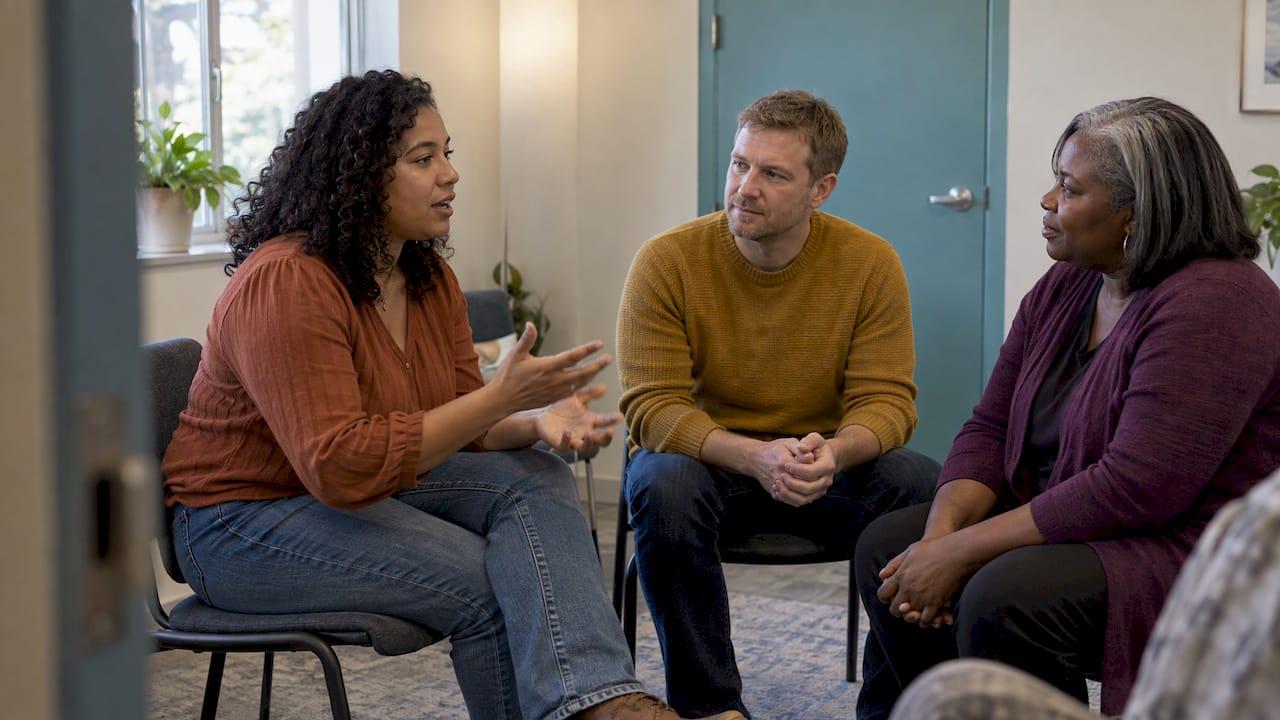
A rehab alumni program is the organized contact a treatment center keeps with you after you finish a level of care: peer connection, check-ins, groups and events that extend recovery beyond the building. The research is clear on one point: support that lasts months, not days, is what matters. The strongest version of an alumni program begins before discharge, as part of a written aftercare plan. At Connected Recovery, our aftercare planning starts while you are still in treatment, in a 12-bed setting where your team knows you personally.
TL;DR
- An alumni program keeps you connected to peers and a care team after discharge. It is a layer of support, not a replacement for a clinical aftercare plan.
- Research on continuing care shows small but significant gains, and longer, more active support tends to work better.
- Look for support that runs at least 3 to 6 months, with up to 12 months the better target, and follow-up at set intervals.
- Ask how you stay connected if you live far away, relapse, or have a co-occurring mental health condition.
- Build the plan before discharge: who you call, what you attend, where you live, and what happens in the first weeks.
Table of Contents
- What a rehab alumni program is
- What alumni programs typically include
- What the research says about staying connected
- How long support should last
- Recovery is more than abstinence
- Support beyond the social side
- If you live far away or have been away a while
- How to choose an alumni program or aftercare plan
- Where we fit
- Start your plan with Connected Recovery
- Our perspective
- FAQ
- Sources
What a rehab alumni program is
Treatment ends, but recovery does not. An alumni program fills the gap between the structure of a residential stay and ordinary life. It usually combines a community of people who finished the same program with regular contact from the provider.
Much of what happens in these programs is peer support. Federal guidance describes it as help given by a person who uses lived experience of recovery from mental illness or addiction, plus formal training, and notes that it helps extend treatment beyond the clinical setting into everyday life. Virginia's Medicaid manual puts it in similar terms: collaborative, nonclinical, peer-to-peer services that support a person's own efforts toward sustained recovery.
Two words in that definition matter. "Nonclinical" means alumni contact is not therapy or medical care. "Peer" means the value comes from people who understand the road because they have walked it. Both are useful, and neither replaces a clinical plan for medication, therapy and mental health care.

Who can take part
Generally, anyone who has completed a level of care with the provider: detox, residential treatment or a step-down program. Eligibility, cost and format differ from one provider to the next, so ask before you leave what is open to you, for how long, and in what form.
What alumni programs typically include
The common elements are simple. What changes from place to place is how consistent they are.
- Peer groups. Regular meetings with people at different stages of recovery, in person or online.
- Check-ins. Calls or messages from staff or peer mentors at planned intervals after discharge.
- Events and milestones. Gatherings, sober social activities and recognition of time in recovery.
- Giving back. Alumni who mentor people newer to recovery. Peer support roles can also extend to training, resource development and public education.
- A route back to care. A clear way to ask for help quickly if cravings or a slip put recovery at risk.
That last item is the one people overlook. A social calendar is pleasant. A fast path back to your care team is protective.
What the research says about staying connected
Alumni programs are one form of what clinicians call continuing care: ongoing support after the intensive phase of treatment. The evidence on continuing care is worth knowing, because it tells you what to look for.
Gains are real, and modest
A meta-analysis of 33 controlled trials found continuing care had a small but significant positive effect, both at the end of the intervention and at follow-up. Earlier research reviewing decades of studies found interventions were more likely to work when they had a longer planned duration and made more active efforts to deliver treatment.
On peer recovery support specifically, a 2024 review concluded that these services can improve treatment engagement and retention, with preliminary but inconclusive evidence of better substance use outcomes. In practice: alumni connection helps you stay in the recovery process. It works best alongside a clinical plan, not alone.
Reaching out beats waiting
Trials of assertive continuing care, where the provider actively contacts people after residential treatment instead of waiting for them to call, found significantly higher abstinence rates than usual continuing care over 12 months. That study involved adolescents, but the principle carries over: a program that contacts you is more useful than one you have to remember to contact.
A separate randomized trial of volunteer recovery support after residential discharge found it increased engagement in recovery activities and in pro-recovery peer networks, which in turn predicted less substance use at 9 and 12 months.
What real alumni programs look like in numbers
Two published evaluations give a sense of how alumni engagement and recovery fit together. In an evaluation of a first-year continuing care program, 54% of 198 participants had some use during follow-up, yet 71.4% of those who relapsed were retained or re-engaged in the program. A relapse did not end the connection. It was a reason to use it.
A 2025 study of a residential program's completers found that of 155 people, 59% were actively engaged alumni and 76% had not returned to use. These are single-program results, not promises, but they show why providers invest in staying in touch.
Participation is the weak point
Researchers have long noted that participation in continuing care is relatively low, especially under real-life conditions. That is a reason to design your plan around your actual life: your commute, your work, your family, your phone. The best alumni program is the one you will attend in month four.
How long support should last
Clinical reviews give a usable benchmark. Continuing care should extend for at least 3 to 6 months, with up to 12 months appearing essential for a reasonable expectation of robust recovery. The same review recommends that programs educate patients about continuing care options, including medication, before treatment ends, and include follow-up at set intervals such as 30 days, 6 months and 12 months, for a minimum of 12 months.

That gives you a concrete way to judge any offer. If an alumni program is a monthly newsletter and an annual picnic, it covers little of the first year. If it combines structured check-ins, groups and a clinical aftercare plan across those months, it matches what the research describes.
Recovery is more than abstinence
A good plan covers more than meetings. SAMHSA's working definition of recovery describes a process of change in which people improve their health and wellness and live self-directed lives, supported by four dimensions: health, home, purpose and community. Academic work building on that framework describes recovery capital as the sum of personal and social resources, including social support, financial stability and a stable, safe home, that make recovery easier to sustain.
Use those four dimensions as a checklist for your own plan:
| Dimension | Question to answer before discharge |
|---|---|
| Health | Who prescribes and monitors medication, and who handles therapy for any mental health condition? |
| Home | Where will you live, and is it free of substances and pressure to use? |
| Purpose | What will fill your days: work, school, volunteering, a routine? |
| Community | Which peer group or alumni contact do you join in the first week? |
An alumni program mainly answers the last row. The other three come from the aftercare and discharge plan, which is why the two belong together.
Support beyond the social side
People with alcohol problems often find that talk therapy and regular community support strengthen each other. This overview of ongoing support for alcohol use disorder explains how continued social support and counseling help people maintain recovery and respond to relapse risk. If you have co-occurring anxiety, depression or trauma, build that therapy into the plan from the start, so the alumni community supports treatment you are already receiving.
If you live far away or have been away a while
Distance does not have to end contact. A randomized study found that for most graduates of intensive outpatient programs, brief weekly telephone contacts plus a support group in the first month produced outcomes as good as more intensive face-to-face continuing care. The same study found people with dual alcohol and cocaine dependence who made little progress early on may benefit from more frequent group counseling.
Three practical points follow:
- Ask for a remote option before you leave. Phone and video check-ins are a recognized way to stay connected. We cover how that works in our guide to telehealth aftercare.
- Reconnecting is normal. Many people drift from support during a busy or hard stretch. Contact the program, say where you are, and ask what the next step is. A gap is a reason to reach out, not a reason to stay away.
- Tell the team about a slip early. As the first evaluation above showed, many people who used again were still retained or re-engaged. If you have returned to regular use, withdrawal from alcohol or benzodiazepines can be dangerous, so a medical assessment comes before anything else.
How to choose an alumni program or aftercare plan
When you compare options, ask these questions:
- How long does it last? Look for a year of structured contact, not a few weeks.
- Does the provider reach out, or wait for you? Active contact is linked to better results.
- Is there a clinical plan behind it? Medication management, therapy and relapse prevention should be written down, not assumed.
- What happens if you slip? There should be a named person and a fast route to care.
- Does it fit your life? Evenings, remote access and family involvement all raise the odds you will use it.
- Does it address co-occurring conditions? If you live with anxiety, depression or trauma, support for both is part of recovery.
- Is your privacy respected? Ask how your information and your alumni status are handled.
Families can use the same list. The first days at home are the most fragile, which is why we suggest putting the first 72 hours in writing: who is home, what the rules are, and who to call.
Where we fit
A 12-bed program is small by design. Your clinicians know your history, your triggers and your goals, and that is the knowledge a good aftercare plan is built on. Our offer covers the full path: medical detox, residential treatment, dual diagnosis care for co-occurring mental health conditions, and medication-assisted treatment, followed by relapse prevention, case management and discharge planning. Our approach to the stages of care is laid out in what a continuum of care means.
Start your plan with Connected Recovery
If you or someone you love needs detox or residential treatment in Los Angeles, we offer both in a boutique facility in Van Nuys, with 24/7 medical supervision and treatment plans tailored to the person. Aftercare planning and discharge planning are part of the program from the beginning, so your plan for life after treatment is written before you leave. Admissions are confidential. You can see everything we offer on our programs page or contact us through our website.
Our perspective
We think of an alumni program as the last chapter of a plan that began on admission day, not as a separate benefit you sign up for at the door.
Because we keep the facility to 12 beds, the people who write your aftercare plan are the same people who have sat with you through detox and treatment. They know whether your evenings are the hard part, whether anxiety rises on Sundays, or whether medication needs close follow-up. That detail is what turns a general list of meetings into a plan you will actually keep.
We also believe recovery and mental health care belong together. If depression or trauma is part of your story, the plan after discharge should name who treats it, how often, and how it connects to your recovery community.
The research points the same way: longer, more active support helps. So we ask every person and family the same questions before discharge. Where will you live? Who do you call? What happens in week one, month three and month twelve?
Jim
FAQ
Do I have to join a rehab alumni program?
No, but staying connected after treatment is one of the most useful things you can do. Reviews of continuing care find a small but significant benefit, and longer, more active support tends to work better. Ask your care team which options fit your schedule and your level of need.
Is an alumni program the same as aftercare?
Not quite. Aftercare is the clinical plan: therapy, medication, housing and follow-up appointments. An alumni program is the community and contact that surrounds it. The strongest results come from having both, written down before discharge.
How long should I stay involved?
Clinical reviews describe continuing care of at least 3 to 6 months, with up to 12 months appearing essential for robust recovery. Many people stay connected longer, especially as mentors to those newer to recovery.
What if I relapse after treatment?
A slip is a medical and emotional signal, not the end of recovery. Contact your care team promptly and describe what happened. If you have used heavily and then stopped, withdrawal from alcohol or benzodiazepines can be dangerous, so get a medical assessment first. If you are in immediate danger, call 911.
Can family members be involved?
Yes. Families often carry much of the early burden after discharge, and a written plan for the first days at home helps everyone know what to expect. See our guide to family support after rehab.
Sources
- Peer Recovery Support Services Supplement, Virginia Medicaid
- Peer Support Services Practice Guideline, April 2026
- Peer Recovery Support Services and Recovery Coaching, 2024 review
- Recovery Management Guidance 2025-2026
- Evaluation of a comprehensive continuing care program (McKay et al.)
- Randomized trial of volunteer recovery support (Godley et al.)
- Randomized trial of Assertive Continuing Care (Godley et al.)
- Engagement and retention in a residential program (Bunn et al., 2025)
- Treating Alcoholism as a Chronic Disease (McKay and Hiller-Sturmhöfel)
- Recovery capital and context (Jason et al., 2020)
- Meta-analytic review of continuing care (Blodgett et al.)
- Continuing Care Research (McKay)
- Telephone contacts and support groups after IOP (McKay, 2005)
- The Continuing Care Model of Substance Use Treatment (Proctor and Herschman)