
Recovery from addiction is a lifelong process because addiction permanently alters brain chemistry, creating ongoing vulnerability to relapse long after substance use stops. The National Institute on Drug Abuse classifies addiction as a chronic brain disorder, placing it alongside conditions like hypertension and diabetes that require continuous management. Relapse rates reach 40–60% within the first month after discharge. That figure alone tells you this is not a condition you treat once and walk away from. Understanding why recovery never ends is the first step toward building a life that actually holds.
Why recovery is a lifelong process: the brain science behind it
Addiction does not just change habits. It rewires the brain itself. Addiction restructures reward and stress systems, making it harder to resist cravings and triggers even after years without substance use. The brain learns to associate certain people, places, emotions, and routines with the substance. Those associations do not simply vanish when someone stops using.

This is why the clinical term "substance use disorder" matters. It signals that addiction is a medical condition, not a moral failure. Like diabetes or asthma, it requires ongoing management rather than a single cure. The brain can heal and adapt over time, but the underlying vulnerability remains.
The comparison to other chronic diseases is not just rhetorical. It is backed by data:
| Condition | Relapse or recurrence rate |
|---|---|
| Substance use disorder | 40–60% |
| Hypertension | 50–70% |
| Type 2 diabetes | 30–50% |
| Asthma | 50–70% |
These numbers show that addiction performs no worse than other well-accepted chronic conditions. The difference is that society rarely tells a diabetic they "failed" when their blood sugar spikes. Recovery deserves the same clinical framing.
Pro Tip: When cravings feel overwhelming, name the trigger out loud or write it down. Labeling a craving activates the prefrontal cortex and reduces its intensity, a technique supported by cognitive behavioral therapy.
Why does aftercare matter so much for preventing relapse?
Structured treatment gives you the foundation. Aftercare is what keeps it standing. Ongoing therapy reduces relapse risk by 30–50% in the first year after treatment. That reduction is not automatic. It comes from consistent engagement with support systems that hold you accountable and give you tools to handle stress without substances.
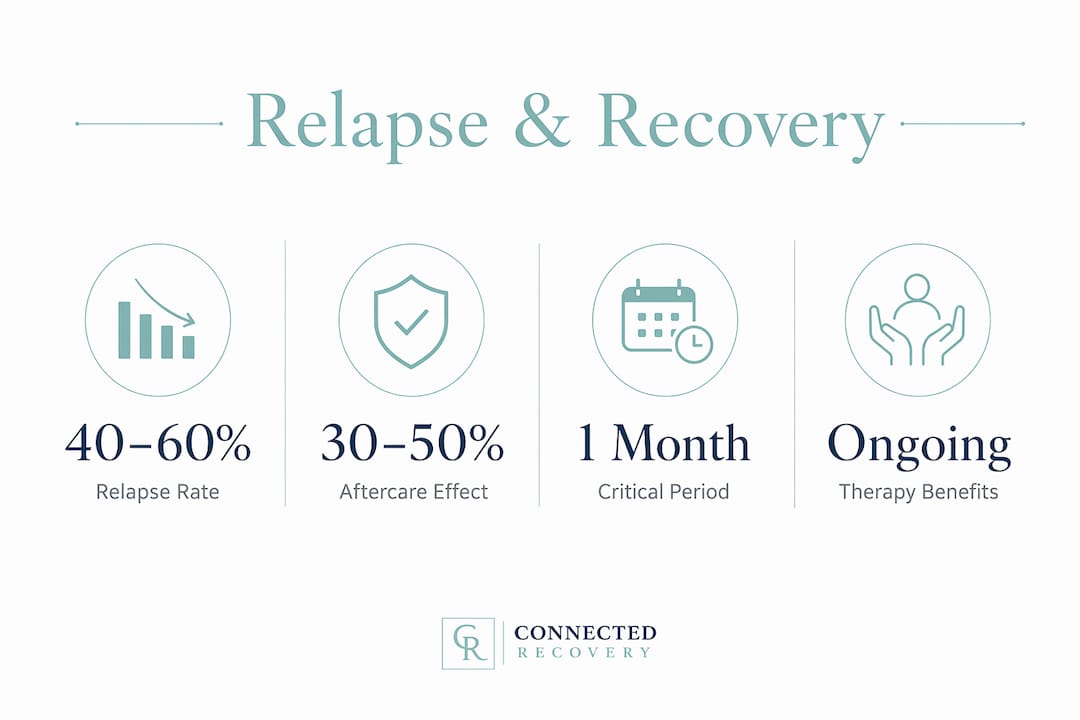
Aftercare is not optional. Clinical experts describe it as the bridge that transitions people from structured treatment to independent living while maintaining the skills they built. Without it, the gap between leaving treatment and building a stable life becomes a high-risk window.
Effective aftercare typically includes:
- Individual therapy: Cognitive behavioral therapy (CBT) and dialectical behavior therapy (DBT) address thought patterns that drive substance use.
- Peer support groups: Programs like 12-step groups or SMART Recovery provide community, accountability, and shared experience.
- Family education: Loved ones learn how to support recovery without enabling harmful patterns.
- Relapse prevention planning: A written plan identifying triggers, warning signs, and specific responses.
- Case management: Coordination of housing, employment, and healthcare to reduce life stressors that fuel relapse.
Aftercare planning at Connected Recovery is built into treatment from day one, not added as an afterthought at discharge.
"Aftercare is a fundamental component of recovery, not an optional add-on. It transitions patients from structured treatment to independent recovery while maintaining accountability and relapse prevention skills."
Pro Tip: Schedule your first aftercare appointment before you leave treatment. The days immediately after discharge carry the highest relapse risk, and having a confirmed appointment creates a concrete anchor for that period.
How does recovery change over time?
Recovery is not a flat line. The challenges you face in month three look nothing like the challenges you face in year five. Relapse risk is highest in the first one to two years and declines after three to five years, but it never reaches zero. That decline can create a false sense of security that becomes its own risk.
Clinicians call this "diminished recovery vigilance." After years of sobriety, life feels normal again. Meetings get skipped. Therapy appointments get canceled. The support network quietly shrinks. Disengagement from support systems after years of sobriety is one of the most common precursors to relapse, even for people with a decade of clean time.
Recovery capital is the concept that explains what actually sustains long-term sobriety. It refers to the accumulation of resources that protect against relapse:
- Stable housing: A safe, substance-free living environment reduces daily stress and removes environmental triggers.
- Meaningful employment: Work provides structure, purpose, and financial stability, all of which lower relapse risk.
- Healthy relationships: Supportive connections with family, friends, and peers in recovery create accountability and belonging.
- Mental health management: Ongoing treatment for co-occurring conditions like PTSD, anxiety, and depression is not separate from addiction recovery. It is part of it.
Recovery capital builds gradually. You cannot rush it, but you can be intentional about it. Every stable month adds to the foundation.
Pro Tip: Do a quarterly check-in on your recovery capital. Ask yourself: Is my housing stable? Am I employed or working toward it? Have I connected with my support network this week? Treating recovery like a living plan keeps you from drifting.
What are the most effective long-term recovery strategies?
Sustaining recovery over years requires more than willpower. It requires a set of practiced skills, reliable supports, and a life worth protecting. The good news is that these are learnable and buildable.
-
Stay in therapy beyond the acute phase. Many people stop therapy once they feel stable. That is exactly when the deeper work begins. Therapy addresses the underlying patterns, trauma, and beliefs that originally drove substance use.
-
Maintain peer support connections. Peer support reduces isolation, which is one of the most reliable predictors of relapse. Whether through formal groups or informal friendships with others in recovery, connection matters.
-
Build and follow a relapse prevention plan. A written plan is not pessimistic. It is practical. Relapse prevention planning identifies your personal warning signs, your triggers, and the specific steps you will take if you feel yourself slipping.
-
Recognize early warning signs. Many relapses begin with identifiable warning signs days or weeks before substance use, such as increased stress, social withdrawal, or skipping support meetings. Catching these early allows for intervention before a full relapse occurs.
-
Build healthy daily routines. Sleep, exercise, nutrition, and structured time are not luxuries in recovery. They are clinical tools. Disrupted routines destabilize mood and lower the threshold for cravings.
-
Treat mental health as part of recovery. Anxiety, depression, and trauma do not disappear with sobriety. Addressing them through dual diagnosis treatment reduces the emotional pressure that drives people back to substances.
Pro Tip: Keep a simple daily log of your mood, sleep, and stress level. Patterns become visible over weeks, and you will spot warning signs before they escalate into crisis.
Key Takeaways
Recovery from addiction is a lifelong process because the brain changes caused by substance use disorder create permanent vulnerability that requires continuous management, support, and personal growth.
| Point | Details |
|---|---|
| Addiction is a chronic condition | Relapse rates of 40–60% in the first month confirm that addiction requires ongoing management, not a one-time fix. |
| Brain changes persist long-term | Rewired reward and stress systems create lasting trigger sensitivity that does not disappear with sobriety. |
| Aftercare cuts relapse risk significantly | Ongoing therapy reduces relapse risk by 30–50% in the first year, making structured aftercare a clinical necessity. |
| Recovery capital sustains long-term sobriety | Stable housing, employment, and healthy relationships build the foundation that protects against relapse over years. |
| Vigilance must be maintained indefinitely | Diminished recovery vigilance after years of sobriety is a documented risk factor for relapse, even with a decade of clean time. |
What I have learned about the long-term nature of recovery
Recovery is not a destination you arrive at and then relax. That framing sets people up for the hardest kind of relapse: the one that comes after years of doing everything right.
What I have seen, both clinically and in conversations with people who have built genuinely stable lives in recovery, is that the ones who thrive are not the ones who stopped thinking about it. They are the ones who integrated recovery into their identity. They did not white-knuckle their way through every day. They built a life where sobriety made sense, where it was supported by relationships, purpose, and honest self-awareness.
The hardest thing to accept is that recovery is non-linear. A lapse after three years does not erase three years. It is a clinical signal, not a verdict. The people who recover from a lapse quickly are the ones who already have a plan and a team. The people who spiral are often the ones who had quietly stepped away from both.
Ongoing connection to community is not a sign of weakness. It is the most evidence-based thing a person in recovery can do. The research is clear, and so is the lived experience of thousands of people who have walked this road. Lifelong recovery is not a burden. It is a practice, and like any practice, it gets more natural over time.
— Jim
Connected Recovery's approach to lasting recovery support
Connected Recovery is a boutique residential treatment center in Van Nuys, CA, built specifically for people who need more than a bed and a detox protocol. With a 12-bed capacity, every person receives individualized attention from a clinical team that includes 24/7 medical supervision. The programs span medical detox through residential treatment and into structured aftercare planning, because the team at Connected Recovery understands that the work does not end at discharge. If you or someone you care about is ready to build a recovery that lasts, Connected Recovery offers the personalized, medically grounded support that makes the difference between short-term sobriety and a genuinely sustainable life.
FAQ
Why is recovery considered a lifelong process?
Addiction causes lasting changes in brain chemistry and behavior that create ongoing vulnerability to relapse. Because these changes do not fully reverse, recovery requires continuous management, much like other chronic conditions such as diabetes or hypertension.
What is the relapse rate after addiction treatment?
Relapse rates reach 40–60% within the first month after discharge from treatment. This rate is comparable to relapse rates for other recognized chronic diseases, reinforcing that addiction is a medical condition requiring long-term care.
Does relapse mean treatment failed?
A relapse is a clinical signal that the current recovery plan needs adjustment, not evidence that treatment failed. Recovery is non-linear, and a lapse responded to quickly with professional support rarely becomes a full return to active addiction.
How does aftercare reduce relapse risk?
Ongoing therapy and structured aftercare reduce relapse risk by 30–50% in the first year post-treatment. Aftercare provides accountability, skill reinforcement, and a support network during the highest-risk period of recovery.
What is recovery capital and why does it matter?
Recovery capital refers to the accumulation of resources that protect against relapse, including stable housing, employment, healthy relationships, and mental health support. Building recovery capital over time is one of the strongest predictors of sustained long-term sobriety.