
Do not stop tramadol abruptly. The two safe paths off it are a clinician-supervised taper for lower-risk cases or a medically supervised detox when seizure history, high doses, or psychiatric symptoms raise the stakes. Tramadol's dual action on opioid receptors and serotonin creates withdrawal risks, including seizures, that other opioids don't share, which is exactly why a plan built with a prescriber beats going it alone.
TL;DR:
- Tramadol withdrawal can trigger seizures and psychiatric symptoms due to its dual action on opioid receptors and serotonin, requiring careful medical management.
- Symptoms may include muscle aches, mood swings, hallucinations, and sensory disturbances, with peak intensity between 24 and 72 hours and lingering effects lasting weeks.
- Longer use, higher doses, and rapid discontinuation increase risks, making supervised tapering or detox essential especially for those with seizure or psychiatric histories.
- Preparation should include detailed medication, health history, and support plans, with gradual dose reductions and close monitoring to minimize complications.
- Home detox carries risks without support, so medical supervision is recommended, particularly for complex cases involving high doses, long-term use, or psychiatric concerns.
Table of Contents
- What Makes Tramadol Withdrawal Management Different From Other Opioids?
- What Symptoms Should You Expect During Withdrawal?
- How Long Does Tramadol Withdrawal Typically Last?
- Why Does Tramadol Require Extra Clinical Caution?
- What Are the Recommended Tramadol Withdrawal Treatment Options?
- What Should You Bring to the Conversation With Your Doctor?
- Is It Safe to Detox From Tramadol at Home?
- When Should You Go to the Emergency Room?
- How Do You Prevent Relapse After Withdrawal Ends?
- How Should You Prepare Before Starting a Tramadol Taper?
- How Do You Manage Insomnia, Anxiety, and Pain Without Opioids?
- Why Does Counseling Matter During Tramadol Withdrawal?
- How Do You Coordinate Care With Doctors and Family?
- The Perspective Nobody Tells You About Tapering Alone
- Get Supervised Support for Tramadol Withdrawal Management
- Sources
What Makes Tramadol Withdrawal Management Different From Other Opioids?
Tramadol works two ways at once. It binds mu-opioid receptors like classic opioids, but it also blocks the reuptake of serotonin and norepinephrine, functioning more like an antidepressant than a typical painkiller. That second mechanism is why tramadol withdrawal management can't just borrow the playbook used for oxycodone or heroin.
The monoamine piece explains withdrawal features doctors rarely see with pure opioids: "brain zaps," sudden mood swings, panic that seems to come from nowhere, and in documented cases, transient psychosis with hallucinations. Case reports have linked tramadol withdrawal to psychotic episodes, a symptom pattern that doesn't show up in standard opioid withdrawal literature.
There's a second, more dangerous issue: tramadol lowers the seizure threshold. That risk climbs with high doses, abrupt discontinuation, or interactions with other drugs that also affect serotonin, and it's the single biggest reason clinicians treat tramadol withdrawal as its own category.
What Symptoms Should You Expect During Withdrawal?
The physical symptoms overlap with typical opioid withdrawal: muscle aches, sweating, chills, runny nose, nausea, diarrhea, and restlessness. Most people also feel intense anxiety and insomnia within the first day or two.
Where tramadol diverges is the atypical layer riding on top of those symptoms. Because of its serotonergic activity, some people report:
- Brain zaps or electric shock sensations, especially with head movement
- Sudden crying spells or mood swings disconnected from circumstances
- Hallucinations or paranoid thinking in a subset of cases
- Numbness, tingling, or unusual sensory disturbances
One documented case involved a patient who developed psychosis during tramadol discontinuation, a reminder that psychiatric symptoms deserve the same urgency as physical ones. Seizures, severe confusion, or suicidal thoughts are not "just withdrawal." They're emergency signs that mean stop the taper and get medical help now.
How Long Does Tramadol Withdrawal Typically Last?
Timelines vary by dose, formulation, and how long someone has used tramadol, but a general pattern holds for most people coming off short-acting tramadol:
- Onset: symptoms usually begin 6 to 24 hours after the last dose.
- Peak intensity: symptoms typically peak between 24 and 72 hours in.
- Acute resolution: most physical symptoms ease within 4 to 10 days.
- Post-acute withdrawal (PAWS): lingering mood swings, low motivation, or sleep disruption can persist for weeks or, in some cases, months.
Extended-release formulations tend to produce a slower onset and a more drawn-out taper curve compared with immediate-release tramadol. Higher daily doses and longer duration of use generally mean a longer, sometimes bumpier, timeline. None of this is fixed. It's a planning range, not a promise.
Why Does Tramadol Require Extra Clinical Caution?
The dual mechanism cuts both ways during treatment planning. On one hand, the serotonergic component means abrupt cessation can trigger discontinuation symptoms that mimic serotonin syndrome in mild form, things like agitation, tremor, and sweating that look alarming even when they're not life threatening on their own.
On the other hand, the seizure risk is real and well documented, which is why tramadol and seizure interactions get specific attention in the clinical literature that other opioids don't. This combination steers management decisions in a specific direction: avoid abrupt opioid antagonists that could precipitate sudden withdrawal, be cautious layering other serotonergic medications on top of tapering tramadol, and lean toward supervised settings whenever seizure history, high dose, or psychiatric symptoms are in the picture. A plan that ignores either the seizure risk or the serotonergic piece is an incomplete plan.
What Are the Recommended Tramadol Withdrawal Treatment Options?
Two paths cover most situations, and the right one depends on dose, history, and how much support is available at home.
Individualized tapering is the standard first approach for people without major risk factors. The FDA label for tramadol specifically warns against abrupt discontinuation in physically dependent patients and supports gradual, individualized dose reductions with frequent reassessment.
Medically supervised detox makes sense when seizure history, high daily dose, long duration of use, or psychiatric symptoms are in play. Inpatient monitoring allows for:
- Seizure precautions and rapid response if one occurs
- IV fluids and nutritional support for severe nausea or dehydration
- Medications like clonidine or lofexidine to blunt adrenergic symptoms such as sweating and rapid heart rate
- Buprenorphine or methadone when opioid receptor support is clinically indicated, guidance the Substance Abuse and Mental Health Services Administration backs for opioid withdrawal generally
- Psychiatric stabilization if mood or thought disturbances emerge
Rapid or accelerated detox protocols exist but carry higher complication rates and fit a narrower set of candidates. They're not a shortcut for most people, and clinical trials studying tramadol formulations in withdrawal contexts underscore how much individual variation still shapes outcomes.
Pro Tip: If you're not sure which path fits, ask the prescriber directly: "Given my dose, how long I've used this, and my health history, am I a taper candidate or does this need supervised detox?" That one question filters most of the decision.
What Should You Bring to the Conversation With Your Doctor?
A useful tapering plan starts with information the clinician doesn't have unless you provide it. Walk in with specifics, not generalities.
- Exact dose and formulation. Immediate-release and extended-release tramadol taper differently.
- Duration of use. Weeks of use tapers faster than years of daily use.
- Other medications, especially SSRIs, SNRIs, MAOIs, or anything else with serotonergic activity.
- Seizure history, personal or family, and any prior withdrawal complications.
- Psychiatric history, including depression, anxiety, or prior psychotic episodes.
From there, a reasonable non-prescriptive structure looks like small percentage reductions, often in the 10% to 25% range, every two to four weeks, with a built-in rule to pause or step back up if withdrawal symptoms spike. Slower, multi-month tapers tend to have fewer dropouts than aggressive short tapers, particularly for people who've used tramadol for a long stretch.
Build a monitoring plan alongside the dose schedule: scheduled check-ins with the prescriber, a written emergency plan for what to do if symptoms escalate, and a standing connection to mental health support if mood symptoms are part of the picture.
Pro Tip: Keep a simple daily log, three lines: sleep, mood, physical symptoms. It takes 30 seconds and gives your clinician something concrete instead of "I've been feeling off" at the next appointment.
Is It Safe to Detox From Tramadol at Home?
Unsupervised, abrupt cessation carries real hazards: seizures, severe dehydration from vomiting and diarrhea, psychiatric crisis, and a meaningful relapse and overdose risk if someone returns to tramadol after a period of abstinence lowers their tolerance.
If professional care isn't immediately available, some harm-reduction steps reduce risk while you arrange it:
- Never combine tramadol tapering with alcohol, benzodiazepines, or other CNS depressants without medical guidance
- Avoid starting or adjusting SSRIs or other serotonergic medications on your own during this window
- Have a support person physically present, not just reachable by phone
- Track fluid intake and electrolytes; vomiting and diarrhea deplete both fast
- Seek medical review the moment symptoms feel severe rather than waiting them out
None of this replaces supervised care. It buys time safely while you get it.
When Should You Go to the Emergency Room?
Some signs mean stop planning and act. Call emergency services or go to the nearest emergency department for:
- A seizure of any duration
- Hallucinations paired with an inability to keep yourself safe
- Suicidal thoughts with any intent or plan
- Persistent vomiting causing visible dehydration
- Chest pain or severe autonomic instability (racing heart, extreme blood pressure swings)
Bring your medication list and dosing history if you can. If the crisis is psychiatric rather than physical, a crisis hotline can direct you to the right level of care, and your prescriber or a medical detox program should be your next call either way.
How Do You Prevent Relapse After Withdrawal Ends?
Getting through the acute phase is not the finish line. Post-acute withdrawal syndrome, the lingering mood instability, low motivation, disrupted sleep, and occasional cravings, can stretch for weeks or months after the physical symptoms fade. This is where a lot of tapering plans quietly fail: people assume day 10 means done, stop paying attention, and get blindsided when a low mood spike in week six sends them looking for relief.
A real aftercare plan treats PAWS as expected, not exceptional. That means:
- A written relapse-prevention plan made before symptoms fully resolve, not after a close call. It should name specific triggers, a support contact, and a same-day action if cravings intensify.
- Scheduled follow-up, not "call if you need to." A check-in at two weeks, one month, and three months post-taper catches drift before it becomes a crisis.
- Ongoing mental health support if mood symptoms were part of the withdrawal picture, since PAWS often overlaps with underlying anxiety or depression that tramadol was partly masking.
- Sleep and stress routines rebuilt deliberately, since disrupted sleep is one of the most common PAWS symptoms and one of the biggest relapse triggers when it's ignored.
The people who navigate this well tend to treat the first three months after tapering as their own distinct phase of care, not an afterthought tacked onto detox. If your original plan doesn't mention what happens after the taper ends, that's a gap worth raising with your provider now, not later.
How Should You Prepare Before Starting a Tramadol Taper?
Walking into a taper cold makes everything harder. A short preparation window, even a week or two, changes the experience meaningfully.

Physically, that means getting ahead of things a taper will disrupt. Hydration and stable nutrition make nausea and fatigue more manageable. If sleep is already poor before you start, addressing it beforehand (consistent bedtime, reduced screen time, caffeine cut earlier in the day) gives you a baseline to protect once withdrawal starts chipping away at it. Anyone with a seizure history or other neurological condition should flag it to their prescriber before the first dose reduction, not mid-taper.
Mentally, the preparation is about expectations and logistics. Know roughly what week one and week two will feel like so a bad day doesn't feel like a crisis. Clear your calendar where you can. Tell your workplace or family what you need, even in general terms, so you're not managing withdrawal symptoms and unexpected demands at the same time.
It also helps to line up support before you need it: a therapist, a trusted friend who knows the plan, or a follow-up appointment already on the calendar rather than something you'll "schedule if things get bad." People who prepare this way tend to stick with individualized tapering plans longer and report fewer emergency detours than people who start reducing doses without any groundwork laid first. Two weeks of preparation is a small investment against a process that can stretch for months.
How Do You Manage Insomnia, Anxiety, and Pain Without Opioids?
Three symptoms drive most people back to tramadol during withdrawal: insomnia, anxiety, and the return of underlying pain. None of them require an opioid to manage.
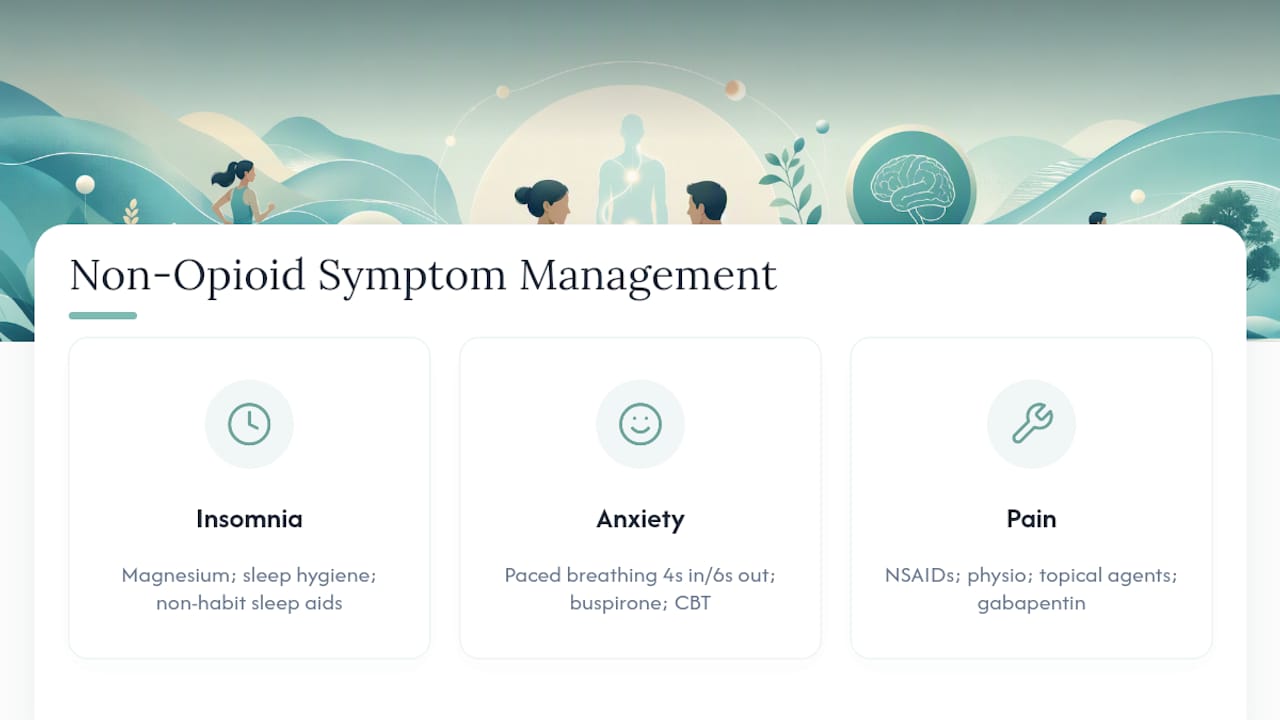
For insomnia, non-opioid approaches include magnesium supplementation, sleep hygiene basics (consistent wake time matters more than bedtime), and short-term use of non-habit-forming sleep aids under medical guidance. Avoid benzodiazepines paired with tramadol tapering unless a clinician specifically prescribes and monitors that combination.
For anxiety, breathing techniques sound almost too simple to matter, but paced breathing (four seconds in, six seconds out) measurably reduces the physical sensation of panic within minutes. Beyond that, non-opioid anti-anxiety approaches like buspirone, short-term use of certain antihistamines for sleep-linked anxiety, or cognitive behavioral techniques taught by a therapist all have a place. A structured tapering approach used for other serotonergic medications illustrates a similar principle: slower is generally more tolerable than fast, and anxiety spikes are often a signal to slow the pace rather than push through.
For pain, the return of underlying pain that tramadol was treating is common and needs its own plan, separate from withdrawal symptoms. Non-opioid options include NSAIDs where appropriate, physical therapy, topical treatments, and in some cases nerve-pain-specific medications like gabapentin under medical supervision. Heat, gentle movement, and massage help more than people expect for the muscle aches that come with withdrawal itself.
Why Does Counseling Matter During Tramadol Withdrawal?
Withdrawal is not purely physical, and treating it as if it were is one of the most common mistakes people make when tapering alone. The mood instability tramadol withdrawal produces, magnified by the drug's effect on serotonin, often needs more than willpower to get through.
Individual counseling gives you a place to process the anxiety, irritability, and low moments that show up during a taper, separate from the physical symptom log you're keeping for your prescriber. Cognitive behavioral therapy in particular helps reframe the catastrophic thinking that withdrawal symptoms tend to trigger, the "this will never end" spiral that makes day three feel unbearable even when it's medically routine.
Group support adds something individual therapy can't: proof that other people have been through this exact thing and came out the other side. That matters more than it sounds like it should when you're three days into brain zaps and wondering if something is seriously wrong.
For anyone with a co-occurring mental health condition, depression, anxiety, or a history of trauma, counseling isn't a nice addition to the taper. It's part of what makes the taper survivable, because withdrawal has a way of surfacing exactly the psychological vulnerabilities someone was using tramadol to numb in the first place.
How Do You Coordinate Care With Doctors and Family?
Tapering alone, with no one else looped in, is one of the biggest predictors of a taper that falls apart. Coordination doesn't need to be complicated, but it does need to be deliberate.
Start with your prescriber and be the one who keeps the paper trail organized: dose changes, symptoms, and any medication adjustments in one place, so if you switch clinicians or a covering doctor picks up your case, no one is guessing. If you're seeing a therapist alongside a tapering prescriber, ask them to communicate directly, at least once, so mental health symptoms and physical taper progress aren't managed in two disconnected silos.
Family involvement helps most when it's specific rather than vague. "Check on me" is harder to act on than "call me every evening at 7 to see how the day went" or "come with me to my two-week follow-up appointment." Give the people supporting you a short list of warning signs, the same ones covered earlier, seizures, severe confusion, suicidal thoughts, so they know exactly when to escalate rather than second-guessing a bad night.
If no family support is available, that's a strong argument for a structured setting where monitoring is built in rather than dependent on one person catching a problem at 2 a.m. Either way, the goal is the same: no single person, including you, should be the only safeguard in the plan.
The Perspective Nobody Tells You About Tapering Alone
Most tramadol withdrawal guidance out there emphasizes the tapering schedule and gives seizure risk a sentence in passing. That ordering is backwards. The dose math matters, but it's the second decision, not the first. The first decision is whether this particular person, with this particular history, needs a supervised setting at all, and too many people skip straight to "how many milligrams do I cut" without ever answering that.
A boutique setting changes what supervision actually looks like in practice. At a 12-bed facility, monitoring isn't a hallway check every few hours, it's staff who know which patient reported a brain zap yesterday and which one mentioned a seizure history on intake. Connected Recovery structures that pathway deliberately: medical detox first, with seizure precautions and round-the-clock oversight, followed by residential stabilization, then dual-diagnosis care for the anxiety, depression, or psychiatric symptoms that tramadol withdrawal tends to expose, and a discharge plan built before the taper even ends rather than assembled in a rush on the last day.
— Jim
Get Supervised Support for Tramadol Withdrawal Management
Home tapering works for some people, but it depends on having no seizure history, a low starting dose, and someone watching closely if anxiety or mood symptoms spike. Connected Recovery exists for the cases where that margin isn't there: a 12-bed boutique setting in Van Nuys with 24/7 medical supervision, built specifically for the seizure precautions and psychiatric monitoring tramadol withdrawal can demand.

Intake starts with a straightforward clinical review: your dose, formulation, duration of use, and any seizure or psychiatric history, the same details covered earlier in this article. From there, the medical detox program manages the acute taper under direct supervision, and for anyone whose withdrawal has surfaced or worsened anxiety, depression, or other mood symptoms, dual-diagnosis treatment picks up where detox leaves off. Discharge planning, including aftercare and relapse-prevention support, starts before you finish the taper, not after.
If you're weighing whether your situation calls for supervised care, call Connected Recovery for an assessment. Insurance and private-pay options are both handled during intake, and a same-week evaluation is often possible for anyone with active withdrawal symptoms.
This article is general information, not a substitute for advice from a qualified doctor. Consult a qualified healthcare professional about your own circumstances before acting on anything here.
Sources
- DailyMed - Tramadol hydrochloride — prescribing information (label)
- Psychosis following Tramadol Withdrawal — PMC (NIH)
- SAMHSA — Substance Abuse and Mental Health Services Administration
- Clinicaltrials