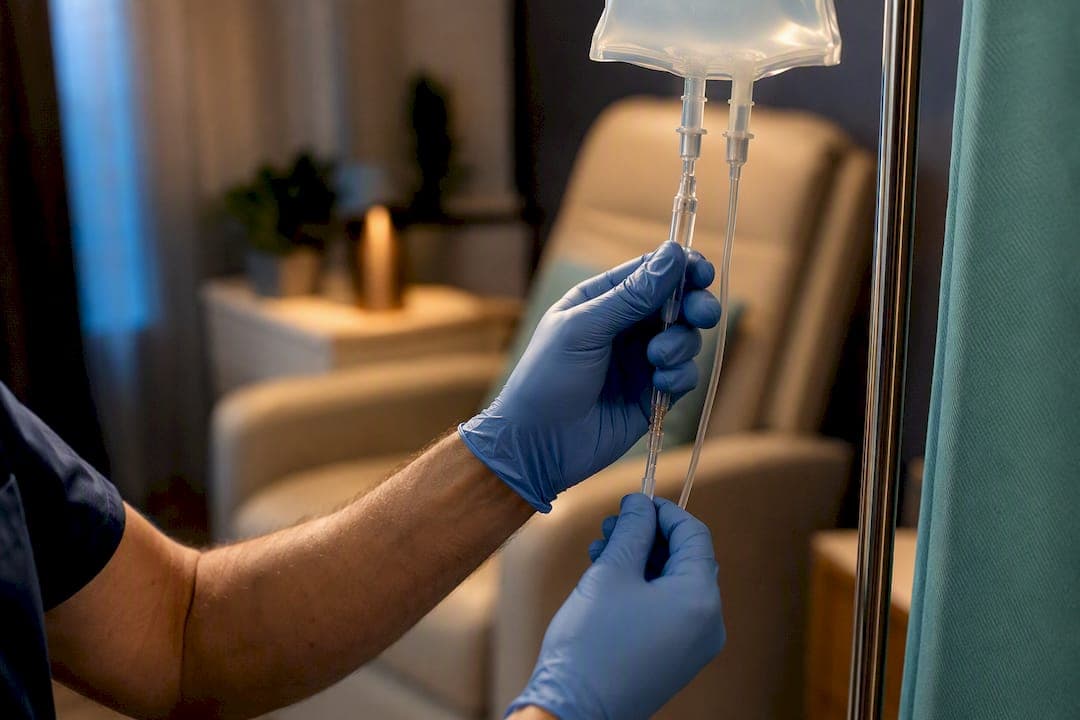
Thiamine (vitamin B1) should be given routinely to people going through alcohol detox who show signs of nutritional risk, and it must go in before IV glucose, not after. The reason is simple: thiamine deficiency causes Wernicke encephalopathy, a preventable brain injury that becomes permanent if treatment waits for lab confirmation. High-risk patients get parenteral thiamine immediately; lower-risk outpatients can often use oral dosing, but the timing rule around glucose never changes.
TL;DR:
- High-risk patients with signs of malnutrition or neurological symptoms should receive immediate parenteral thiamine before any glucose infusion during detox.
- Oral thiamine may be sufficient for low-risk, well-nourished outpatients, but all patients should be treated as if they are at risk unless clearly low risk.
- Doses vary from 100 to 500 mg IV or IM for high-risk cases, with repeated doses over days; the timing of administration before glucose is more critical than the exact dose.
- Management of electrolyte levels, monitoring neurological status, and preventing refeeding syndrome are essential during repletion, especially in hospitalized settings.
- Outpatient thiamine is considered appropriate only when the patient is stable, has reliable follow-up, and shows no neurological warning signs, whereas inpatient care is reserved for high-risk cases.
Table of Contents
- Why Alcohol Detox Puts Thiamine at the Center of Care
- Who Actually Needs Thiamine During Detox, and How Urgently
- Dosing, Routes, and the Rule That Comes Before Everything Else
- What to Watch For Once Repletion Starts
- Choosing Between Outpatient and Inpatient Thiamine Repletion
- Connected Recovery's Approach to Thiamine and Nutritional Repletion
- Why the "Just Give a Banana Bag" Mentality Is Outdated
- Getting Supervised Thiamine Repletion at Connected Recovery
- Sources
- FAQ
Why Alcohol Detox Puts Thiamine at the Center of Care
Thiamine helps nerve cells convert glucose into usable energy. Without it, brain tissue that depends on a constant fuel supply starts to fail, and the damage shows up fast in the parts of the brain that control eye movement, balance, and memory.
People with alcohol use disorder become thiamine deficient through several overlapping problems at once:
- Poor dietary intake, since alcohol displaces food and calories
- Impaired absorption in the gut, which alcohol damages directly
- Reduced storage capacity in a liver that's often already under strain
- Higher metabolic demand for thiamine during withdrawal itself
The clinical fallout has names clinicians take seriously. Wernicke encephalopathy shows up as confusion, unsteady gait, and abnormal eye movements. Left untreated, it can progress to Korsakoff syndrome, a chronic memory disorder that often doesn't reverse. Severe deficiency can also cause beriberi, affecting the heart and peripheral nerves. Caught early, thiamine repletion prevents lasting neurological damage; caught late, it's often too late to undo.
Who Actually Needs Thiamine During Detox, and How Urgently
Not every patient in alcohol detox needs the same intervention, but the threshold for treating should be lower than most people expect. Here's a practical way to sort risk:
- High risk, treat immediately with parenteral thiamine. This includes anyone showing signs of malnutrition, acute confusion, ataxia, prolonged heavy drinking, unstable housing, or a documented history of poor food intake.
- Moderate risk, lean toward parenteral dosing if uncertain. Patients with a heavy drinking history but no obvious neurological signs still deserve a low threshold for injectable thiamine rather than waiting to see if symptoms develop.
- Low risk, oral prophylaxis may be reasonable. Ambulatory patients entering detox with adequate nutrition and no red-flag symptoms can often be managed with oral thiamine, provided follow-up is in place.
The tricky part is that Wernicke encephalopathy rarely presents with the textbook combination of confusion, ataxia, and eye movement abnormalities all at once. Clinical reviews note that the full triad is often incomplete, which is exactly why guidelines push toward empiric treatment rather than waiting for a clean diagnostic picture.
Dosing, Routes, and the Rule That Comes Before Everything Else
Regimens vary by institution because large, high-quality trials establishing one exact dose are limited, so clinical judgment and consensus guidance fill the gap. That said, the ranges used in practice are fairly consistent.
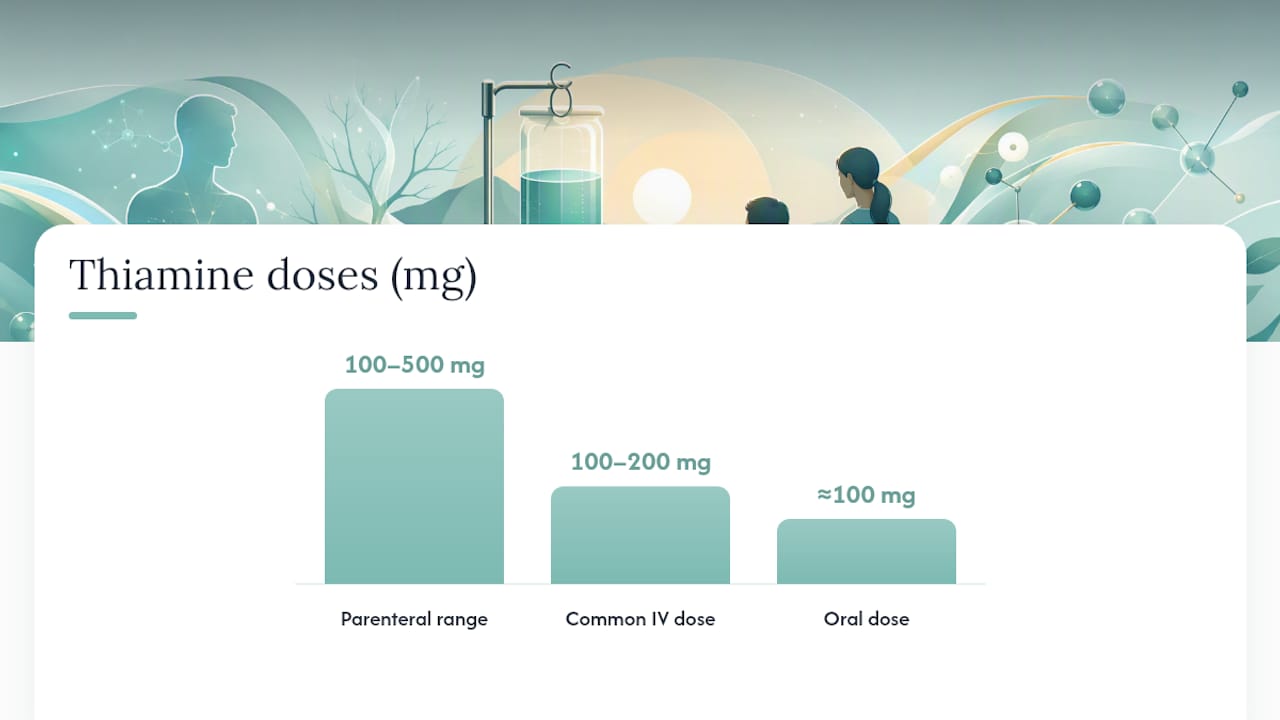
Parenteral (IV or IM) dosing, used for high-risk patients or suspected Wernicke encephalopathy:
- Commonly 100 to 500 mg given IV or IM
- Frequent dosing matters more than a single large dose. Many protocols use 100 to 200 mg IV three times daily, and suspected Wernicke encephalopathy often calls for higher, repeated dosing over several days
- Some centers now run higher initial IV doses and more frequent schedules than the older single 100 mg "banana bag" standard, reflecting a shift toward more aggressive repletion protocols
Oral dosing, generally reserved for lower-risk, ambulatory patients:
- Typical oral doses commonly used are around 100 mg daily
- Less reliable in people actively drinking, since gut absorption is already compromised in this population
Pro Tip: If you're unsure whether a patient qualifies as high risk, treat them as if they do. The cost of an extra dose of thiamine is negligible; the cost of missed Wernicke encephalopathy is not.
The rule that overrides every dosing decision: thiamine should be administered before or with any glucose-containing IV fluids to prevent worsening symptoms. Giving glucose to a thiamine-deficient patient can precipitate or worsen Wernicke encephalopathy by demanding more thiamine than the depleted body has available. MSD Manual's clinical guidance puts it plainly: 100 mg IV thiamine before IV glucose in any at-risk patient, with multivitamin repletion to follow.
What to Watch For Once Repletion Starts
Thiamine repletion doesn't happen in isolation. As nutrition is restored in someone who has been chronically malnourished, the body can react in ways that need active monitoring.
- Check phosphate, magnesium, and potassium levels regularly, especially in the first few days of repletion
- Reassess neurologic status frequently in anyone treated for suspected Wernicke encephalopathy, since improvement or lack of it guides how long parenteral dosing continues
- Watch for refeeding syndrome, a shift in electrolytes and fluid balance that can occur when nutritional support resumes too quickly in someone who has been undernourished
- Magnesium deficiency often accompanies thiamine deficiency in this population, and repleting magnesium alongside thiamine is standard practice because magnesium is a cofactor thiamine needs to work properly
Electrolyte abnormalities from refeeding are managed with careful, staged repletion rather than aggressive nutritional catch-up, which is one more reason inpatient monitoring matters for higher-risk patients. Fluid management during this window also deserves attention, particularly how hydration is handled alongside electrolyte correction.
Choosing Between Outpatient and Inpatient Thiamine Repletion
The decision isn't just about thiamine. It's about what level of monitoring the whole detox process requires.
- Outpatient works when the patient is medically stable, has reliable access to food and follow-up care, and shows no neurological warning signs. Oral thiamine at 100 mg daily, clear instructions on red flags like new confusion or unsteady walking, and a scheduled follow-up visit make this approach reasonable.
- Inpatient is warranted when a patient shows any high-risk feature: malnutrition, confusion, ataxia, a history of prior Wernicke encephalopathy, or an unstable home situation. Parenteral thiamine, close monitoring, during the acute withdrawal window, and same-day access to lab work all matter here.
- Escalate to specialist involvement when neurological symptoms don't improve within 48 to 72 hours of high-dose thiamine, or when the diagnosis is uncertain enough that neurology or critical care input changes management.
Medically supervised detox programs are built around exactly this kind of coordination, pairing lab monitoring with nutritional support and any medication-assisted care the withdrawal process requires.
Connected Recovery's Approach to Thiamine and Nutritional Repletion
Connected Recovery runs its detox program on a 12-bed model specifically so nutritional risk doesn't get missed in the shuffle of a larger facility. Every patient entering detox gets an early assessment for thiamine deficiency risk, with parenteral repletion started when indicated rather than delayed for confirmation. Around-the-clock medical supervision means electrolyte shifts and neurological changes get caught early, not at the next scheduled check-in. For patients whose withdrawal involves co-occurring depression or anxiety, integrated mental health support runs alongside the medical protocol rather than as an afterthought.
Why the "Just Give a Banana Bag" Mentality Is Outdated
Older approaches treated thiamine with a single dose, but current understanding emphasizes the need for ongoing, adequate supplementation to prevent severe complications. Wernicke encephalopathy doesn't wait for a convenient diagnostic picture, and the research bears this out. The classic triad of confusion, ataxia, and eye movement problems is often incomplete, which means clinicians relying on textbook presentation will miss real cases.
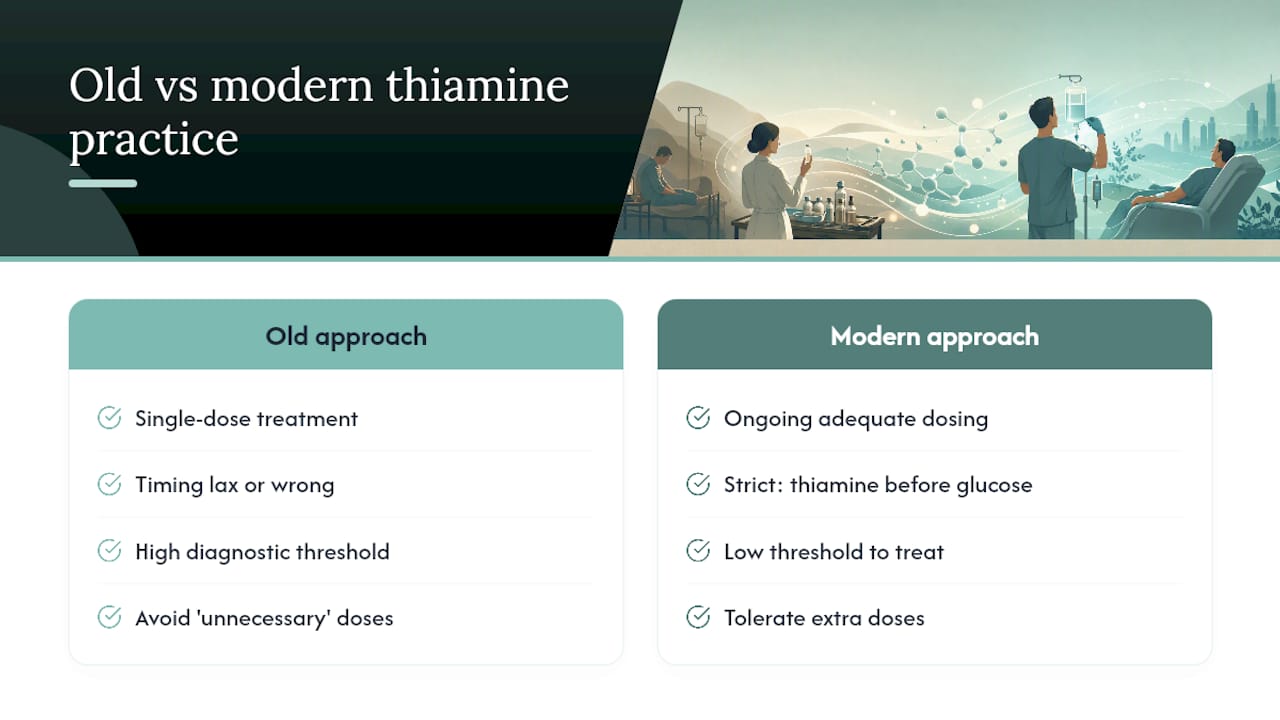
What the evidence actually supports is a lower threshold for treatment and a higher tolerance for "probably unnecessary" doses of thiamine. Overtreating with a cheap, low-risk vitamin costs almost nothing. Undertreating costs a patient their memory, permanently, in the worst cases. The other place conventional advice falls short is timing discipline. Plenty of well-meaning care still gets the order wrong, running glucose before or alongside thiamine instead of strictly before it. That single sequencing error is preventable, and it's the detail that separates careful detox management from careless detox management.
If there's one thing readers should walk away prioritizing, it's this: ask about thiamine timing before you ask about dosing amounts. The amount matters, but the order matters more.
— Jim
Getting Supervised Thiamine Repletion at Connected Recovery
If you or someone you love is heading into alcohol detox with any of the risk factors covered here, poor nutrition, prolonged heavy drinking, or early confusion, that's not something to manage alone at home. A medically supervised detox program should be designed to address nutritional and neurological risks, with around-the-clock medical supervision to catch problems before they escalate.

At intake, patients receive a clinical assessment, baseline labs, and an individualized detox plan that includes thiamine protocols from day one, not as an afterthought once symptoms appear. For those with co-occurring mental health needs, Dual Diagnosis Treatment runs in parallel with medical detox, and patients who need ongoing support after stabilization can transition directly into Residential Treatment or Medication Assisted Treatment. If you're a clinician managing a high-risk patient who needs a higher level of monitoring than an outpatient setting can offer, referring them to a medically supervised detox program is the safest next step. Reach out through the programs page to start that conversation today.
Sources
- Wernicke encephalopathy - NCBI Bookshelf (StatPearls / NBK482360)
- Thiamine in the management of alcohol use disorders - PMC
- Beyond the Banana Bag: Treating Nutritional Deficiencies of Alcohol Withdrawal Syndrome - UVA guidance (2021)
This article is general information, not a substitute for advice from a qualified doctor. Consult a qualified healthcare professional about your own circumstances before acting on anything here.
FAQ
How Much Thiamine Should You Take After Quitting Drinking?
Low-risk patients typically take 100 mg orally per day, while anyone with malnutrition, confusion, or a heavy drinking history usually needs parenteral doses ranging from 100 to 500 mg, sometimes repeated multiple times daily.
Why Are People With Alcohol Use Disorder Given Vitamin B1?
Thiamine is given to prevent or treat Wernicke encephalopathy, a brain injury caused by deficiency that can become permanent without prompt treatment.
Why Is Thiamine Low in People Who Drink Heavily?
Alcohol reduces dietary intake, damages gut absorption, depletes liver storage, and increases the body's thiamine demand all at once, which is why deficiency develops so quickly in this population.
Should Heavy Drinkers Take Thiamine Even Without Symptoms?
Yes. Because Wernicke encephalopathy often presents without the full set of classic symptoms, guidelines favor treating at-risk patients before symptoms fully develop rather than waiting for confirmation.
What Happens if Glucose Is Given Before Thiamine?
Giving glucose first can worsen or trigger Wernicke encephalopathy in a thiamine-deficient patient, which is why thiamine always goes in before or with glucose, never after.
Does Connected Recovery Provide Thiamine Repletion During Detox?
Connected Recovery's Medical Detox program includes early risk assessment for thiamine deficiency and parenteral repletion when indicated, all under continuous medical supervision; current program details are available on the Medical Detox page.