
The safest way to reduce a prescription opioid is a slow, individualized taper you build with your prescriber, not a fixed formula you follow alone. Most clinician-aligned schedules cut the dose by roughly 5% to 20% every few weeks, with much slower rates for anyone who has used opioids for months or years. HHS/CDC guidance and trial data back this approach, and withdrawal symptoms are generally manageable with multimodal support, with medication-assisted options and supervised care such as Connected Recovery available if the taper stalls.
TL;DR:
- Tapering schedules should be individualized, with slower reductions of 5% to 20% every four weeks or less for long-term use years.
- Complete withdrawal symptoms typically subside in 5 to 10 days, requiring supportive medications like NSAIDs, antiemetics, and hydration.
- Building a comprehensive plan with alternative pain management strategies before tapering enhances success and reduces discomfort.
- Medical supervision is recommended for complex cases or when tapering has repeatedly failed, often involving detox programs or medication-assisted treatment.
- A slow, person-centered approach prioritizes safety and function over speed, making collaborative planning essential for effective opioid discontinuation.
Table of Contents
- Who Should Consider a Prescription Opioid Taper?
- What Do Fast and Slow Taper Schedules Actually Look Like?
- What Withdrawal Symptoms Should You Expect, and How Long Do They Last?
- What Pain Management Options Help During a Taper?
- When Do Buprenorphine or Methadone Make Sense?
- How Do You Build and Monitor Your Own Taper Plan?
- When Does Tapering Need Supervised Medical Support?
- A Patient-Centered View on Tapering Off Opioids
- Get Supervised Support for a Safer Opioid Taper
- Where to Read More on Safe Opioid Tapering
- Sources
Who Should Consider a Prescription Opioid Taper?
Tapering makes sense when the opioid no longer helps as much as it once did, side effects outweigh the benefit, you simply want off the medication, or you're on a risky combination such as an opioid plus a benzodiazepine. Before touching the dose, your prescriber should run through a short safety check.
- Review comorbidities that raise risk, including sleep apnea, chronic lung disease, and liver or kidney impairment.
- List every current medication, since interactions change how withdrawal feels and how fast it's safe to move.
- Screen for depression, suicide risk, and untreated anxiety, all of which can flare during dose changes.
- Reassess the original pain diagnosis. Has it changed, resolved, or evolved into something opioids never treated well?
- Screen for opioid use disorder. If cravings, loss of control, or compulsive use show up, referral to specialist addiction care belongs in the plan from day one.
What Do Fast and Slow Taper Schedules Actually Look Like?
There's no single tapering plan for opioids that fits everyone, but two general templates cover most situations. Which one applies depends almost entirely on how long you've been on the medication.
- Faster taper (shorter-term use, weeks to a few months): Reduce the dose by about 10% per week until you reach roughly 30% of the original amount, then slow to 10% of whatever remains each week. This suits people who have not been on opioids long enough to develop deep physiological dependence.
- Slower taper (long-term or high-dose use): Cut by 5% to 20% every four weeks, and consider 10% per month or even less for anyone who has taken opioids for years. Research on patient-centered opioid reduction consistently finds slower tapers better tolerated after long-term therapy.
- Proportional adjustment as the dose drops: Shrink the percentage further as the absolute dose gets smaller. Going from 100 milligrams to 90 is a very different physiological event than going from 20 to 18, even though both are 10% cuts.
That last point comes from what researchers call hyperbolic or proportional tapering. Because opioid receptors respond nonlinearly, a fixed percentage drop feels harsher at low doses than at high ones. Tapering guidance grounded in this pharmacology suggests trimming the recent dose by just 1% to 10% every one to two weeks once you're in the lower range, sometimes stretching the full taper across many months or longer for people on long-term therapy.
Pro Tip: Bring a written schedule to your appointment instead of asking your prescriber to design one from scratch. A one-page plan with proposed percentages and dates turns a vague conversation into a concrete, negotiable document.
What Withdrawal Symptoms Should You Expect, and How Long Do They Last?
Restlessness, sweating, chills, muscle aches, a runny nose, nausea, diarrhea, anxiety, and a faster heart rate are the classic signs of opioid withdrawal. None of them signal danger on their own, though they're uncomfortable enough that most people want a plan before symptoms start.
- Short-acting opioids (oxycodone, hydrocodone) tend to produce symptoms within 6 to 12 hours of a reduction.
- Longer-acting formulations delay onset by a day or more but can drag symptoms out longer.
- Most withdrawal from a reasonable taper resolves in about 5 to 10 days, though some people feel lingering fatigue or mood changes for weeks.
For symptom relief, clinicians often reach for antiemetics for nausea, loperamide for diarrhea, NSAIDs for muscle aches, and in some cases clonidine or lofexidine to blunt the sympathetic surge. Hydration and electrolyte replacement help more than people expect. Contact your clinician right away if symptoms become severe, if you can't keep fluids down, or if you notice suicidal thoughts. Those situations call for slowing the taper, not pushing through it. Our guide to the opioid detox timeline breaks down day-by-day expectations in more detail.
What Pain Management Options Help During a Taper?
Dropping the opioid dose works far better when something else is picking up the slack. The goal isn't to tough out more pain. It's to swap one tool for several smaller ones that together cover similar ground.
- Acetaminophen and NSAIDs for baseline pain, plus topical agents like lidocaine or diclofenac gel for localized joint or muscle pain.
- Neuropathic agents such as gabapentin or SNRIs when nerve-related pain is part of the picture.
- Physical therapy and a graded exercise plan to rebuild function that opioids may have let slide.
- Cognitive behavioral therapy or pain psychology to address the anxiety and catastrophizing that often accompany chronic pain.
- Mindfulness training and, when appropriate, interventional procedures like nerve blocks.
Start these supports before you cut the dose, not after symptoms appear. Detoxing from pain medication without losing control of your pain means lining up alternatives in advance and setting functional goals, like walking distance or sleep quality, that everyone on your care team can track together.
When Do Buprenorphine or Methadone Make Sense?
Most tapers don't need a substitute medication at all. But when outpatient tapering has failed more than once, when opioid use disorder is diagnosed, or when someone has been on very high doses for years, buprenorphine or methadone shifts the conversation from tapering to medication-assisted treatment.
- Buprenorphine requires a certified prescriber and careful timing. Starting it too soon after a full agonist opioid can trigger precipitated withdrawal, a sudden and severe symptom spike.
- Methadone requires enrollment through a certified opioid treatment program and daily dosing in early treatment.
- Lofexidine is FDA-approved for short-term relief of acute withdrawal symptoms, typically for up to 14 days, and clonidine serves a similar off-label role in some practices.
None of these decisions belong in a self-directed plan. They require a prescriber experienced in addiction medicine, and our opioid addiction treatment program can help coordinate that referral when outpatient options aren't enough.
How Do You Build and Monitor Your Own Taper Plan?
A taper plan works best written down, with specific numbers both people agree to before the first dose reduction happens.
- Set the goal together: full discontinuation, a lower maintenance dose, or simply escaping a risky combination.
- Choose a pace based on how long you've used opioids, then define what success looks like beyond just the number on the bottle: pain scores, sleep, mood, and daily function all count.
- Schedule check-ins, whether in person or by telehealth, and use a symptom diary or a Clinical Opiate Withdrawal Scale (COWS) score to track objective changes over time.
- Build in urine testing checkpoints if your prescriber recommends them; understanding cutoff levels helps both sides interpret results accurately.
Pro Tip: *Track function, not just pain level.
Pause or seek urgent reassessment if withdrawal becomes severe, if suicidal thoughts appear, or if there's any risk of returning to opioid use at a dose that could cause an overdose.
When Does Tapering Need Supervised Medical Support?
Some tapers need more structure than an outpatient office visit every few weeks can provide. Connected Recovery sees this most often with people who have tried and failed outpatient tapers multiple times, who carry unstable medical comorbidities, who take several interacting medications, or who have significant psychiatric conditions layered on top of chronic pain.
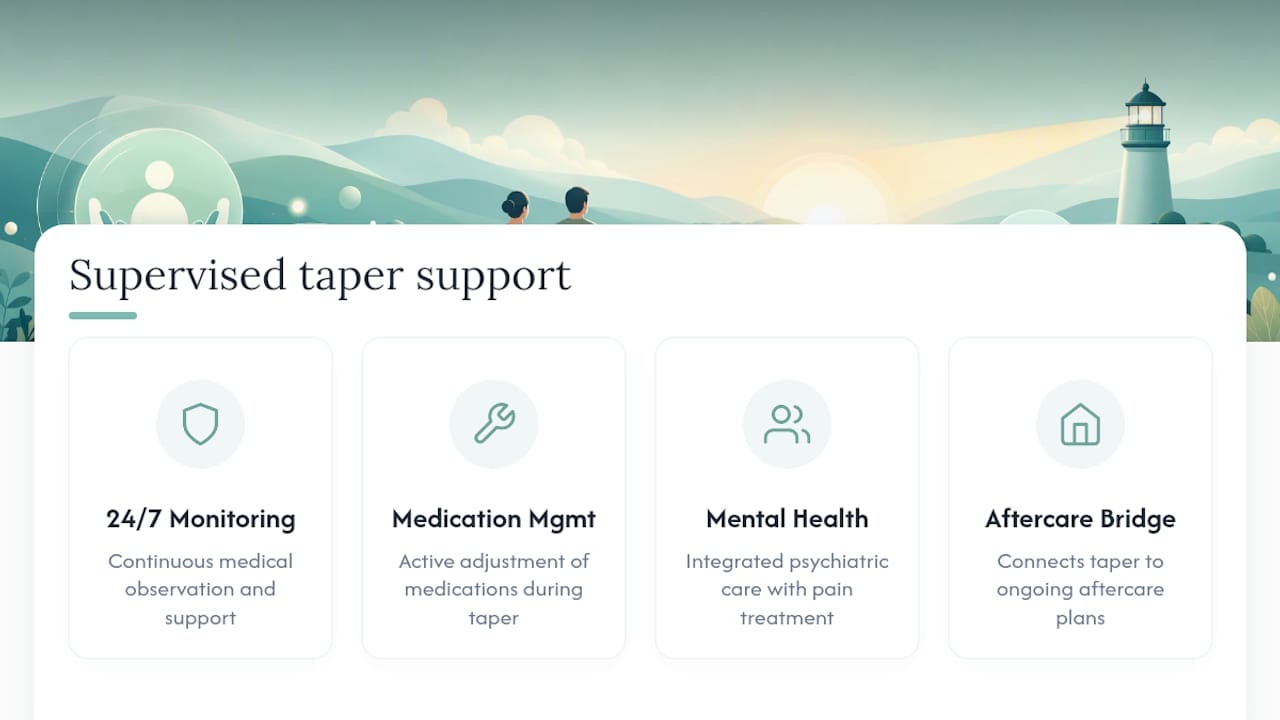
Medical detox in a supervised setting provides 24/7 monitoring, active medication management, and integrated mental health care rather than treating the physical taper and psychological symptoms as separate problems. It also builds a bridge to aftercare, so the plan doesn't end the day withdrawal symptoms fade. Readers weighing this option can look at our pain management detox guide for a closer look at what that transition involves.
A Patient-Centered View on Tapering Off Opioids
The biggest mistake I see in how people talk about tapering is treating speed as the measure of success. It isn't. A taper that takes eighteen months but preserves someone's job, sleep, and relationships beats a three-month taper that leaves them barely functional. Collaborative plans work better than unilateral ones because pace should bend to the person, not the other way around. If you remember one thing from any tapering plan for opioids, make it this: safety and function come first, and a slower path that gets you there intact is not a failure.
— Jim
Get Supervised Support for a Safer Opioid Taper
When outpatient tapering has stalled, or the medical and psychiatric picture is too complex for weekly office visits to manage safely, Our facility offers round-the-clock medical monitoring in a setting built for individualized attention rather than a revolving waiting room.

Connected Recovery's programs cover the full arc of a complicated taper, including medical detox with continuous monitoring, residential treatment for those who need more than a few days of support, dual diagnosis care for co-occurring mental health conditions, and aftercare planning so the transition off opioids sticks. If prescription opioids or other prescription medications are part of the picture, our prescription drug addiction treatment program coordinates directly with your existing prescriber rather than starting from scratch.
Intake starts with a full assessment of your medical history, current medications, and taper attempts so far, followed by a personalized plan built around your specific risks. Contact us to schedule an assessment and find out whether supervised detox fits your situation.
Where to Read More on Safe Opioid Tapering
- HHS/CDC Guide for Clinicians on Opioid Dosage Reduction — federal clinical guidance on taper pacing and safety.
- Patient-Centered Reduction of Long-term Opioid Analgesics — foundational review on individualized tapering.
- Mayo Clinic: Tapering Off Opioids — patient-facing guidance on timing and expectations.
- MedlinePlus: Opioid Withdrawal — symptom and timeline reference.
This article is general information, not a substitute for advice from a qualified doctor. Consult a qualified healthcare professional about your own circumstances before acting on anything here.
Sources
- Patient-Centered Reduction or Discontinuation of Long-term Opioid Analgesics
- Guide for Clinicians on the Appropriate Dosage Reduction or Discontinuation of Long-Term Opioid Analgesics — HHS/CDC
- Opioid withdrawal — MedlinePlus