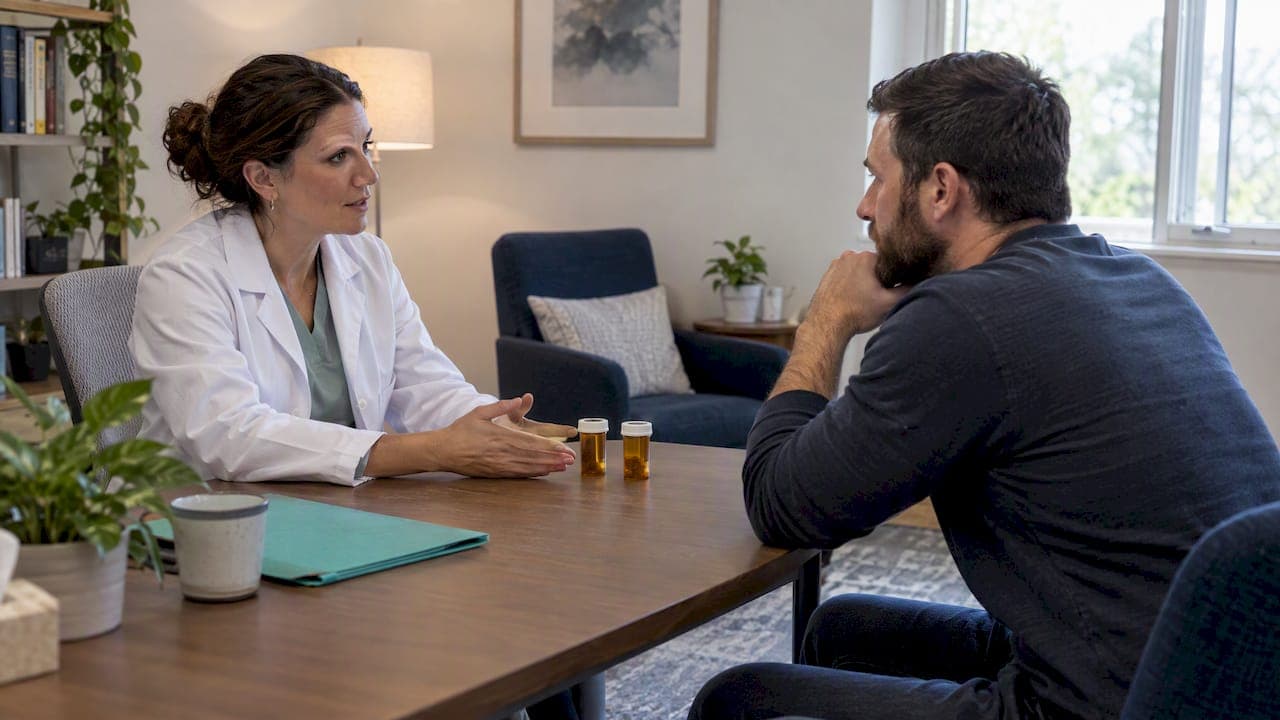
Three medications are FDA-approved specifically for alcohol use disorder: naltrexone, acamprosate, and disulfiram. Naltrexone reduces the pleasurable effects of drinking and curbs cravings, acamprosate helps people stay abstinent after they've already stopped, and disulfiram deters drinking by causing an unpleasant reaction if alcohol is consumed. None of them treat acute alcohol withdrawal, and all require a prescriber's evaluation and ongoing oversight.
TL;DR:
- Naltrexone can reduce alcohol cravings in active drinkers, with Vivitrol offering a monthly injection option for better adherence.
- Acamprosate is best suited for individuals who have already stopped drinking and want to prevent relapse, especially when combined with counseling.
- Disulfiram requires strict supervision and is most effective for motivated patients willing to adhere to daily dosing, as it deters drinking through unpleasant reactions.
- Off-label options like gabapentin and topiramate show some promise but have less robust evidence and limited FDA approval for alcohol use disorder.
- Active opioid use or severe renal impairment contraindicates naltrexone and acamprosate, and ongoing medical oversight is essential during treatment.
Table of Contents
- Naltrexone, acamprosate, and disulfiram: how each one works
- Why cravings happen and how medication interrupts them
- Off-label options: gabapentin, topiramate, and other candidates
- Who shouldn't take these medications, and what monitoring looks like
- What medication can realistically change, and how long it takes
- Getting evaluated: what to prepare and what happens next
- How supervised detox and MAT programs put these medications to work
- What the evidence actually tells you to prioritize
- Getting clinician-led support for medication and detox
- Sources
- FAQ
Naltrexone, acamprosate, and disulfiram: how each one works
These three drugs tackle alcohol use disorder from different angles, and the right one depends on where a patient is in their recovery and what their body can tolerate.
- Naltrexone comes as a daily 50 mg oral tablet or as Vivitrol, an extended-release injectable given once a month. It blocks opioid receptors involved in alcohol's rewarding effects, which can reduce the pleasurable effects of alcohol and decrease cravings. It fits patients who are still drinking and want to cut back, not just those aiming for total abstinence.
- Acamprosate (Campral) is meant for patients who are already abstinent and want to stay that way. The typical dose is 666 mg three times daily, and Campral's FDA labeling notes it works best as part of a broader treatment program, with dosing adjusted or avoided in patients with significant renal impairment.
- Disulfiram (Antabuse) causes nausea, flushing, and heart palpitations if someone drinks after taking it. That aversive reaction depends entirely on adherence, which is why it tends to work best when someone else, a spouse or a clinician, is involved in supervising daily dosing. Because of this adherence requirement, disulfiram is generally not the first medication prescribers reach for.
Vivitrol's monthly injection schedule can be a practical advantage for patients who struggle to take a pill every day, and combining naltrexone with acamprosate is sometimes considered when a patient needs both craving reduction and abstinence support. According to federal prescribing information for Campral, naltrexone can raise acamprosate blood levels when the two are used together, though no dose adjustment is required as a result.
Why cravings happen and how medication interrupts them
Alcohol cravings aren't just willpower failures. They're driven by specific changes in brain chemistry, and each FDA-approved medication targets a different piece of that chemistry.
Naltrexone works through opioid receptor blockade. Alcohol triggers the release of endorphins that create a sense of reward, and naltrexone sits on those opioid receptors and blunts that reward signal. Over time, drinking simply feels less satisfying, which reduces both the pleasure and the craving tied to alcohol.
Acamprosate works differently. Chronic drinking throws off the balance between glutamate, an excitatory neurotransmitter, and GABA, an inhibitory one. Campral's prescribing information notes it likely works by restoring that GABA/glutamate balance, which may ease the lingering discomfort, irritability, and restlessness that often follow detox and that drive relapse.
Disulfiram doesn't touch craving mechanisms at all. It works through aversive conditioning: the threat of a severe physical reaction becomes a deterrent strong enough to interrupt the decision to drink in the moment.
Matching the mechanism to the goal matters:
- Someone who wants to reduce heavy drinking episodes while still drinking is a better fit for naltrexone.
- Someone who has already stopped drinking and wants to protect that abstinence is a better fit for acamprosate.
- Someone who needs an external deterrent and has reliable supervision may be a candidate for disulfiram.
Pro Tip: Bring your drinking goal, not just your drinking history, to the prescribing conversation. Whether you're trying to cut back or stay fully abstinent changes which medication makes sense.
Off-label options: gabapentin, topiramate, and other candidates
Beyond the three approved medications, some prescribers turn to drugs developed for other conditions when standard options aren't a fit or haven't worked.
Gabapentin, normally used for seizures and nerve pain, has dose-dependent evidence at 900 to 1,800 mg per day for reducing drinking and improving sleep and mood in people with alcohol use disorder. It's cleared by the kidneys, so dosing needs adjustment in patients with renal impairment, and it isn't used to manage acute withdrawal.
- Topiramate has shown benefit for reducing heavy drinking days in trials, but cognitive side effects like word-finding difficulty and slowed thinking, along with metabolic effects, limit how widely it's used.
- Baclofen and SSRIs have mixed evidence. Specialists sometimes trial baclofen in patients with liver disease who can't tolerate other options, and SSRIs may be considered when depression or anxiety is driving the drinking, but neither has the consistency of evidence behind naltrexone or acamprosate.
None of these off-label drugs carry FDA approval for alcohol use disorder, so a reasonable starting point is: discuss the standard three medications first, and treat gabapentin, topiramate, baclofen, or SSRIs as a second-line conversation if the first-line options aren't a good fit.
Who shouldn't take these medications, and what monitoring looks like
Medication for alcohol cravings isn't one-size-fits-all, and a few contraindications matter enough to flag before starting.
- Active opioid use rules out naltrexone without a washout period. Because naltrexone blocks opioid receptors, taking it while opioids are still in the system can trigger precipitated withdrawal, a sudden and severe reaction. Vivitrol's prescribing information specifies that patients must be opioid-free before the injection, and clinicians should also counsel patients about opioid overdose risk once naltrexone's blockade wears off.
- Significant renal impairment affects acamprosate dosing. Since the drug is cleared by the kidneys, Campral's labeling flags severe renal impairment as a contraindication and calls for dose adjustment in milder cases.
- Disulfiram requires a frank conversation about what the reaction feels like and which conditions rule it out, including certain heart conditions, and patients need to understand that even small amounts of alcohol in mouthwash or cooking can trigger symptoms.
- Acute withdrawal is managed separately from craving medication. None of these three drugs treat withdrawal itself, and understanding the alcohol withdrawal timeline helps explain why detox typically comes first.
- Ongoing monitoring typically includes liver function checks, renal function tracking for acamprosate and gabapentin dosing, and attention to mood changes or suicidal thinking, since any medication affecting brain chemistry warrants psychiatric follow-up alongside physical checks.
What medication can realistically change, and how long it takes
Medication isn't a replacement for counseling, it's an addition to it. ARCR and NIAAA reviews report that acamprosate or naltrexone combined with counseling increases rates of abstinence or no heavy drinking compared to counseling alone, and that combination is consistently where the strongest outcomes show up.
- Treatment courses typically run months, not weeks, with periodic reassessment of whether the medication is still needed or should be adjusted.
- A positive response usually looks like fewer heavy drinking days, lower craving intensity, and often better sleep and mood, rather than an instant switch to zero cravings.
- Relapse during treatment doesn't necessarily mean the medication has failed. It often means the dose, the medication choice, or the counseling intensity needs to be revisited.
Despite the evidence for combining medication with counseling, Pew Research reporting found that a small fraction of people eligible for an FDA-approved alcohol use disorder medication have ever been prescribed one, a gap that reflects how unfamiliar these options still are to many patients and even some primary care providers.
Getting evaluated: what to prepare and what happens next
Starting medication for alcohol cravings is a process, not a single prescription handed over at a first visit.
- Before your appointment, gather your current medication list, a honest account of your drinking pattern and history, and any recent lab results. Be ready to discuss any opioid use, past or current, since that directly affects whether naltrexone is an option.
- During the visit, expect a withdrawal risk assessment, baseline labs (often liver and kidney function), and a conversation about which medication fits your goals, along with informed consent covering side effects and what to watch for.
- After the visit, oral medications like naltrexone or acamprosate start as a daily routine, while Vivitrol is scheduled as a monthly injection appointment. Follow-up visits typically track side effects, cravings, and whether counseling is layered in alongside the medication, and NIAAA materials note that medication usually starts after detox or withdrawal risk has been managed, not during it.
Pro Tip: If anxiety during the early weeks is making it hard to stick with a plan, ask your care team about coping strategies for managing anxiety during detox before or alongside starting medication.
How supervised detox and MAT programs put these medications to work
A medically supervised setting changes how these medications get introduced and adjusted. At Connected Recovery, a 12-bed residential facility in Van Nuys, Los Angeles, medication decisions happen under 24/7 medical supervision rather than through occasional check-ins.
- Medical detox addresses acute withdrawal first, before any anti-craving medication is introduced, which matches how these drugs are meant to be used.
- The Medication Assisted Treatment (MAT) program integrates naltrexone, acamprosate, or disulfiram selection with ongoing clinical monitoring and lab work.
- Dual diagnosis treatment addresses co-occurring mental health conditions that often complicate medication choice, such as depression affecting which drug a prescriber recommends.
- The small 12-bed capacity allows closer tracking of side effects and dose adjustments than a larger facility typically allows.
What the evidence actually tells you to prioritize
The biggest misconception about alcohol craving medication is that it's an all-or-nothing fix, something you either take and stop drinking entirely, or skip because it clearly isn't working if cravings persist at all. That framing sets people up to quit a medication that's actually helping, just not perfectly.

What the evidence supports is more specific: medication paired with counseling outperforms either one alone, and the right drug depends heavily on whether someone is trying to cut back or stay fully abstinent, not on which option is generically "strongest." Disulfiram gets dismissed too quickly by some patients who assume it's outdated, when it still has a role for people who want a supervised deterrent. Meanwhile, gabapentin and topiramate get treated as interchangeable with the FDA-approved options, when they're genuinely second-line choices with thinner evidence.
If you take one thing from this, prioritize an honest conversation with a prescriber about your actual drinking goal before you ask which medication is "best." The best medication is the one matched to what you're actually trying to do.
— Jim
Getting clinician-led support for medication and detox
Figuring out which medication fits your situation is easier with a prescriber who can run the labs, watch for interactions, and adjust course if something isn't working, which is exactly what a supervised program is built for. Medical detox, residential treatment, dual diagnosis care, and MAT are often provided in small residential settings with 24/7 medical supervision throughout.
This kind of integrated setup fits people who need supervised withdrawal management before starting craving medication, or who want medication and therapy coordinated under one roof rather than juggled across separate appointments. If that describes where you are, you can learn more about medical detox or explore the MAT program to see what getting evaluated actually involves.
This article is general information, not a substitute for advice from a qualified doctor. Consult a qualified healthcare professional about your own circumstances before acting on anything here.
Sources
- Alcohol Use Disorder: The Role of Medication in Recovery (ARCR/NIAAA review)
- VIVITROL prescribing information (FDA)
- CAMPRAL (acamprosate) prescribing information (DailyMed / FDA)
- Alcohol use disorder can be treated with an array of medications, but few people have heard of them (CU Anschutz news)
FAQ
What can reduce alcohol cravings?
The three FDA-approved medications for alcohol cravings are naltrexone, acamprosate, and disulfiram, each working through a different mechanism. Naltrexone blocks the reward signal from drinking, acamprosate helps stabilize brain chemistry after someone stops, and disulfiram deters drinking through an aversive physical reaction.
What are the common medications used for alcohol detox?
Medications used during acute alcohol detox, like benzodiazepines for withdrawal symptoms, are different from the craving-reduction medications discussed here. Naltrexone, acamprosate, and disulfiram are not withdrawal treatments and are typically started after detox or once withdrawal risk has been managed, according to NIAAA guidance.
What to replace alcohol with when quitting?
There's no medication substitute for the habit of drinking itself, but many people find it helpful to swap the ritual with alcohol-free beverages while building new routines. Reading labels carefully matters here, since alcohol-free and non-alcoholic drinks aren't always the same thing, and some products still contain trace alcohol.
What are some natural supplements that can help with alcohol cravings?
No supplement has the FDA-approval or clinical evidence base that naltrexone, acamprosate, or disulfiram carry for alcohol use disorder. Anyone considering a supplement should discuss it with a prescriber first, since interactions with other medications or with alcohol itself are possible even with over-the-counter products.
Is naltrexone safe to take if I'm still drinking?
Naltrexone is actually designed to work for people who are still drinking and trying to cut back, unlike acamprosate, which is meant for people who are already abstinent. The real safety concern with naltrexone is opioid use, not alcohol use, since starting it too soon after opioids can trigger a severe reaction.