
Yes, marijuana withdrawal is real and clinically recognized under DSM-5. Expect irritability, anxiety, disrupted sleep with vivid dreams, decreased appetite, and cravings that typically start 12 to 48 hours after your last heavy use, peak within the first week and mostly fade within a few weeks. Heavier, longer-term users sometimes need medical support if symptoms run longer or intensify.
TL;DR:
- Symptoms typically peak within the first week, with irritability, sleep disturbance, and cravings being the most intense during days 2 to 6.
- The biological recovery of CB1 receptors begins within two days and usually normalizes over two to four weeks, aligning with symptom resolution.
- Heavy, long-term users, especially those with high-potency cannabis or co-occurring mental health issues, may experience more severe and prolonged withdrawal symptoms.
- Supportive care like sleep hygiene, routine, hydration, exercise, and counseling effectively manages withdrawal, while medication offers only temporary symptom relief.
- Treating severe or complicated cases, especially with co-occurring disorders or polysubstance use, may require inpatient detox or residential treatment for safety and stabilization.
Table of Contents
- Marijuana Withdrawal Symptoms: What You'll Actually Notice
- How Long Does Weed Withdrawal Last? A Day-By-Day Breakdown
- Why Marijuana Withdrawal Happens: The Biology Behind It
- Diagnosing Cannabis Withdrawal and Knowing When It's Serious
- Managing Withdrawal: What Actually Helps
- When Detox or Residential Treatment Makes Sense
- What Recovery Looks Like After the Worst Passes
- Why the Standard Advice on Weed Withdrawal Undersells the Timeline
- Sources
Marijuana Withdrawal Symptoms: What You'll Actually Notice
Most people expect the physical stuff (sweating, nausea, aches) and get blindsided by how much cannabis withdrawal messes with mood and sleep instead. The clinical literature on cannabis withdrawal consistently puts psychological and behavioral symptoms at the top of the list, with physical complaints trailing well behind.
Mood and behavioral changes
Irritability is the signature symptom. It shows up early, hits hard, and tends to surprise people who never thought of themselves as short tempered. Right alongside it comes anxiety, sometimes low grade and nagging, sometimes sharp enough to feel like a panic response to ordinary stress. Anger and aggression are common enough that partners and roommates often notice the shift before the person going through it does. Restlessness and a depressed or flat mood round out the picture, and for some people, the emotional symptoms outlast everything else.
Sleep disruption and vivid dreaming
Cannabis suppresses REM sleep during regular use, so stopping triggers a rebound. Dreams often become more vivid and sometimes disturbing, and sleep itself becomes lighter and more fragmented. This is a commonly reported feature of quitting cannabis, and it can take people by surprise. You might sleep fewer hours, wake up more, or feel like your dreams are running a marathon while you're barely resting.
Appetite, weight, and physical symptoms
Decreased appetite is common, sometimes paired with modest weight loss over the first couple weeks. Physical symptoms exist but are less prominent than the mental and sleep-related ones: chills, sweating, headache, mild tremor, and abdominal discomfort appear in a meaningful minority of cases, according to the same clinical management review. Nausea and vomiting are reported less often and, when they show up severely, deserve medical attention rather than a wait-and-see approach.
Here's the full symptom rundown clinicians look for:
- Irritability, anger, or aggression
- Anxiety or nervousness
- Sleep disturbance, including insomnia and vivid or disturbing dreams
- Decreased appetite or weight loss
- Depressed mood or restlessness
- Physical symptoms: headache, chills, sweating, tremor, abdominal pain
- Cravings for cannabis
Symptom severity isn't uniform. How rough this gets depends heavily on how much and how often you were using, plus a handful of other factors that shift the picture more than people expect.
Symptom variability: Research on the cannabis withdrawal syndrome finds that severity tracks with the amount and frequency of prior use, and that women tend to report stronger physical symptoms than men. Co-occurring anxiety or depression also amplifies the whole experience.
Pro Tip: If you're not sure whether what you're feeling is withdrawal or just normal life stress, track your symptoms daily for the first week. A clear pattern that starts within two days of quitting and peaks by day five is a strong signal it's withdrawal, not coincidence.
How Long Does Weed Withdrawal Last? A Day-By-Day Breakdown
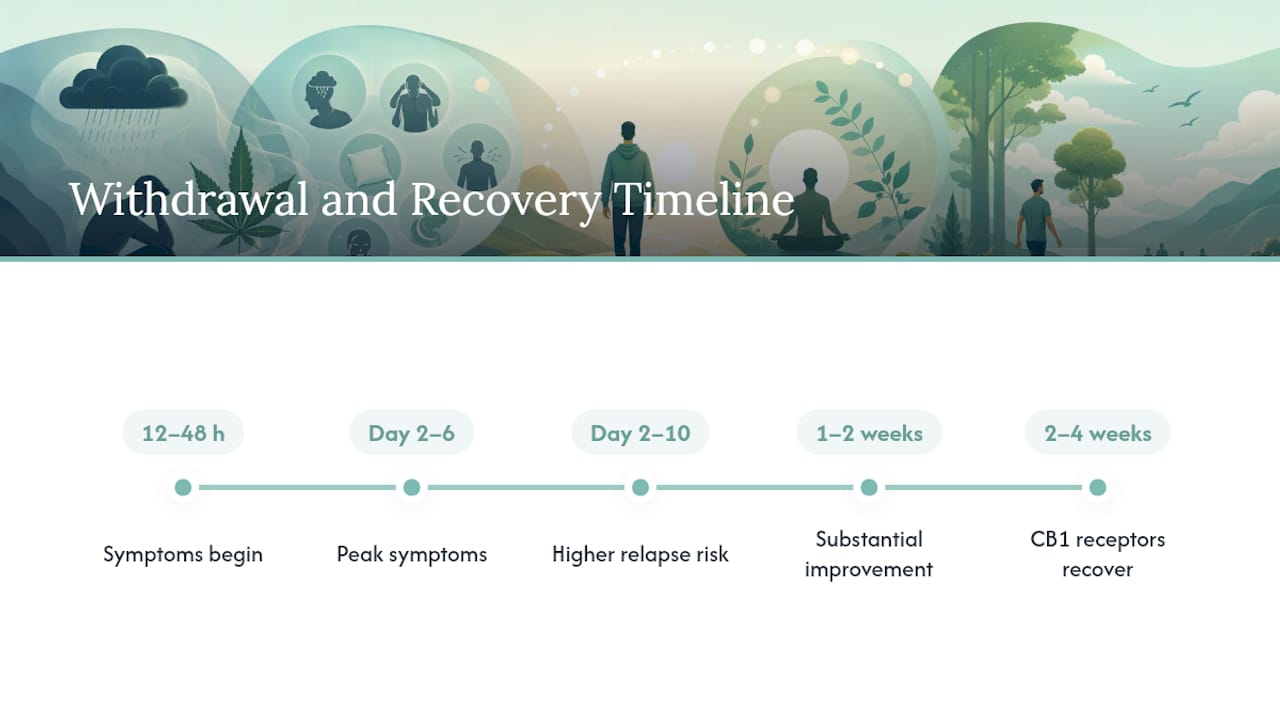
Withdrawal follows a fairly predictable arc, even though the exact intensity varies from person to person. Onset generally happens within one to two days of the last heavy use, and symptoms peak within the first week before beginning to taper off.
Here's roughly how the timeline unfolds:
- Days 1 to 2: First signs appear. Irritability, mild anxiety, and trouble falling asleep are usually the earliest markers.
- Days 2 to 6: Peak intensity. This window carries the sharpest irritability, cravings, sleep disruption, and appetite loss.
- Following weeks: Most acute symptoms start softening over the next weeks. Sleep is still often disturbed, but the emotional volatility usually eases.
- Longer term: Some heavy, long-term users may report lingering symptoms, particularly sleep and dream disturbances, for several weeks or more.
Timeline snapshot: A widely cited review of cannabis withdrawal timing confirms this pattern: onset at 12 to 48 hours, peak severity at two to six days, and resolution of most acute symptoms within one to two weeks, with extended courses of three weeks or more in heavier users.
Not every symptom clears on the same schedule. Irritability and anxiety, being tied more closely to acute neurochemical shifts, tend to fade first. Sleep disturbance and vivid dreaming often linger the longest because they're connected to REM rebound, a slower process than mood normalization. Appetite typically returns to baseline somewhere in the middle of that range, often by the end of week two.
This staggered resolution is worth understanding because it prevents a common misstep: assuming that because your mood has stabilized, you're "done" with withdrawal, then getting thrown off when disturbing dreams show up again on day 12. They're two different processes running on two different clocks.
Why Marijuana Withdrawal Happens: The Biology Behind It
Chronic THC exposure changes how your brain's cannabinoid system operates, and that change is the entire reason withdrawal exists. THC binds to CB1 receptors throughout the brain, and with regular heavy use, the brain responds by reducing the number and sensitivity of those receptors. That's called downregulation, and it's the body's way of compensating for a substance that's constantly flooding a specific receptor system.
When you stop using, the THC that was propping up receptor activity disappears, but the receptors haven't recovered yet. You're left with an underactive cannabinoid system for a stretch of time, and that gap is what produces the symptom cluster: mood disruption, sleep changes, appetite shifts, all downstream of a signaling system that's temporarily out of balance.

The good news is that this reverses. Research on the cannabis withdrawal syndrome shows CB1 receptor downregulation begins reversing within the first two days of abstinence, with receptor density normalizing over roughly two to four weeks. That biological timeline lines up almost exactly with the symptom timeline described above, which isn't a coincidence. Your brain is quite literally rebuilding its receptor sensitivity, and your symptoms track that rebuild.
Framing withdrawal in terms of weeks rather than days matters clinically. People who expect a 48 hour ordeal and then find themselves still irritable and sleepless on day ten often assume something is wrong or that they're weak for still struggling. Understanding that full receptor recovery takes closer to a month reframes the experience as a biological process on a schedule, not a personal failing.
A few factors shift how intense or prolonged that process feels. Potency matters. High THC products, increasingly common in today's market, tend to produce more pronounced downregulation and, correspondingly, more noticeable withdrawal. Frequency and duration of use matter too. Daily use over years produces a deeper adaptation than occasional use over a few months. Sex differences show up here as well, with some research pointing to stronger physical symptom reporting in women. Genetics and pre-existing psychiatric conditions, particularly anxiety and depression, also shape how rough the withdrawal period feels.
Diagnosing Cannabis Withdrawal and Knowing When It's Serious
DSM-5 sets a specific bar for diagnosing cannabis withdrawal: three or more characteristic symptoms developing within approximately one week of stopping or substantially reducing heavy, prolonged use. That's the formal clinical threshold, and it matters for more than just labeling. According to research on the cannabis withdrawal syndrome, meeting that criteria pattern is what separates ordinary post-use discomfort from a diagnosable syndrome.
There's a reason this diagnosis carries weight beyond symptom relief. Experiencing withdrawal is one of the clearer signals that a Cannabis Use Disorder may be present, since withdrawal by definition reflects a level of physiological dependence. The Cleveland Clinic notes that withdrawal itself is rarely life-threatening, but it's still a meaningful clinical marker worth discussing with a provider, especially if quitting attempts keep failing because symptoms feel unmanageable.
Most people can ride out cannabis withdrawal without medical intervention. But certain signs mean you shouldn't wait it out at home:
- Suicidal thoughts or feelings of hopelessness that emerge or intensify during withdrawal.
- Psychotic symptoms, such as paranoia, hallucinations, or disorganized thinking that goes beyond ordinary anxiety.
- Severe dehydration, particularly if nausea or vomiting is preventing fluid intake.
- Concurrent withdrawal from another substance, especially alcohol or benzodiazepines, which carries its own serious medical risks.
- Symptoms that are worsening rather than improving after the typical one to two week window, suggesting something beyond straightforward withdrawal.
Any of these warrants contacting a medical provider promptly, not waiting to see if things resolve on their own.
Managing Withdrawal: What Actually Helps
Supportive care and psychoeducation, not medication, form the backbone of effective cannabis withdrawal management. That's not a consolation prize. It's the evidence-based first-line approach according to the clinical management literature, and it works because most withdrawal symptoms resolve on a predictable schedule once you understand what's happening and structure your days around getting through it.
Nonpharmacologic steps that make the biggest difference
Start with the basics, because they carry the most evidence behind them:
- Sleep hygiene. Fixed wake times, no screens right before bed, and a cool dark room help offset the sleep disruption that's often the most stubborn symptom.
- Structured daily routine. Withdrawal is easier to manage when your day has anchors: consistent meals, consistent activity, consistent points of contact with other people.
- Hydration and nutrition. Appetite loss makes it easy to under eat during the first week. Small, frequent meals tend to work better than trying to force three full ones.
- Exercise. Even moderate activity, walking counts, helps with both mood and sleep quality during the acute window.
- Social and support planning. Line up people you can call during the peak days two through six, before you're in the thick of it and less likely to reach out.
Behavioral and counseling support
Brief counseling grounded in cognitive behavioral techniques helps people recognize withdrawal-driven irritability and cravings as temporary and biologically explainable, rather than as signs that quitting was a mistake. Peer support groups and, increasingly, digital tools built around relapse tracking can serve as useful adjuncts, though they work best alongside real counseling rather than as a replacement for it. The Pursuit Counseling's rundown of coping skills covers grounding techniques and behavioral strategies that translate directly to the anxiety and irritability spikes common during cannabis withdrawal. Connected Recovery also publishes a practical guide to coping with withdrawal-related anxiety that walks through immediate steps for the roughest moments.
Where medication fits, and where it doesn't
There is currently no medication approved specifically to treat cannabis withdrawal. That's worth saying plainly because it gets glossed over often. Some clinicians use gabapentin or mirtazapine off-label, particularly for insomnia, and a handful of controlled trials have looked at THC-analogues for specific symptoms. Short courses of medication for acute anxiety or nausea are sometimes used, but they're symptom patches, not a cure for the underlying receptor recovery process happening on its own timeline.
The high-risk window and relapse prevention
Days two through ten are when relapse risk peaks, precisely because that's when symptoms are worst and cravings are strongest. Withdrawal discomfort itself is one of the strongest drivers of relapse during early cessation. Building a short-term plan for that window specifically, who to call, what to do instead of using, where you'll be during the hardest evenings, matters more than any general "stay strong" mindset. Connected Recovery's relapse-prevention program is built around exactly this kind of structured planning for the early, most vulnerable stretch of cessation.
Outpatient self-management works for most people with moderate use histories and no complicating factors. If symptoms are escalating, if you've tried and failed to quit outpatient before, or if there's a co-occurring mental health or substance use issue in the mix, that's the signal to consider a higher level of clinical supervision.
When Detox or Residential Treatment Makes Sense
Most people don't need inpatient care to get through cannabis withdrawal. But certain situations shift the calculation toward medically supervised detox or residential treatment, and recognizing those situations early can prevent a rough week from turning into a repeated cycle of failed attempts.
Consider a higher level of care if any of the following apply:
- Severe Cannabis Use Disorder, marked by an inability to cut down despite repeated attempts or significant life disruption from use.
- Co-occurring psychiatric conditions, particularly depression, anxiety disorders, or a history of psychosis, which can complicate the withdrawal picture significantly.
- Polysubstance use, especially alongside alcohol, benzodiazepines, or opioids, where withdrawal from multiple substances at once carries real medical risk.
- Safety concerns, including suicidal ideation or a home environment that isn't stable enough to support recovery.
- Prior outpatient attempts that didn't hold, suggesting that more structure and supervision could change the outcome.
In these higher-risk scenarios, residential medically supervised detoxification is commonly recommended to stabilize mood and reduce the chance of complications that could otherwise trigger relapse. This is the exact population A specialized residential facility is built to serve people needing individualized attention rather than processing large volumes of clients, with 24-hour medical monitoring throughout detox.
What that looks like in practice: medication management for withdrawal-related symptoms when clinically appropriate, integrated treatment for co-occurring mental health disorders rather than treating substance use in isolation, and a transition plan into aftercare rather than a hard stop once acute symptoms fade. Connected Recovery's medical detox program and residential treatment services are structured around that full arc, from the first uncomfortable days through longer-term stabilization.
What Recovery Looks Like After the Worst Passes
Most people see substantial improvement within one to two weeks and feel largely stable by the one-month mark. That's the realistic expectation for someone with a moderate use history and no major complicating factors, and it lines up with the CB1 receptor recovery window discussed earlier. Heavier, longer-term users sometimes need more time, occasionally stretching into the second month before things feel fully settled.
Sleep and dream disturbances are the most likely holdouts. If vivid or disruptive dreams are still showing up three or four weeks out, that's not necessarily a sign something's wrong. It's often just the slower tail end of REM rebound working itself out. Consistent sleep hygiene practices, the same ones useful during acute withdrawal, tend to help here too, though patience is part of the process.
The most useful next step isn't just waiting it out. Schedule a follow-up with a primary care provider or an addiction specialist, particularly if symptoms feel unusually intense or prolonged. Build a support plan that extends past the acute phase, since the risk of returning to use doesn't vanish the moment symptoms fade. Ongoing behavioral support, whether through counseling, peer groups, or a structured aftercare program, meaningfully improves the odds that this round of quitting sticks.
Why the Standard Advice on Weed Withdrawal Undersells the Timeline
The biggest gap between what's commonly said and what the research actually shows is duration. Most casual advice treats cannabis withdrawal as a 48 hour inconvenience, when the honest picture, backed by CB1 receptor recovery data, points to a four week process for full biological normalization. That mismatch is where a lot of quit attempts fail, not because people lack willpower, but because they expected a sprint and got a slow climb.
The other underrated piece is sleep. Mood symptoms get all the attention, but vivid dreaming and fragmented sleep often outlast everything else and catch people off guard precisely because nobody warned them it would happen. If you're managing your own cessation, prioritize sleep strategy and honest timeline expectations over white-knuckling the first two days and assuming you're finished. And if irritability, cravings, or sleep disruption are derailing repeated attempts, that's a legitimate reason to bring in clinical support rather than a sign of personal failure.
— Jim
This article is general information, not a substitute for advice from a qualified doctor. Consult a qualified healthcare professional about your own circumstances before acting on anything here.
Sources
- PubMed: (2021/2022) study summary on withdrawal timing
- Clinical management of cannabis withdrawal (PMC)
- Marijuana (Weed) Withdrawal: Symptoms & Treatment — Cleveland Clinic