Finding a residential addiction treatment center that combines accredited care with personalized attention and transparent cost details remains challenging. Many providers lack public cost information, consistent clinical outcomes, or offer only large-scale generic programs. This list compares licensing, treatment levels, and intake processes so families can pick a substitute without waiting for hidden details.
Table of Contents
- Connected Recovery Inc.
- Acadia Healthcare
- Palmetto Addiction Recovery Center
- Longleaf Hospital
- Anabranch Recovery Center
- SV Recovery LA
- Comparison of alternatives
Connected Recovery Inc.
At a Glance
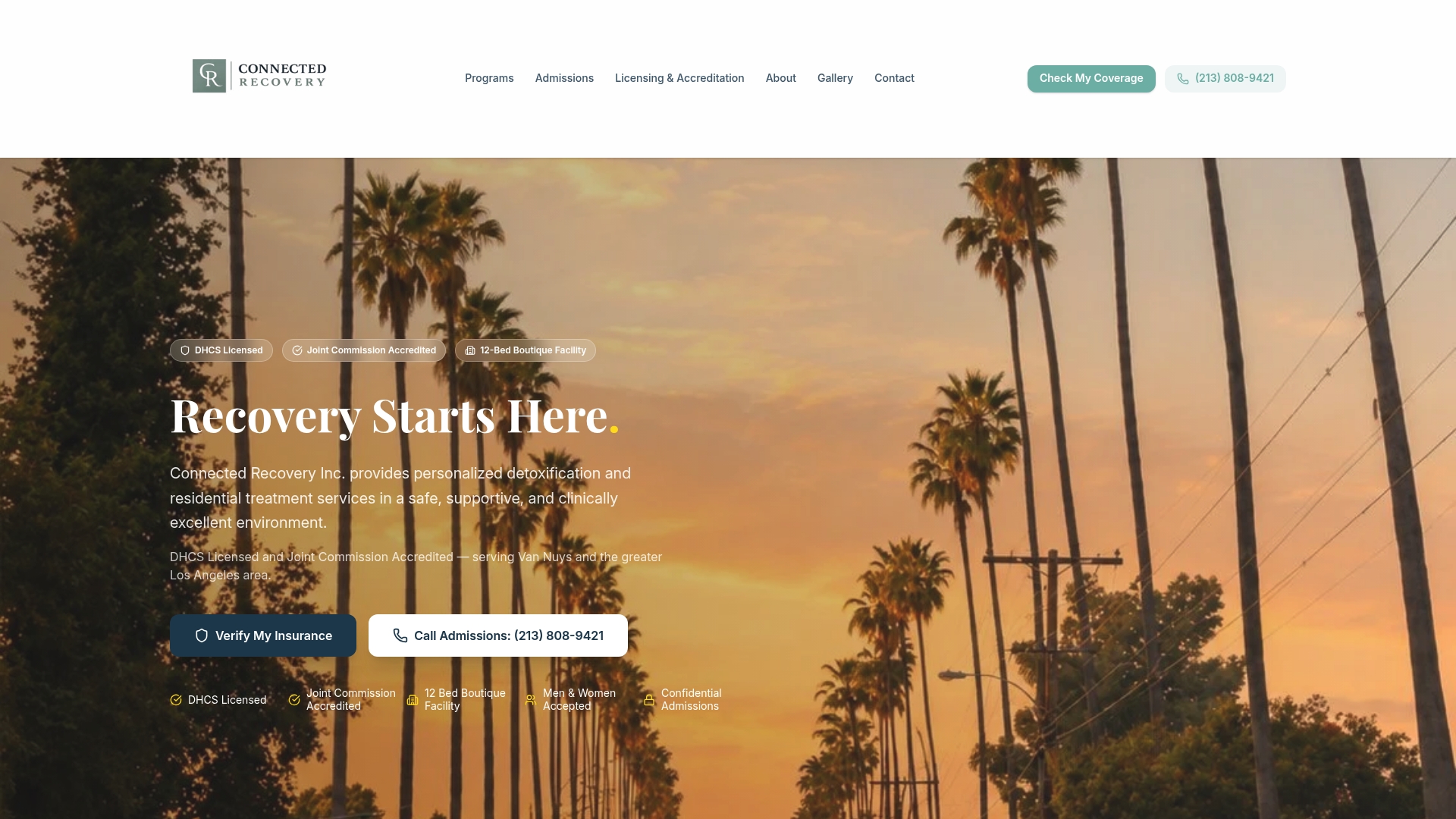
A 12-bed boutique facility in Van Nuys provides medical detox, residential treatment, and dual diagnosis care. The program emphasizes family involvement and planned aftercare to support longer-term stability. The facility reports both DHCS licensing and Joint Commission accreditation.
Core Features
Connected Recovery operates a small residential center with medical detox, residential therapy, dual diagnosis treatment, and medication-assisted treatment. The staff builds personalized treatment plans and includes family participation and aftercare planning as part of the clinical pathway. The vendor advertises DHCS licensing and Joint Commission accreditation, which signals external oversight of clinical processes.
Key Differentiator
The single standout is the boutique 12-bed model that supports individualized clinical attention in a home-like setting. That capacity lets clinicians develop focused detox plans and sustained residential care for each adult client. The approach prioritizes continuity from intake through aftercare.
Pros
Small census and a multidisciplinary clinical team let staff tailor medication-assisted treatment and psychotherapy for individual needs. The residential model pairs medically supervised detox and continued residential care to reduce handoffs between providers. Their intake workflow includes confidential insurance verification, which helps reduce administrative delay before admission.
Cons
- Limited capacity may lead to waiting times during periods of high demand.
Notable Integrations
The center connects with insurance verification services to confirm coverage before placement. That integration supports faster admissions for people using insurance and for families arranging payment. No other third-party platform integrations are listed.
Who It's For
Adults in the Los Angeles area seeking a small, medically supervised residential program for substance use disorder will find a close match. People with co-occurring mental health conditions who want family involvement and structured aftercare will benefit. The setting is not aimed at adolescents or out-of-state clients seeking local placement.
Unique Value Proposition
A capped 12-bed census enables consistent clinician to client contact and continuity of care across detox and residential phases. That configuration reduces the number of transitions a patient experiences and concentrates clinical oversight during early recovery. Families gain a predictable, small-group environment for involvement and planning.
Real World Use Case
A man in his 30s with opioid dependence enters for medically supervised detox and moves into residential treatment under the same clinical team. The program involves family sessions and a written aftercare plan that schedules follow-up supports. Insurance verification through the center speeds his admission once coverage is confirmed.
Pricing
No public rates are listed. Pricing is informational only, and admissions rely on confidential insurance verification or direct billing arrangements. Contact the center for benefits checks and placement availability.
Website: https://connectedrecoverycenter.com
Acadia Healthcare
At a Glance
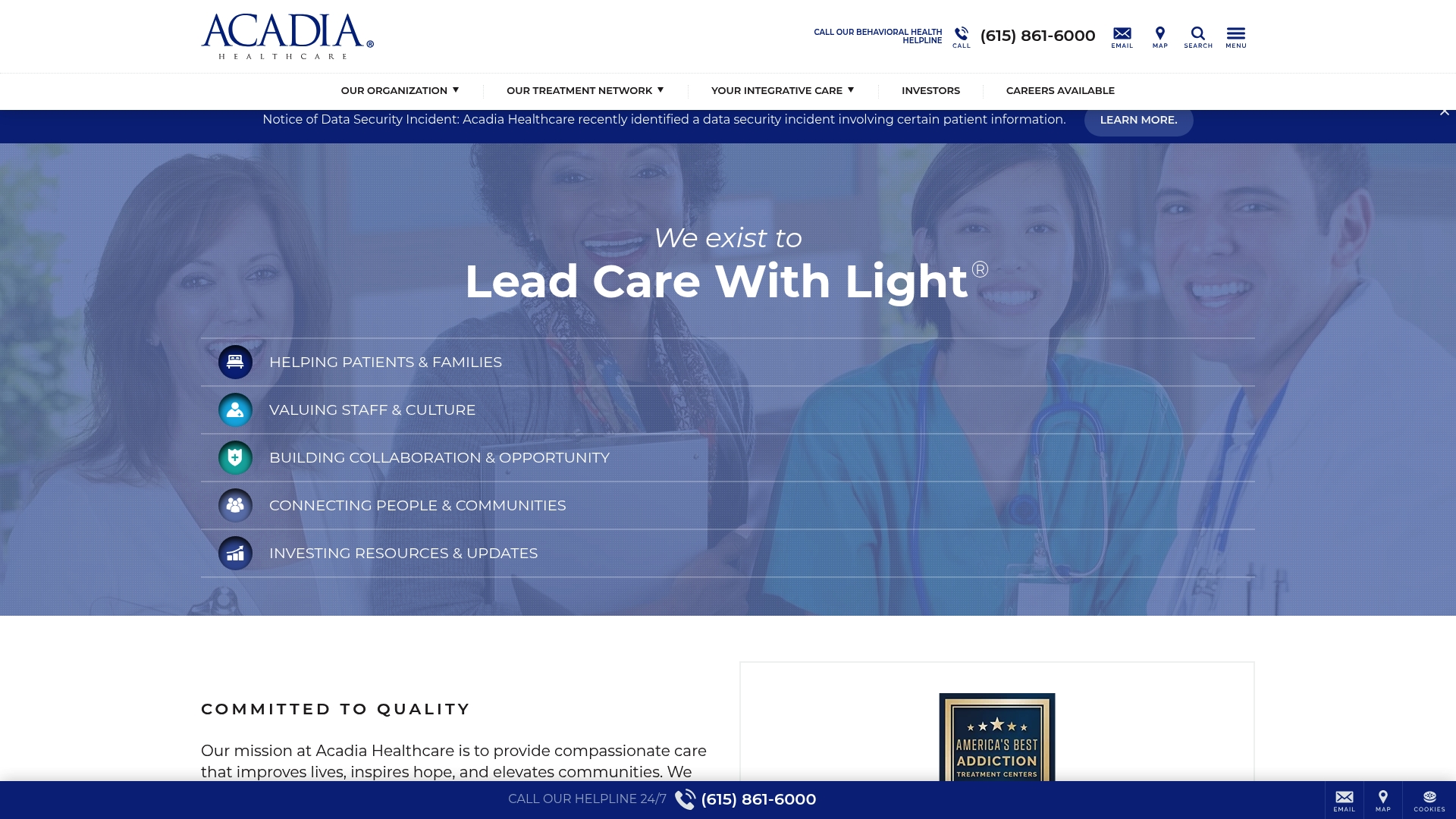
277 treatment facilities across 40 states give Acadia Healthcare a true national footprint. The network covers inpatient, residential, outpatient, detox, and medication assisted treatment. That breadth makes referrals and care transitions simpler for organizations that need multiple levels of care.
Core Features
Acadia operates a multi site network that treats depression, anxiety, bipolar disorder, PTSD, eating disorders, and substance use. Facilities offer inpatient programs, residential stays, outpatient therapy, medical detox, and medication assisted treatment. The system also runs age specific tracks for children, teens, adults, and seniors and maintains community outreach programs.
Key Differentiator
The standout is scale combined with variety of care levels. Few providers combine a network this large with both inpatient and outpatient options and programs for distinct age groups. That setup helps partners move a patient from acute stabilization into step down care within the same provider family.
Pros
A large network means broad geographic access and easier placement when bed availability changes. Acadia lists affiliations with CARF and The Joint Commission, which signals attention to accreditation and clinical standards. The group highlights research based care and community outreach, and Newsweek recognition for some centers suggests external visibility for selected programs.
Cons
- Third party reviews and external sources report variation in treatment experience across facilities, which can affect consistency of care.
- Public content lacks detailed reporting on individualized program outcomes or standardized patient results, making objective comparisons hard.
- Some site pages such as detailed pricing or program specifics appear missing or return errors, which slows pre referral research.
When It May Not Fit
Organizations that need a single small provider for very hands on partnership may find the scale a poor match. Families seeking transparent, published pricing and insurance details will encounter limited public information. Programs that prioritize a single consistent local culture may prefer smaller regional providers.
Who It's For
Hospital systems, behavioral health clinics, and community health organizations looking to expand referral options will find Acadia useful. Agencies needing multiple care levels and bed capacity across states benefit from the network. Families seeking many program types within one provider will find practical advantages when local facilities match their needs.
Real World Use Case
A community hospital lacking an adolescent psychiatric unit refers a teenager to an Acadia facility that offers a youth residential track. The hospital coordinates discharge to outpatient services inside the same network to reduce handoff friction. That chain reduces the time the patient spends without active follow up after inpatient care.
Pricing
Pricing is not published on the public site and is marked as informational only. Insurance coverage and out of pocket costs are not listed in detail and must be verified with individual facilities or payers.
Website: https://acadiahealthcare.com
Palmetto Addiction Recovery Center

At a Glance
Palmetto reports more than 30 years of operation, and the vendor advertises CARF accreditation and high success and relapse prevention rates. That combination positions the center as a long-running option for people seeking licensed care in Louisiana or remotely. The center emphasizes tailored plans for individuals and professionals and ongoing alumni engagement.
Core Features
Palmetto combines residential treatment with medically supervised detox, outpatient services, and relapse programs and pairs those levels of care with family counseling and alumni programs. Treatment plans adapt to professional needs and confidentiality requirements for people who must protect licensure. The center also states a holistic focus on physical, emotional, and spiritual recovery.
Key Differentiator
The vendor advertises CARF accreditation alongside a multi decade track record. That accreditation and longevity are the clearest claims that set Palmetto apart from many regional providers.
Pros
Palmetto’s long tenure supports institutional experience and staff familiarity with common clinical pathways. That background pairs with the center’s stated CARF accreditation, which signals adherence to external quality standards. Programs for professionals provide privacy and licensing support, and family counseling plus active alumni activities extend care beyond discharge.
Cons
- Some third party reviews raise concerns about inconsistent staff professionalism. These reports suggest variable experiences across facilities and time.
- Public details on specific treatment modalities and numerical success rates are limited. That makes it hard to compare outcomes side by side with other centers.
- Availability of specialized programs may vary by location and timing. People in certain regions may find limited slots for niche tracks.
When It May Not Fit
If you need a provider with fully public, data driven outcome reporting, Palmetto may not match that requirement. People seeking instant access to a specific specialty track should confirm local availability first. Those who place overriding weight on uniform staff ratings might prefer a different center with extensive third party reviews.
Who It's For
Adults and licensed professionals who want accredited, personalized addiction care in Louisiana or through remote arrangements will find Palmetto relevant. The center fits readers prioritizing confidentiality, family therapy options, and ongoing alumni support. It also fits people who value an established program history.
Real World Use Case
A licensed nurse with concerns about alcohol and prescription medication enrolls in Palmetto’s professional program. The center creates a tailored plan that includes medically supervised detox, residential stabilization, and family sessions. After discharge the nurse joins alumni meetings to maintain peer support while following licensure recommendations.
Website: https://palmettocenter.com
Longleaf Hospital
At a Glance
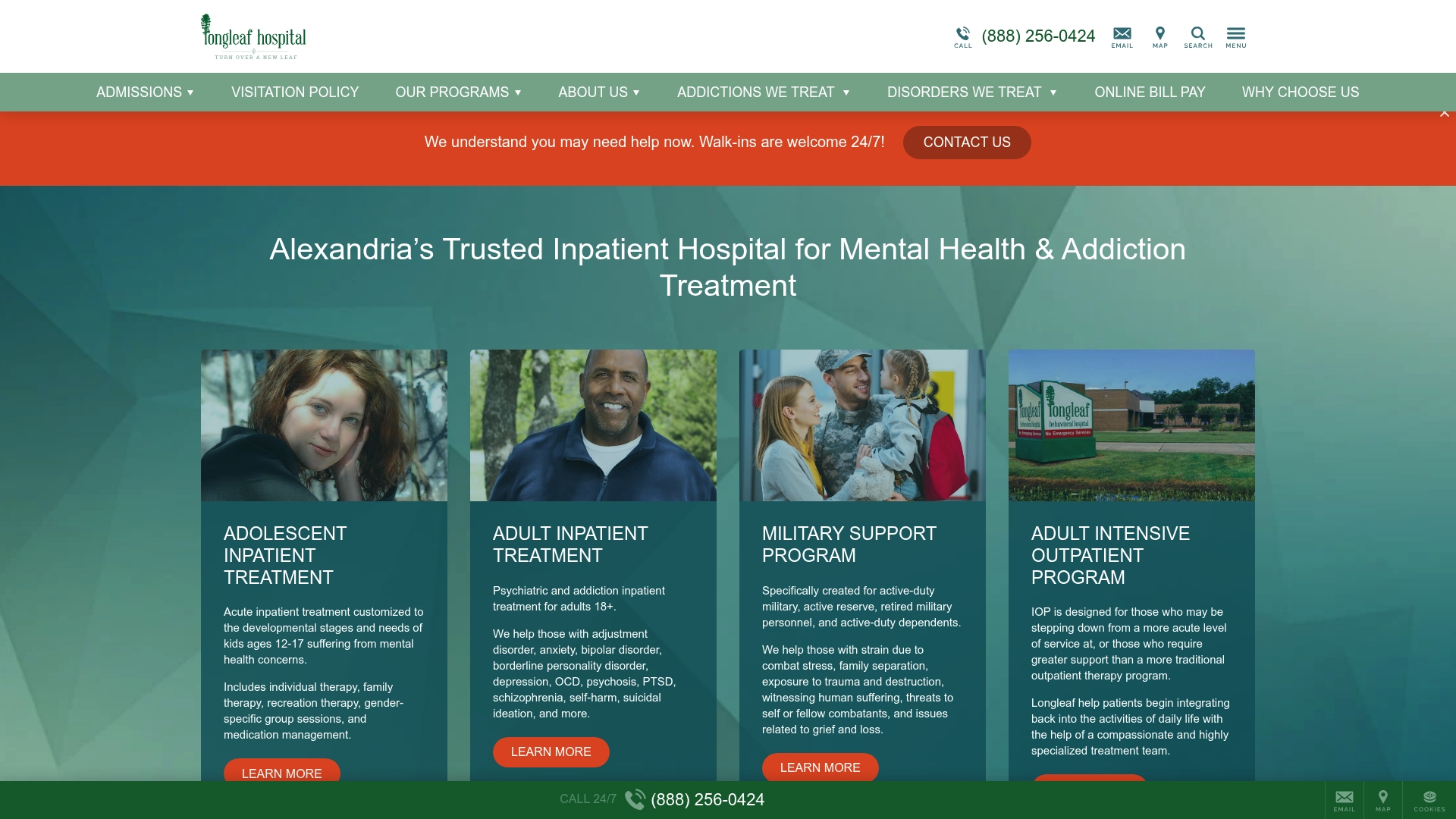
A 139-bed inpatient behavioral health hospital in Alexandria, LA. The hospital reports accreditation by the Joint Commission. It accepts most insurance, including Medicare and Medicaid, and maintains 24/7 walk-in availability for urgent assessments.
Core Features
The hospital runs inpatient, outpatient, and intensive outpatient programs that address both mental health and addiction. A multidisciplinary team of psychiatrists, therapists, and medical staff builds customized treatment plans for adolescents, adults, seniors, and military families. Services include crisis intervention, medication management, and population-specific programming.
Key Differentiator
Longleaf focuses on regionally targeted care for families and military personnel while delivering multidisciplinary inpatient services. That accreditation above supports clinical oversight and standardized care practices within its programs.
Pros
Longleaf offers highly personalized treatment across a full spectrum of care, from stabilization to step-down outpatient services. It accepts most insurance and lists Medicare and Medicaid, which reduces out-of-pocket barriers for many patients. The facility advertises 24/7 walk-in assessments, which helps people get urgent attention without lengthy waits.
Cons
- Public-facing materials lack clear pricing and fee details, which can make financial planning difficult for families.
- The site lists few third-party outcomes or success metrics, so measurable recovery rates are not available.
- Some pages contain broken links or errors, which can complicate appointment scheduling or information gathering.
Who It's For
People in the Alexandria, LA region who need urgent or ongoing behavioral health care will find relevant services here. The hospital suits adolescents with mood disorders, adults managing addiction, seniors with late-life psychiatric needs, and military families needing tailored support. If you want both inpatient stabilization and follow-up outpatient care under one roof, this facility is a fit.
Real World Use Case
A teenager with worsening depression and suicidal thoughts arrives for urgent assessment. Staff admit the teen to inpatient care, create a personalized plan, start medication as indicated, and schedule family therapy. The care team then moves the teen to outpatient follow-up once symptoms stabilize.
Pricing
Not applicable for direct online purchase. The hospital does not publish bundled pricing on its site. Most patients will rely on insurance coverage, and the facility states it accepts a wide range of plans including Medicare and Medicaid. Contact admissions directly for benefits verification and cost estimates.
Website: https://longleafhospital.com
Anabranch Recovery Center
At a Glance
Part of Summit Behavioral Healthcare, the center advertises accreditation by The Joint Commission. The facility operates in Terre Haute, Indiana, and focuses on detox, residential, outpatient, and virtual programs. It emphasizes personalized care and community reintegration for adults working on substance use and co occurring mental health challenges.
Core Features
The center describes its clinical method as evidence based and lists CBT, ACT, DBT, and REBT among therapy options. Programs span medically supervised detox, residential treatment, outpatient tracks both in person and virtual, plus alumni support. Relapse prevention and life skills education are built into program schedules to help people transition back to daily life.
Key Differentiator
Anabranch pairs tailored treatment plans with ongoing community and alumni support in an accredited setting. That combination targets continuity of care by keeping people connected after discharge. The focus suits patients who need structured follow up and local reintegration services.
Pros
Personalized treatment plans recognize individual differences in addiction and co occurring conditions. The facility offers multiple levels of care, so patients can move from detox to residential and then to outpatient without leaving the same provider network. Mind body practices such as yoga and meditation appear alongside psychiatric and behavioral therapies. Strong alumni engagement offers a local peer network for ongoing support, and the accreditation above signals adherence to external quality standards according to the center.
Cons
-
Limited public detail on insurance coverage and out of pocket costs. Families will likely need a direct call to admissions for pricing and billing specifics.
-
No independently published long term outcome data or success rates. The center lists program goals, but external longitudinal studies are not cited.
-
Virtual tracks require reliable internet and may not work well for people far from Indiana without in person options. Travel and access remain potential barriers.
When It May Not Fit
If you need clear, posted pricing or a breakdown of accepted insurance plans, this provider may not meet that need. If independent, peer reviewed outcome statistics are a priority, this program lacks those published figures. If you live outside Indiana and cannot rely on virtual care, local access to in person services could be limited.
Who It's For
Adults in Indiana seeking an accredited, evidence based rehabilitation community with structured alumni support will find a close match. Families looking for a center that offers detox, residential care, and outpatient follow up will value the single provider model. Professionals who prefer therapy choices such as CBT and DBT plus mind body options will also fit this offering.
Real World Use Case
A woman with opioid dependence enrolls in a virtual partial hospitalization program to keep work responsibilities. She receives tailored therapy, relapse prevention coaching, and remote medication management. After discharge she joins alumni meetings for peer support while transitioning to outpatient therapy.
Website: https://anabranchrecovery.com
SV Recovery LA
At a Glance
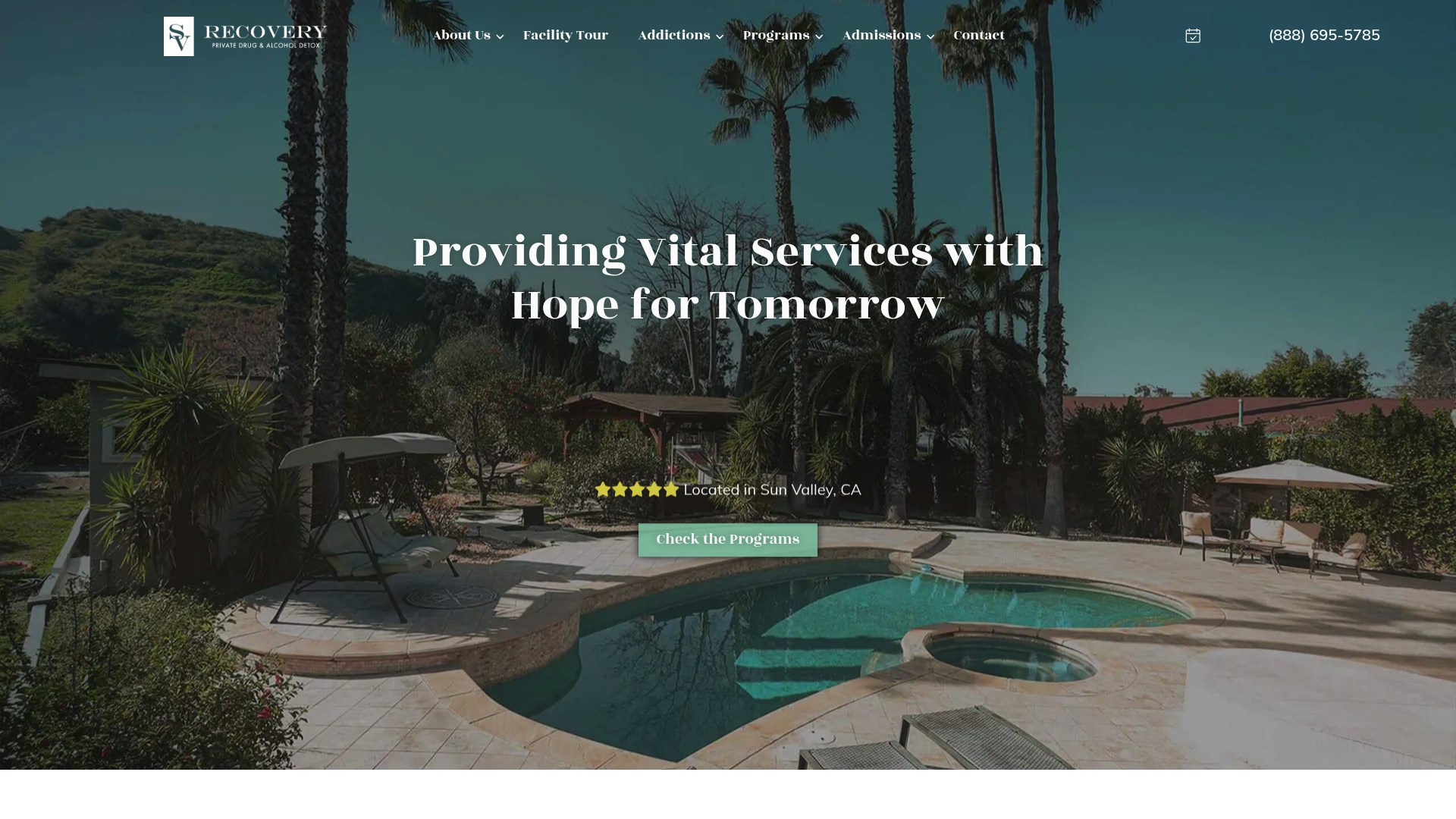
SV Recovery LA reports Joint Commission accreditation and DHCS licensing, plus 24/7 clinical coverage. The center runs a private campus in Sun Valley with scenic outdoor spaces and holistic therapies. Programs address substance use and co occurring mental health disorders and accept various insurance plans.
Core Features
Personalized inpatient program modules combine evidence based therapies such as CBT and DBT with medication assisted treatment. The care mix includes trauma therapy, family therapy, art and music therapy, and nature walks on site. A dedicated clinical team provides round the clock supervision and support.
Key Differentiator
The standout is the combination of a luxury, scenic campus with licensed clinical services. That setting lets clinicians deliver medically supervised care alongside outdoor therapy and creative modalities. Clinical staffing on site supports higher acuity needs than many nonclinical retreats.
Pros
Those credentials support clinical oversight and licensing for medical detox and inpatient care. The facility's scenic grounds and private campus reduce exposure and allow outdoor sessions and nature walks. Staff availability around the clock supports medically supervised treatment and an immediate response to withdrawal needs.
Cons
- Cost details and exact insurance coverage are not published, so out of pocket estimates are unclear.
- Program durations, step down care levels, and transition pathways are not specified in available materials.
- No specific aftercare, alumni support, or long term follow up is described.
When It May Not Fit
If you need transparent pricing or a public fee schedule, this option may not fit your planning needs. If insurance verification or a clear step down continuum is required, ask the team for written details before committing. Clients seeking a documented alumni program for long term support should confirm what follow up exists.
Who It's For
Adults in Los Angeles who want private, upscale inpatient care and therapies that combine evidence based and holistic approaches will find this option relevant. Family members seeking an accredited, medically supervised setting for a loved one also match this profile. It suits people who value discretion and convenient access to outpatient follow up in the San Fernando Valley area.
Real World Use Case
A busy executive needs discreet, scheduled inpatient detox and therapy while keeping work commitments. The facility can provide private housing, medication assisted treatment, trauma therapy, and outdoor sessions that fit a tight calendar. Admissions staff coordinate insurance checks and scheduling to minimize disruption.
Pricing
Pricing is not specified and typically varies with personalized treatment plans and insurance coverage. Prospective clients should request an itemized estimate and benefits verification from admissions before making arrangements.
Website: https://svrla.com
Comparison of alternatives
Residential addiction treatment programs vary widely in their structure, scope, and focus, catering to a diverse range of needs among those seeking care. Each facility reviewed brings standout attributes relevant to specific recovery management scenarios.
Focus and accessibility: where programs differ
Connected Recovery Inc. excels in offering an intimate setting with its capped 12-bed model, allowing for deep personalization and consistent clinical engagement. Acadia Healthcare, with its scale of 277 facilities across 40 states, shines by providing geographically diverse care options suitable for clients seeking treatment flexibility and continuity across multiple levels of care. In contrast, Palmetto Addiction Recovery Center emphasizes its 30-year tenure, fostering an experienced approach to professional and alumni-focused services tailored for licensed individuals seeking privacy and confidentiality.
and regional emphasis: examining the outcomes
Longleaf Hospital, strategically located in Louisiana, caters to a broad demographic range, including military families, by integrating personalized treatment across numerous spectrums of care. Alternatively, SV Recovery LA highlights the importance of environment in healing, combining its upscale campus in Sun Valley with evidence-based and therapeutic modalities, appealing to clients prioritizing facility ambiance and location convenience. Anabranch Recovery Center provides a balance by emphasizing alumni engagement and a continuum of care within its community-centered recovery approach.
Best fit
- If you’re seeking a small, highly personalized experience, Connected Recovery Inc. offers a boutique setting that emphasizes intensive, family-involved care.
- Those requiring extensive program availability across different locations will appreciate Acadia Healthcare’s vast network for accessibility.
- Professionals in need of privacy and licensure protection should consider Palmetto Addiction Recovery Center, given its established services for individuals in sensitive occupational situations.
- People prioritizing a scenic and relaxing environment may find SV Recovery LA’s approach with outdoor and modalities beneficial.
- For regional clients focused on steady progression from inpatient to outpatient care, Longleaf Hospital offers a smooth, personalized transition.
Our pick
Connected Recovery Inc. is the ideal facility for those who highly value intimate and personalized care within a stable, small-community setting. The focus on continuity from detox to aftercare ensures that clients experience thoughtful, tailored therapeutic engagement. However, for clients whose needs include extensive geographic flexibility or niche professional programs, other exceptional facilities like Acadia Healthcare or Palmetto Addiction Recovery Center may be more suitable.
Choosing a residential addiction treatment center involves evaluating key factors such as the breadth of services, accreditation, and individualized care.
| Facility | Core Features | Key Differentiator | Best For | Pricing | Notable Limitation |
|---|---|---|---|---|---|
| Connected Recovery | Medical detox, dual diagnosis treatment | Boutique 12-bed model prioritizing attention | Adults in Los Angeles seeking focused residential care | Price not published | Limited capacity may lead to waiting times |
| Acadia Healthcare | Nationwide inpatient and outpatient care | Large network supporting diverse age groups | Families seeking broad availability across states | Price not published | Variability in treatment experience across facilities |
| Palmetto Recovery Center | Residential and detox programs, alumni support | Multi-decade operation with CARF accreditation | Professionals needing confidential, targeted treatment | Price not published | Inconsistent staff professionalism reported in reviews |
| Longleaf Hospital | Comprehensive inpatient behavioral care | Targeted programming for families and military | Louisiana residents needing urgent behavioral care | Price not published | Lack of published outcome statistics |
| Anabranch Recovery Center | Detox, residential, and virtual care | Focus on continuity through alumni support | Adults in Indiana seeking community reintegration | Price not published | Insurance coverage details not publicly available |
| SV Recovery LA | Scenic facility with holistic therapies | Integration of medically supervised and outdoor care | Individuals seeking upscale inpatient options | Price not published | Limited aftercare or alumni support described |
Finding a Smaller, Personalized Alternative to Longbranchhealthcare.com
Many adults and families searching for longbranchhealthcare.com alternatives want truly personalized care within a safe and supportive environment. The challenge lies in locating a provider that limits bed capacity to offer tailored treatment plans, strong medical supervision, and direct family involvement through all recovery stages.
Connected Recovery offers a 12-bed boutique setting with 24/7 medical oversight for detox and residential therapy. Patients benefit from coordinated care addressing substance use and co-occurring mental health conditions. This approach reduces transitions between providers and fosters lasting recovery through planned aftercare.
If you seek a focused and family-inclusive treatment option, visit Connected Recovery now. Learn how their personalized programs support long-term stability and medical detox in an intimate setting.
FAQ
How does Connected Recovery support aftercare planning?
Connected Recovery emphasizes planned aftercare to support longer-term stability for its clients. The facility builds aftercare strategies into its personalized treatment plans, ensuring clients have follow-up support once they transition from residential care. Patients can expect structured follow-up plans that include both family involvement and ongoing engagement.
What is the difference between Connected Recovery and Acadia Healthcare?
Acadia Healthcare operates a large multi-site network that treats a wide range of mental health and addiction issues. It offers various programs catering to different age groups and conditions, making it a strong choice for organizations needing diverse treatment options. Connected Recovery, on the other hand, offers a boutique setting that provides individualized clinical attention, particularly for adults with substance use disorders in a more intimate environment.
Can I expect tailored treatment plans at Connected Recovery?
Connected Recovery generates personalized treatment plans based on individual assessments and needs. The facility focuses on building a clinical pathway that effectively integrates family involvement and structured aftercare, aligning well with the goals of each client. This personalized approach enhances the effectiveness of the treatment experience, making it a strong fit for those seeking customized care.
Which facility offers the best continuity of care during detox and residential phases?
Connected Recovery excels at maintaining continuity of care due to its small 12-bed model, which allows for consistent clinician and client contact throughout the detox and residential phases. This structure minimizes disruptions and aids in the overall treatment process, ensuring that clients receive steady and attentive care.
What should I consider regarding insurance coverage at Connected Recovery?
Connected Recovery includes confidential insurance verification in its intake workflow, which helps streamline admissions and reduce delays. Since pricing isn't publicly listed, contacting the facility for specific coverage details and potential costs before beginning treatment is advisable.