
Reintegration is defined as the active, structured transition from residential addiction treatment back into independent daily life, and it is the phase where most recoveries are either solidified or lost. To successfully reintegrate life after residential treatment, you need continuing care, a rebuilt daily routine, and a support network in place before you walk out the door. Structured aftercare engagement raises one-year sobriety success by 50%. That number tells you this phase is not optional maintenance. It is the treatment. The clinical term for this process is "continuing care," and understanding both terms helps you communicate clearly with your treatment team and insurance providers.
What are the key prerequisites for successful reintegration?
The foundation of a smooth transition after treatment is built before discharge, not after. Waiting until you are home to figure out next steps is one of the most common and costly mistakes in early recovery.
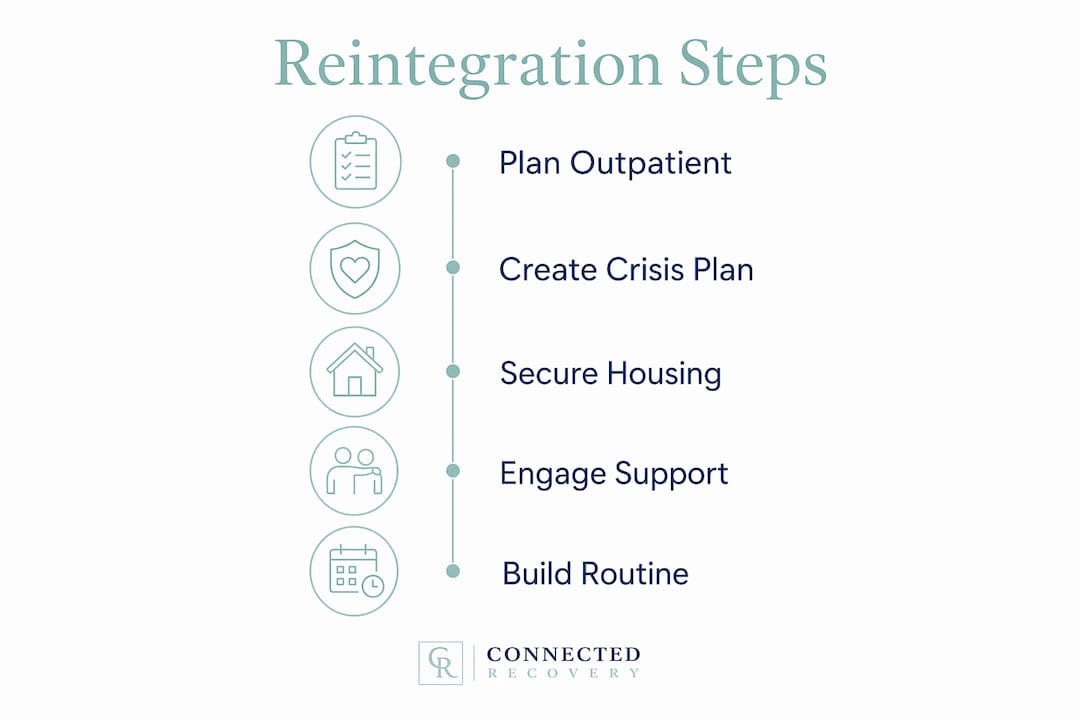
Arrange outpatient care before you leave. A confirmed outpatient start date within 7 days of discharge is directly linked to better sustained recovery outcomes. Contact your outpatient provider, schedule your first appointment, and confirm transportation before your last day in residential care.
Get a written relapse prevention and crisis plan. This document should list your warning signs, your coping steps, your emergency contacts, and the number for your treatment team. Families often underestimate how specific this plan needs to be. Vague plans fail in real moments of crisis.
Secure a stable living environment. A sober living home, a supportive family household, or any setting that bridges the gap between treatment and independence reduces the chaos that triggers relapse. Unstable housing is one of the top predictors of early relapse.

Train your household on naloxone. For anyone with an opioid history, written crisis plans paired with naloxone training for family members reduce risk during the reintegration window. Naloxone kits are available at most pharmacies without a prescription.
| Tool or Support | Purpose |
|---|---|
| Outpatient therapy appointment | Maintains clinical accountability after discharge |
| Written crisis and relapse prevention plan | Provides a clear action path during high-risk moments |
| Stable, sober living environment | Removes environmental triggers and supports routine |
| Naloxone kit and family training | Reduces overdose risk for opioid history cases |
| Daily routine blueprint | Structures sleep, meals, and exercise as medical treatment |
Pro Tip: Build a recovery kit before discharge. Include your counselor's number, your outpatient schedule, a list of your top three coping strategies, and one motivational reminder that is personal to you. Keep it somewhere visible at home.
What are the step-by-step strategies to rebuild daily life?
Life adjustment post-rehab requires deliberate structure. Once treatment structure is removed, daily choices can feel overwhelming. The answer is not willpower. It is a schedule.
- Engage outpatient care within 48 hours. Do not let a single unstructured day become a week. Call your outpatient provider the day you get home and confirm your first session.
- Build a daily schedule and treat it like a prescription. Block time for sleep, meals, exercise, therapy, and support group meetings. Structured daily routines function as core medical treatment for brain healing in early recovery, not just good habits.
- Identify your relapse triggers in writing. Common triggers include specific people, locations, emotional states like loneliness or frustration, and unstructured time. Write them down and plan a specific response for each.
- Recognize and manage the "pink cloud" phase. Many people feel euphoric in the first weeks after discharge. This euphoric phase can mask real vulnerability and lead to underestimating relapse risk. Feeling good is not a sign you can skip therapy.
- Follow your medication schedule without exception. Clinical guidelines recommend weekly individual outpatient therapy for 3–6 months and monthly psychiatric medication management initially. Spacing out appointments happens only after stability is confirmed by your provider.
- Plan for boredom and social pressure. Both are high-risk states. Have a specific activity or contact ready for moments when you feel idle or pressured to use.
- Use coping tools daily, not just in crisis. Journaling, meditation, and physical exercise are most effective when practiced consistently, not only when things get hard.
Pro Tip: Set a five-minute journaling habit each morning. Write one thing you are grateful for, one potential trigger for the day, and one coping plan. This practice takes less than five minutes and builds the self-awareness that protects your recovery.
How can family and social support help after residential care?
Family involvement is one of the most reliable predictors of successful reintegration. It also carries real risks if boundaries are not clearly defined from the start.
Continuing family therapy approaches like CRAFT, combined with peer recovery groups, improve reintegration outcomes and reduce relapse rates. CRAFT stands for Community Reinforcement and Family Training, and it teaches families how to support recovery without enabling use. Connected Recovery's family program provides this kind of structured guidance for households navigating the post-discharge period.
The written crisis plan is a family document, not just a personal one. Every person in your household should know what to do if you show signs of relapse. That means knowing who to call, what to say, and where the naloxone is kept. Families often skip this step because it feels uncomfortable. Skipping it is far more costly.
Family support best practices:
- Attend family therapy sessions during and after residential treatment
- Review and sign the written crisis plan together before discharge
- Complete naloxone training if opioid use is part of the history
- Establish clear household boundaries around substances and recovery-related behaviors
- Connect with Al-Anon or Nar-Anon for peer support specific to family members
- Avoid enabling behaviors like covering up consequences or minimizing warning signs
- Check in regularly without interrogating, showing support without surveillance
Sponsors and peer support groups play a complementary role. Alcoholics Anonymous, Narcotics Anonymous, and SMART Recovery all offer structured community that fills the social gap left by residential treatment. Isolation is a relapse risk. Community is a protective factor.
What common challenges arise after rehab completion?
The first 90 days post-discharge carry the highest relapse risk. Knowing the most common challenges in advance gives you a plan before the pressure hits.
The most dangerous pattern clinicians see is what insiders call the "feeling better" cycle. A person leaves treatment, feels genuinely improved, and gradually stops attending therapy or taking medication. Relapse most commonly occurs 2–6 months post-discharge in people who stopped care after feeling better. Feeling better is the result of treatment. It is not a reason to stop treatment.
| Common Challenge | Practical Solution |
|---|---|
| Feeling better and stopping care | Treat therapy and medication as non-negotiable for at least 6 months |
| Overwhelming independence after structure | Use a written daily schedule and check in with your counselor weekly |
| Encountering old triggers or social circles | Create a specific avoidance or exit plan for each high-risk situation |
| Emotional volatility and mood swings | Normalize this with your therapist; adjust medication if needed |
| Boredom and unstructured time | Schedule productive activity, exercise, or volunteer work daily |
| Relapse warning signs appearing | Contact your treatment team immediately, do not wait |
Managing independence anxiety is real and common. Gradual step-down transitions from residential to outpatient care produce better outcomes than abrupt independence. If you feel overwhelmed, that is clinical information, not personal failure. Tell your provider.
Pro Tip: If you notice two or more warning signs in a single week, contact your treatment team the same day. Warning signs include skipping meetings, isolating, romanticizing past use, or increased irritability. Stepping back up to a higher level of care is a clinical decision, not a setback.
Key takeaways
Successful reintegration after residential treatment requires structured continuing care, a written crisis plan, and active family involvement from the day of discharge forward.
| Point | Details |
|---|---|
| Start aftercare within 7 days | Confirm your outpatient appointment before leaving residential treatment. |
| Treat routine as medical care | Daily structure for sleep, exercise, and therapy reduces relapse risk clinically. |
| Share your crisis plan with family | A written plan with specific steps and contacts protects you in high-risk moments. |
| Watch for the "feeling better" trap | Stopping care after feeling improved is the most common path to relapse within 6 months. |
| Use peer and family support together | Sponsors, support groups, and family therapy each address different recovery needs. |
What I have learned about reintegration that most guides get wrong
Most articles about life adjustment post-rehab focus on motivation and mindset. Those things matter. But in my experience working with people in early recovery, the single biggest predictor of success is not attitude. It is logistics.
The people who struggle most after discharge are not the ones who want recovery less. They are the ones who left without a confirmed outpatient appointment, without a written plan, and without a household that understood its role. Recovery does not fail because someone stopped caring. It fails because the structure disappeared and nothing replaced it.
Families are both the greatest resource and, when unprepared, a genuine stressor. I have seen households with the best intentions accidentally enable relapse by avoiding hard conversations or covering up warning signs out of love. The most helpful thing a family can do is get educated, get a written plan, and get comfortable saying the uncomfortable things early.
One more thing that rarely gets said directly: step-down care is not a consolation prize for people who are not ready for real life. It is the clinical standard. Intensive Outpatient Programs, Partial Hospitalization Programs, and ongoing individual therapy are not signs of weakness. They are the evidence-based path that actually works. Embrace them without apology.
Recovery is not a straight line, and the early months will test you in ways residential treatment did not prepare you for completely. That is normal. The goal is not perfection. The goal is to stay connected to care, stay honest with your support network, and reach out before a warning sign becomes a crisis.
— Jim
How Connected Recovery supports your transition home
Connected Recovery is a boutique, 12-bed residential facility in Van Nuys, CA, built specifically for the kind of individualized care that makes reintegration work. The small size is intentional. Every client leaves with a personalized aftercare plan, not a generic checklist.
Connected Recovery's addiction treatment programs include residential care, structured aftercare planning, relapse prevention, family programming, and case management services that follow you through the transition period. For clients managing co-occurring mental health conditions, the dual diagnosis program addresses both substance use and underlying disorders simultaneously. If you or someone you love is ready to take the next step, contact Connected Recovery to build a reintegration plan that starts before discharge and holds through the critical first months.
FAQ
How long does reintegration after residential treatment take?
Most clinicians consider the first 90 days the highest-risk window, but structured continuing care for 6–12 months produces the strongest long-term outcomes. Recovery timelines vary based on substance history, co-occurring conditions, and support systems.
What is the most common reason people relapse after residential treatment?
The most common relapse pathway is stopping therapy or medication after feeling better, typically 2–6 months post-discharge. Continued care, even when you feel stable, is the primary protection against this pattern.
Should family members attend therapy during reintegration?
Yes. Continuing family therapy and connecting with programs like Al-Anon or Nar-Anon improves reintegration outcomes for both the person in recovery and their household. A shared written crisis plan is a minimum starting point.
What is a sober living home and do I need one?
A sober living home is a structured, substance-free residence that provides community and accountability during the transition from residential care to full independence. It is especially useful when the home environment carries triggers or lacks recovery support.
When should I step back up to a higher level of care?
Contact your treatment team immediately if you notice two or more warning signs in a week, including skipping meetings, isolating, or romanticizing past use. Stepping up to Intensive Outpatient or Partial Hospitalization is a clinical decision that protects your recovery, not a sign of failure.