
A detox emergency is defined as a severe withdrawal episode that threatens life and requires immediate medical intervention. These crises occur when the body reacts violently to the sudden absence of alcohol, benzodiazepines, or opioids after prolonged use. Conditions like delirium tremens (DTs) and withdrawal seizures are the most dangerous examples. Knowing how to recognize detox emergency signs before they escalate can be the difference between life and death. Resources like the SAMHSA National Helpline (1-800-662-HELP) and hospital emergency rooms are your first line of defense.
How to recognize detox emergency signs early
A detox emergency is not simply feeling sick during withdrawal. It is a medical crisis with specific, identifiable warning signs that demand urgent care.
The most serious condition is delirium tremens. DTs typically appear 48–96 hours after the last drink, though symptoms can begin as early as 12–48 hours. Left untreated, DTs carry a mortality rate of up to 5%. That number reflects how quickly this condition can become fatal without professional intervention.

The core warning signs to watch for
Recognizing detox symptoms early means knowing which signs cross the line from uncomfortable to dangerous. The following symptoms indicate a potential detox emergency:
- Severe confusion or disorientation that worsens rapidly
- Visual or auditory hallucinations (seeing or hearing things that are not there)
- Uncontrollable tremors or shaking of the hands, arms, or entire body
- Seizures of any kind, including brief or partial episodes
- High fever above 101°F
- Rapid or irregular heartbeat exceeding 100 beats per minute at rest
- Dangerously high blood pressure with readings above 160/100 mmHg
- Severe agitation or extreme psychological distress
- Profuse sweating and signs of dehydration
These symptoms do not always arrive together. A single seizure or a sudden spike in confusion is enough to call 911 immediately.
Pro Tip: Symptom severity can change within minutes during a detox crisis. If you are unsure whether what you are seeing qualifies as an emergency, treat it as one. Erring on the side of caution saves lives.
The 12–96 hour window after stopping substance use is the highest-risk period. Anyone stopping heavy alcohol or benzodiazepine use should be monitored continuously during this time, ideally under medical supervision.
What does vital sign monitoring reveal during detox?
The role of vital sign monitoring in detox is to catch dangerous physiological changes before they become irreversible. Heart rate, blood pressure, body temperature, and breathing rate all shift during withdrawal. Tracking these numbers gives medical staff the earliest possible warning of a crisis developing.
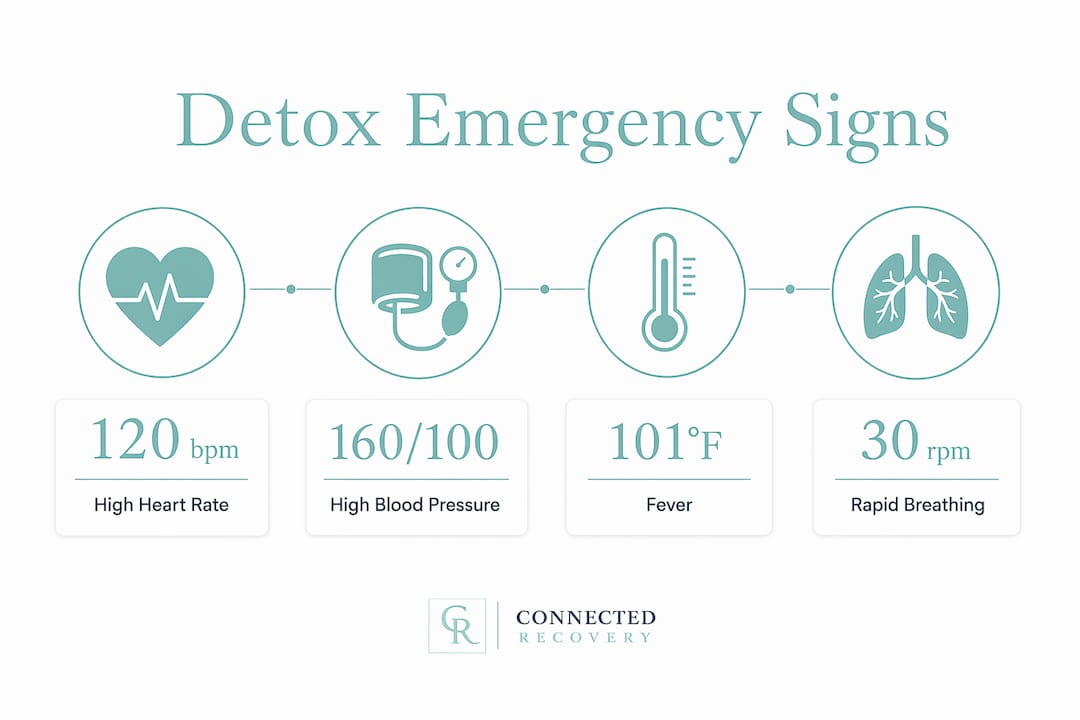
Elevated blood pressure, increased heart rate, rapid breathing, and fever are the four vital sign changes most associated with worsening withdrawal. Each one alone is a signal. All four together constitute a medical emergency.
The ciwa-ar scale: a clinical standard
Medical teams use the CIWA-Ar scale to assess alcohol withdrawal severity. CIWA-Ar stands for Clinical Institute Withdrawal Assessment for Alcohol, Revised. It scores symptoms like tremor, nausea, sweating, and anxiety on a numbered scale. Scores above 15 typically indicate severe withdrawal requiring immediate medication. This tool improves early identification of patients who need emergency detoxification.
The table below summarizes the vital sign thresholds that indicate escalating risk during detox:
| Vital Sign | Normal Range | Concerning Level | Emergency Level |
|---|---|---|---|
| Heart Rate | 60–100 bpm | 100–120 bpm | Above 120 bpm |
| Blood Pressure | Below 120/80 mmHg | 140/90–160/100 mmHg | Above 160/100 mmHg |
| Body Temperature | 97–99°F | 99–101°F | Above 101°F |
| Respiratory Rate | 12–20 breaths/min | 20–25 breaths/min | Above 25 breaths/min |
Vital sign trends matter as much as single readings. A heart rate climbing steadily over two hours tells a different story than a single elevated reading. Medical staff use these trends to time medication and decide when hospital transfer is necessary.
Pro Tip: If you are caring for someone at home during early withdrawal, check their pulse and breathing every 30 minutes. A heart rate above 120 bpm at rest is a clear signal to call 911 without delay.
Mild withdrawal vs. detox emergency: what is the difference?
Not every withdrawal symptom signals a crisis. Understanding the difference between typical detox withdrawal signs and a true emergency prevents both panic and dangerous complacency.
Mild to moderate withdrawal symptoms include body aches, anxiety, fatigue, nausea, and digestive discomfort. These are uncomfortable but not immediately life-threatening. Emergency symptoms involve the central nervous system and cardiovascular system in ways that can cause permanent damage or death within hours.
Who faces the highest risk?
Certain individuals face a significantly higher chance of a detox emergency. Risk factors include a history of long-term heavy alcohol use, previous complicated withdrawals, co-occurring medical conditions like heart disease or liver damage, and any history of self-harm. These factors increase the likelihood of severe withdrawal requiring hospital-level care. Anyone with two or more of these risk factors should never attempt detox without medical supervision.
The comparison table below clarifies the distinction between manageable withdrawal and a true crisis:
| Symptom Category | Mild to Moderate Withdrawal | Detox Emergency |
|---|---|---|
| Mental State | Mild anxiety, irritability, poor sleep | Severe confusion, hallucinations, delirium |
| Physical Symptoms | Nausea, sweating, headache, fatigue | Uncontrollable tremors, seizures, high fever |
| Vital Signs | Slightly elevated heart rate or blood pressure | Heart rate above 120 bpm, BP above 160/100 mmHg |
| Timeframe | Peaks at 24–48 hours, gradually improves | Worsens rapidly, especially at 48–96 hours |
| Required Response | Medical monitoring and supportive care | Immediate 911 call and emergency room treatment |
Underestimating symptoms is the most common and most dangerous mistake families make. A person who seemed "just anxious" at midnight can be in full DTs by morning. When in doubt, act.
What to do when you identify a detox crisis
Speed is the defining factor in detox emergency outcomes. Prompt emergency room care includes benzodiazepine administration and vital sign stabilization, both of which prevent fatal outcomes. Every minute of delay increases risk.
Follow these steps immediately if you recognize a detox emergency:
- Call 911 without hesitation. Describe the symptoms clearly: seizure, confusion, high fever, or uncontrollable shaking. Do not wait to see if symptoms improve on their own.
- Stay with the person. Do not leave them alone under any circumstances. Keep them calm and as still as possible.
- Clear the area of hazards. If they are seizing, move furniture and sharp objects away. Do not restrain them.
- Note the time symptoms began. Emergency responders need this information to guide treatment decisions.
- Do not give food, water, or any substance. This is especially critical during a seizure, as it creates a choking risk.
- Gather medication information. If possible, collect any prescription bottles or information about substances used. This helps the ER team act faster.
- Contact SAMHSA after stabilization. The SAMHSA National Helpline at 1-800-662-HELP connects families to treatment referrals 24 hours a day, 7 days a week, in both English and Spanish.
Pro Tip: Never attempt to manage a detox emergency at home with over-the-counter medications. Benzodiazepines like diazepam or lorazepam are the medical standard for alcohol withdrawal seizures and DTs. Only a licensed medical team can administer them safely.
After the immediate crisis is resolved, the emergency room connects patients to ongoing alcohol addiction treatment or drug treatment programs. Stabilization is the beginning, not the end.
Key takeaways
Recognizing a detox emergency requires knowing the specific vital sign thresholds, symptom clusters, and risk factors that separate dangerous withdrawal from manageable discomfort.
| Point | Details |
|---|---|
| Define the emergency clearly | A detox emergency involves seizures, DTs, or vital sign collapse requiring immediate 911 response. |
| Know the danger window | Symptoms peak between 48–96 hours after last use, with DTs carrying up to 5% mortality untreated. |
| Monitor vital signs actively | Heart rate above 120 bpm or blood pressure above 160/100 mmHg signals an emergency-level crisis. |
| Identify high-risk individuals | Long-term heavy use, prior complicated withdrawals, and co-occurring conditions raise emergency risk significantly. |
| Act without delay | Call 911 immediately, stay with the person, and never give food or drink during a seizure. |
What i have learned from watching families navigate this
The hardest part of a detox emergency is not the medical complexity. It is the hesitation. I have seen families wait hours before calling for help because they did not want to overreact, or because the person insisted they were fine. That hesitation is understandable. It is also the most dangerous thing that can happen.
What I have found over years of working in this space is that most people who witness a detox crisis describe the same experience afterward: the signs were there earlier than they realized. The confusion that seemed like tiredness. The shaking that looked like nerves. The moment they understood what was actually happening, they wished they had called sooner.
The clinical tools exist. The CIWA-Ar scale, vital sign thresholds, and symptom checklists give medical teams a clear framework. But loved ones at home do not have those tools. What they have is this: if something looks wrong, it probably is. The body does not produce high fever, uncontrollable tremors, and confusion simultaneously for minor reasons.
Medical detox is not a last resort. It is the safest first step in recovery. Choosing supervised medical detox from the start removes the risk of this crisis entirely. That is the conversation I wish more families had before an emergency forced the decision.
— Jim
How connected recovery keeps detox safe around the clock
When someone you care about is facing withdrawal, the stakes are too high for guesswork.

Connected Recovery provides 24/7 medically supervised detox at its boutique 12-bed facility in Van Nuys, CA. The clinical team monitors vital signs continuously, uses validated tools like the CIWA-Ar scale, and administers medications at the first sign of escalation. For individuals with co-occurring mental health conditions, Connected Recovery's dual diagnosis treatment addresses both conditions from day one. From initial stabilization through aftercare planning, every step is coordinated. If you or someone you love is approaching withdrawal, reach out now through the medical detox program page to speak with the admissions team.
FAQ
What is a detox emergency?
A detox emergency is a life-threatening withdrawal episode characterized by seizures, delirium tremens, or dangerous vital sign changes requiring immediate emergency medical care.
When do detox emergency symptoms typically start?
Severe symptoms like DTs typically appear 48–96 hours after the last drink, though early signs can begin within 12–48 hours of stopping alcohol or other substances.
What vital signs indicate a detox emergency?
A heart rate above 120 bpm, blood pressure above 160/100 mmHg, body temperature above 101°F, or a respiratory rate above 25 breaths per minute each signal an emergency-level withdrawal crisis.
Can you manage a detox emergency at home?
No. Detox emergencies require benzodiazepine administration and continuous vital sign monitoring that only a hospital or licensed medical detox facility can provide safely.
Who should i call during a detox emergency?
Call 911 immediately for any active seizure, hallucination, or severe confusion. After stabilization, contact the SAMHSA National Helpline at 1-800-662-HELP for treatment referrals available 24/7.