
Alcohol detox at home is not the safe path for anyone with real dependence. If you or a family member has signs of moderate to severe alcohol withdrawal risk, a residential facility with 24/7 medical supervision is the correct setting. Withdrawal can escalate fast into seizures or delirium tremens, and only continuous monitoring, medication, and nutritional support catch that in time. Call a licensed residential detox program today, or emergency services now if severe symptoms are already present.
TL;DR:
- Individuals with a history of withdrawal seizures, delirium tremens, or heavy dependence on alcohol are at high risk and require inpatient detox with medical supervision.
- Residential detox provides continuous vital sign monitoring, symptom assessment, medication management, and nutritional support, which cannot be safely replicated at home.
- Most acute alcohol withdrawal symptoms peak between 48 to 72 hours, necessitating close observation and rapid response capabilities that only a specialized facility can reliably offer.
- A comprehensive discharge plan that includes ongoing treatment, relapse prevention, family involvement, and follow-up is crucial for long-term recovery success after detox.
- Outpatient or community-based detox options may suit lower-risk cases, but even one or two risk factors generally warrant a professional evaluation before attempting a lighter approach.
Table of Contents
- Who Actually Needs Residential Alcohol Detox?
- What Does Medically Supervised Detox Actually Include?
- What Happens Day by Day During Residential Detox?
- Why Detox Is the Start, Not the Finish
- What If You Don't Need Inpatient Detox?
- A Provider's View on Why Small-Scale, Integrated Care Matters
- How Connected Recovery Supports a Safe Detox
- Sources
- FAQ
Who Actually Needs Residential Alcohol Detox?
The decision shouldn't hinge on willpower or how motivated someone feels to quit. The ASAM alcohol withdrawal management guideline is explicit about this: inpatient management is the standard for moderate-to-severe withdrawal risk, and triage runs on objective clinical factors, not intent. That's a meaningful distinction for families trying to figure out what "bad enough" actually means.
Certain risk factors push someone firmly into inpatient territory:
- A history of withdrawal seizures or delirium tremens (DTs) during a prior attempt to stop
- Prolonged, heavy daily drinking rather than occasional binge patterns
- Concurrent dependence on benzodiazepines, which compounds withdrawal risk
- Significant medical comorbidities like liver disease, heart conditions, or diabetes
- Pregnancy
- Age over 65, when the body handles withdrawal stress less predictably
- An unstable or unsafe home environment with no one to monitor symptoms
- A previous failed attempt at home detox
Each of these raises the odds of a complication spiraling before anyone notices. A person with prior DTs, for example, is statistically far more likely to have them again. Someone mixing alcohol and benzodiazepines faces overlapping withdrawal syndromes that a home environment has no way to track. Clinicians use the CIWA-Ar scale (Clinical Institute Withdrawal Assessment for Alcohol) to score severity in real time and decide whether medication needs adjusting right now, not at the next scheduled check-in. That kind of trending data simply doesn't exist in a home setting.
What Does Medically Supervised Detox Actually Include?
Ask any program what "medical detox" means and you should get a specific answer, not a vague reassurance. Here's what residential care is built to provide:
- Continuous vital-sign monitoring, so a rising heart rate or blood pressure spike gets caught within minutes, not hours
- Scheduled CIWA-Ar assessments that track symptom severity and guide dosing decisions
- Physician-directed benzodiazepine protocols, often symptom-triggered, which the NCBI Bookshelf guidance on alcohol withdrawal management recommends specifically for 24-hour assessment settings
- IV fluids to correct dehydration, common in heavy, sustained drinking
- Thiamine (vitamin B1) and electrolyte replacement, particularly magnesium and folate
That last point deserves more attention than it usually gets. Chronic alcohol use depletes thiamine, and without prompt replacement, the risk of Wernicke encephalopathy, a serious and sometimes irreversible neurological condition, goes up. NCBI Bookshelf research on alcohol-related neurological disorders treats this repletion as a routine, non-negotiable safeguard, and it's a step nearly impossible to replicate outside a medical setting.
Good programs also run an integrated psychiatric assessment alongside physical monitoring, since co-occurring depression, anxiety, or trauma symptoms often surface once alcohol leaves the system. That's when medication-assisted treatment or psychiatric medications get started or coordinated, rather than tacked on later as an afterthought.
The outcome data backs the setting up. A Recovery Answers analysis of residential versus outpatient treatment found completion rates notably higher for residential care compared to outpatient. When you're dealing with someone at real medical risk, that gap in follow-through matters as much as the clinical monitoring itself.
For a fuller breakdown of what these components look like in practice, see what medical detoxification actually involves.
What Happens Day by Day During Residential Detox?
Most acute alcohol detox runs 3 to 7 days, with the highest-risk window landing around 48 to 72 hours after the last drink. Knowing the shape of that window in advance keeps families from panicking when symptoms shift.
- Day 0 to 1: Intake includes a full medical assessment, lab work, and the first round of medication if withdrawal has already started. Staff establish a baseline CIWA-Ar score here.
- Days 2 to 4: This is peak risk territory. Tremors, elevated heart rate, sweating, anxiety, and in more severe cases, seizures or hallucinations, tend to cluster in this window. Staff are watching closely and adjusting medication doses in response to scoring, not on a fixed schedule.
- Days 5 to 7: Symptoms generally start tapering. Medication doses step down, appetite often returns, and sleep begins to normalize. This is also when psychiatric and treatment planning conversations typically start in earnest.
If symptoms escalate beyond what the facility's protocols are designed to manage, on-site staff arrange transfer to a hospital rather than waiting it out. That escalation path is one of the biggest gaps in any home-based attempt.
Pro Tip: Pack loose, comfortable clothing and skip anything with strings or drawstrings, most facilities have simple restrictions, for safety reasons. Ask the intake coordinator about family communication policies before admission, so expectations are clear on both ends.
For an hour-by-hour breakdown of symptom onset, the alcohol withdrawal timeline guide covers red flags worth knowing before day one.
Why Detox Is the Start, Not the Finish
Detox stabilizes the body. It doesn't address the reasons someone started drinking heavily in the first place, and skipping the next step is one of the most common reasons people relapse within weeks of finishing detox.
Coordinated discharge planning typically moves toward one of a few paths:
- Continuing directly into residential treatment at the same facility
- Stepping down to a partial hospitalization program (PHP) for structured daily care without overnight stays
- Moving to an intensive outpatient program, a good option covered in this guide to intensive outpatient programs, for people ready for more independence
- Outpatient therapy paired with medication-assisted treatment
- Community-based supports as an added layer alongside formal care
A real discharge plan includes a relapse prevention strategy, a clear medication handoff if MAT is involved, family involvement, and a follow-up appointment already on the calendar before the person walks out the door. Programs that build this into the admission process, rather than scrambling at the end, see better follow-through. That's consistent with the same completion-rate gap between residential and outpatient settings noted earlier, since people who leave detox without a next step lined up are far more likely to fall through the cracks.
What If You Don't Need Inpatient Detox?
Not everyone meets the clinical threshold for residential care. Someone with a shorter drinking history, no prior withdrawal complications, stable housing, and a support system at home may be a reasonable candidate for a lower level of care, always under a physician's guidance rather than a fully unsupervised attempt.
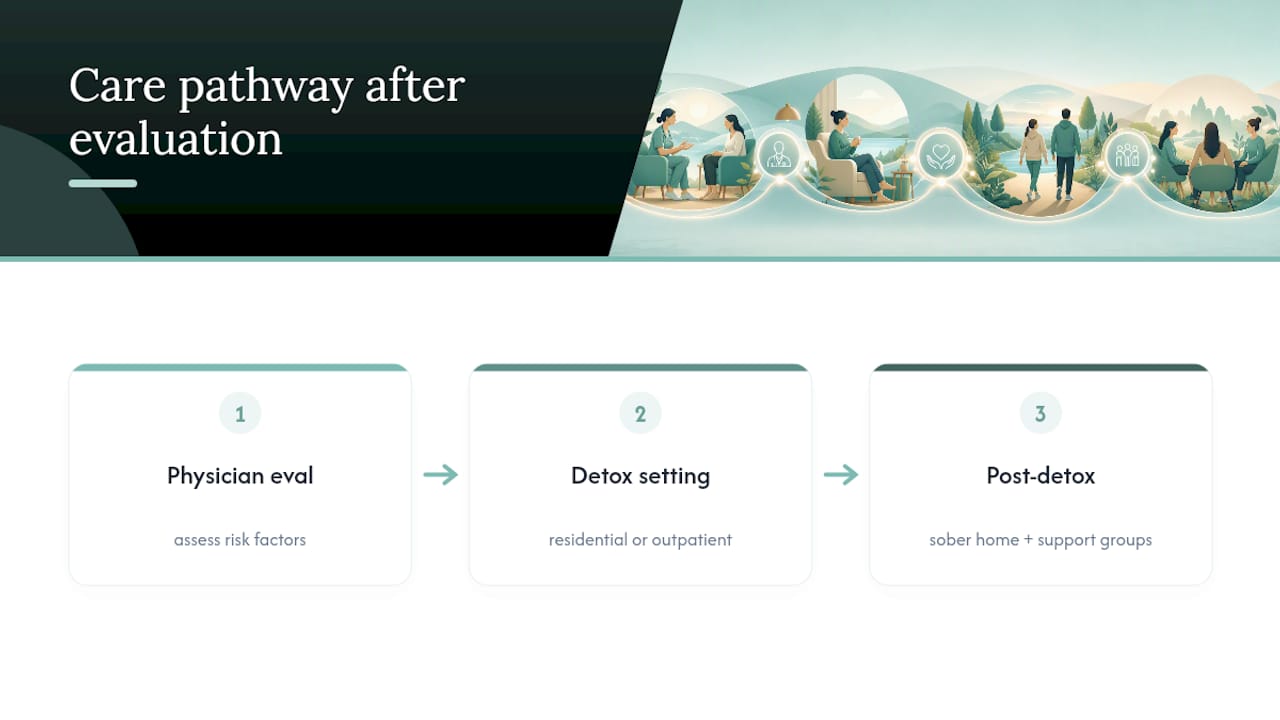
Outpatient detox programs allow daily or near-daily medical check-ins while the person sleeps at home, typically reserved for mild-to-moderate risk profiles confirmed by a clinical evaluation first.
Sober living homes offer a structured, substance-free environment for people who've completed detox and need a step between residential treatment and independent living. They're not a substitute for medical detox itself, but a useful bridge afterward.
Community support groups, including 12-step programs and other peer-led recovery communities, provide ongoing accountability and connection that clinical programs alone don't fully replace. Most successful long-term recovery plans lean on these groups well after formal treatment ends.
The honest answer for most families reading this, though, is that the presence of even one or two risk factors from the earlier list should push the decision back toward a medical evaluation before assuming a lighter-touch option is enough. A quick call to a residential detox program can confirm which category actually applies.
A Provider's View on Why Small-Scale, Integrated Care Matters
The biggest blind spot in home detox conversations isn't the medication piece. It's the assumption that someone can accurately judge their own risk level in the middle of withdrawal, when judgment itself is often one of the first things withdrawal impairs.
At Connected Recovery, that's the reasoning behind keeping the facility small, just 12 beds, with integrated treatment for substance use and co-occurring mental health disorders under one roof. Fewer beds mean staff notice a subtle shift in someone's CIWA-Ar trend before it becomes a crisis, and 24/7 medical supervision means there's never a gap between detox and whatever comes next in the treatment plan.
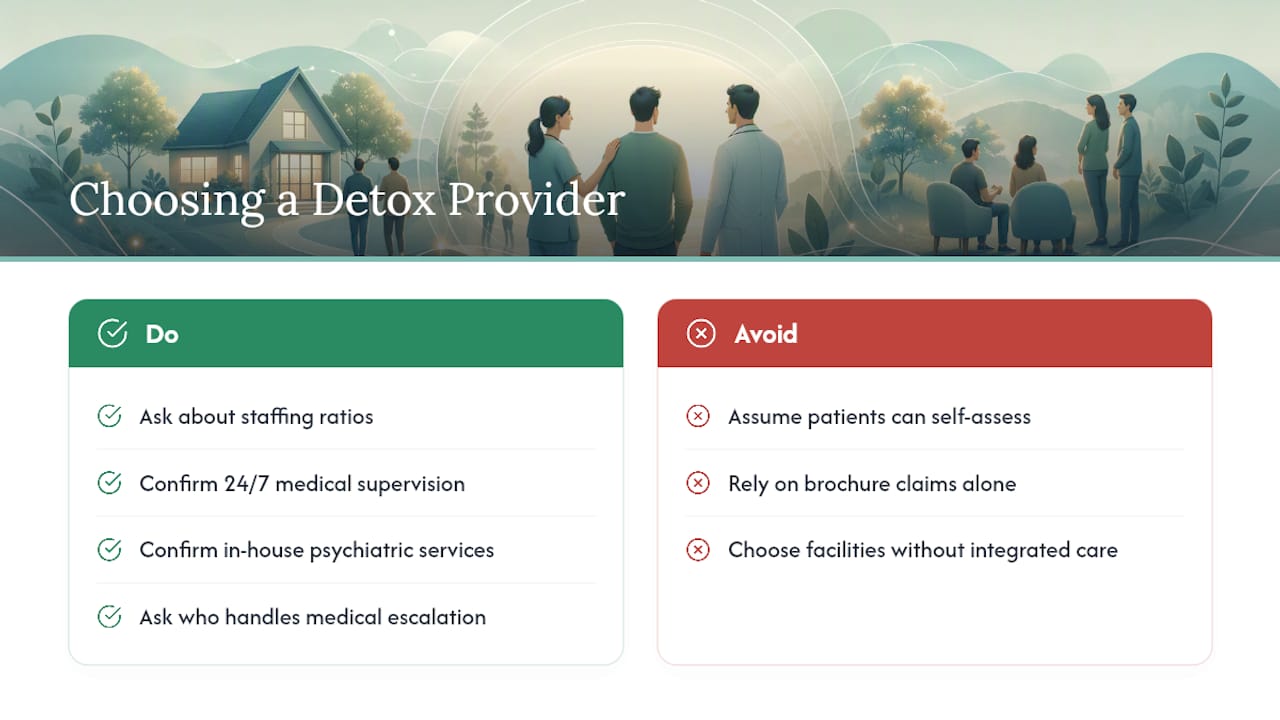
Integrated psychiatric care matters here too. Withdrawal often uncovers depression or anxiety that alcohol had been masking, and treating that alongside the physical symptoms, rather than after the fact, changes how someone transitions into longer-term care.
If you're evaluating a facility for yourself or a family member, ask directly about staffing ratios, whether psychiatric services are in-house or referred out, and who handles medical escalation. The answers tell you more than any brochure will.
— Jim
How Connected Recovery Supports a Safe Detox
A specialized residential program provides detox and treatment in a small, boutique setting with 24/7 medical supervision built around individualized treatment plans.

Every admission starts the same way: a benefit verification call, a full medical and psychiatric assessment, and immediate clinical supervision from the moment intake is complete. There's no waiting period between "we're evaluating you" and "you're being monitored." For anyone dealing with co-occurring depression, anxiety, or trauma alongside alcohol dependence, that integrated approach through dual diagnosis treatment means the psychiatric side of care starts on day one, not after detox wraps up.
If you're trying to figure out whether now is the time to call, it usually is. Reach out to verify your insurance benefits and schedule a confidential medical detox assessment, and find out within a conversation whether residential admission makes sense for your situation.
Sources
For deeper clinical detail beyond this guide, these sources are worth reading directly: the ASAM alcohol withdrawal management guideline, the NCBI Bookshelf clinical guidance on withdrawal management, the Recovery Answers data on residential versus outpatient completion, and the NCBI reference on nutrition and alcohol-related neurological disorders. Families and clinicians looking for additional peer-reviewed material can also search PubMed Central directly.
- ASAM alcohol withdrawal management guideline
- Alcohol withdrawal management — NCBI Bookshelf
- Residential versus outpatient treatment in the U.S. | Recovery Answers
FAQ
Is it ever safe to detox from alcohol at home?
For most people with real dependence, unsupervised home detox carries meaningful risk, since withdrawal can escalate into seizures or delirium tremens without warning. Anyone with prior severe withdrawal, heavy prolonged drinking, or medical comorbidities should be evaluated for residential detox before attempting anything at home.
What are the first signs of alcohol withdrawal?
Early signs typically include tremors, anxiety, sweating, elevated heart rate, and nausea, often starting within hours of the last drink. Seizures can begin as early as 8 hours after stopping in higher-risk individuals, which is why early medical evaluation matters.
How long does residential alcohol detox take?
The acute phase of residential detox typically runs 3 to 7 days, with the highest risk period falling around 48 to 72 hours after the last drink. Full stabilization and transition planning usually happens by the end of that window.
Does Connected Recovery offer medically supervised detox?
Yes. Connected Recovery provides medical detox with 24/7 medical supervision in a 12-bed boutique setting, along with integrated dual diagnosis treatment for co-occurring mental health conditions. Pricing isn't published, so reach out directly to verify insurance benefits and discuss cost.
What happens after detox is complete?
Most people move into a structured next step, whether that's residential treatment, a partial hospitalization program, or intensive outpatient care, along with a relapse prevention and follow-up plan. Programs with coordinated discharge planning built in from admission tend to see better long-term outcomes than those without one.